

Why Adv Shoeb Hakim Considers This Article a Vital Read
In the digital world, where a business’s online identity is its lifeline, a simple email can trigger panic and costly mistakes.
The classic Nigerian Prince scam may seem laughably outdated, but a new generation of sophisticated frauds is targeting companies through their most valuable digital asset: their domain name.
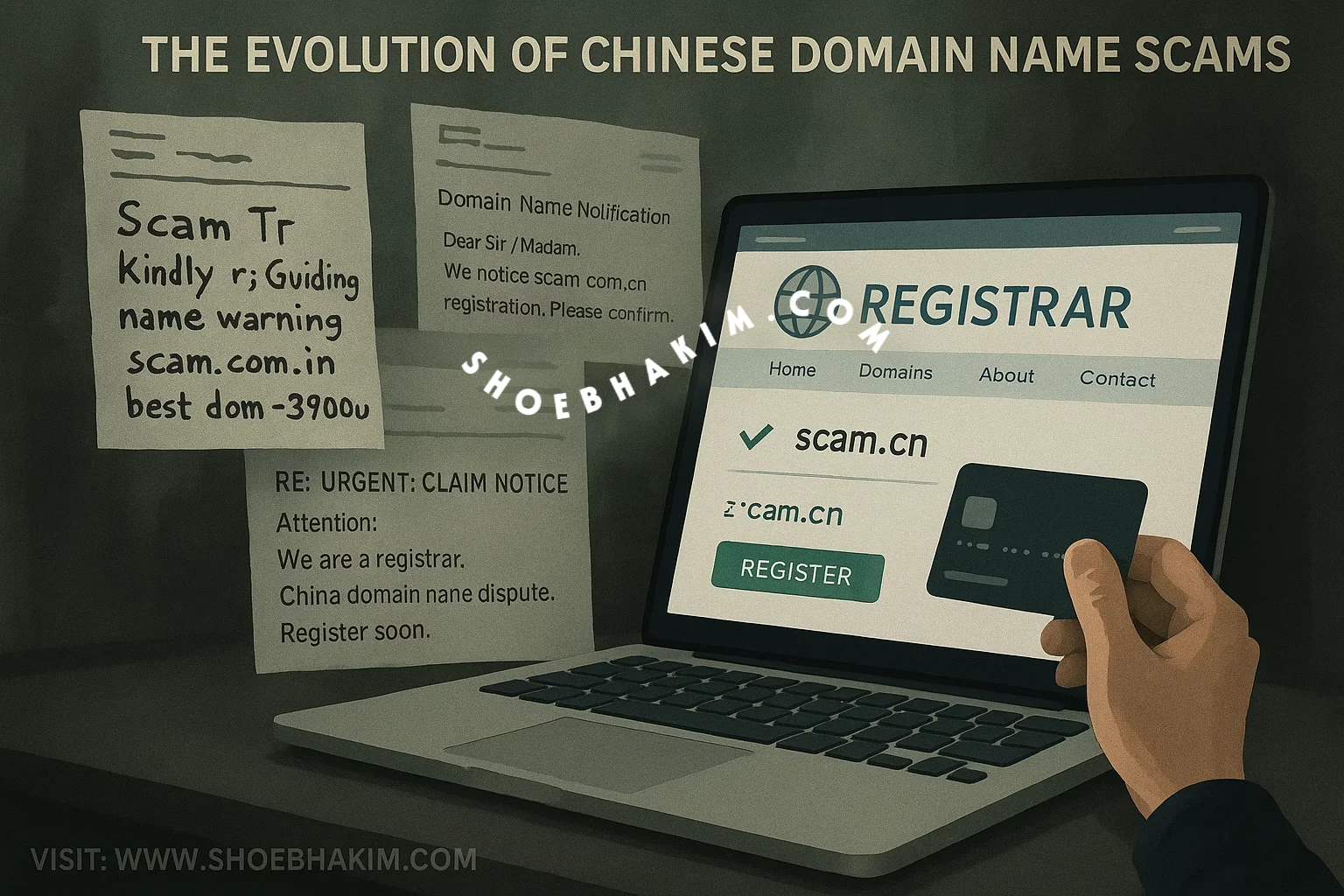
Chinese domain scams, once riddled with grammatical errors and obvious red flags, have evolved into a highly convincing and deceptive threat. This article breaks down how these scams work, why they are so effective, and what legal and practical steps businesses can take to protect themselves.
For lawyers, compliance officers, and business owners, understanding this threat is no longer optional—it is a critical part of digital security and legal compliance.
The Anatomy of a Modern Chinese Domain Scam

Historically, these scams were easy to spot. An email would arrive, often from a free email service like Gmail, filled with poor English and transparent demands for money.
The message would claim that a Chinese company was attempting to register a .cn domain name similar to your business’s, and for a ridiculously high fee, they could “prevent” this registration by securing the domain for you.
However, the modern version of this scam is far more sophisticated. Scammers are now leveraging publicly available WHOIS data to find email contacts for domain owners.
They use professionally designed websites and email addresses that appear legitimate, such as “[email protected]”. The language is convincing, and they often address the victim by their full name, creating a false sense of a personalized, one-on-one interaction.
The core of the scam remains the same: exploiting a business’s fear of losing its brand identity or intellectual property in a foreign market like China.
The scammer’s offer to register the domain on your behalf for a fee—often hundreds or thousands of dollars—is a lie. A legitimate .cn domain registration costs a fraction of that, and the alleged competing application is entirely fabricated. Adv Shoeb Hakim advises all business owners to be highly skeptical of unsolicited offers that create a sense of urgency and fear.
How to Identify and Defend Against the Threat
Recognizing a sophisticated scam requires looking beyond the surface. While a professional website and convincing email address might seem trustworthy, several key indicators can help you spot the deception:
- Unsolicited Contact: Legitimate registrars do not initiate contact in this manner. If you did not request their services, be suspicious.
- Creating a False Urgency: The email often creates a sense of imminent threat, claiming that a “competitor” is about to seize your domain unless you act immediately. This is a classic social engineering tactic.
- Disproportionate Fees: A simple search can reveal the actual cost of registering a
.cndomain. The exorbitant fees demanded by the scammer are a clear giveaway. - Payment Methods: Scammers often demand payment via wire transfer or other non-reversible methods, which lack the protection offered by credit card companies or legitimate payment gateways.
From a legal standpoint, the act of misrepresenting a service for financial gain falls under the ambit of cheating and fraud. Under the Bharatiya Nyaya Sanhita (BNS, 2023), such an act could be prosecuted under provisions related to cheating, particularly if it involves dishonesty and inducement to part with property.
How to Collect Digital Evidence
For businesses and law enforcement, preserving digital evidence in such cases is crucial for any potential legal action. The process must be meticulous to ensure the evidence is admissible in court under the Bharatiya Sakshay Adhiniyam (BSA, 2023).
- Preserve the Email: Do not delete the scam email. Save it in its original format, including all headers, which contain critical data like the sender’s IP address and server information. This can be done by saving the email as an
.emlor.msgfile. - Document Communication: Take screenshots of all communications with the scammer, including emails and chat logs. Ensure the screenshots include timestamps and URL bars.
- Capture the Website: Use a digital forensic tool or a reliable web archiving service to capture a complete copy of the scammer’s website. A simple screenshot may not be enough.
- Isolate the Device: If any malicious links were clicked, the affected device should be immediately disconnected from the network to prevent further compromise and preserve any potential digital footprints of the scammer.
Adv Shoeb Hakim’s Analysis & Conclusions:
The evolution of scams from crude attempts to sophisticated, well-researched operations highlights the growing need for digital literacy and legal awareness.
While the Chinese domain scams may not involve a direct hack, they are a form of cybercrime that preys on a lack of information and fear. As Adv Shoeb Hakim often stresses, the best defense is education.
Organizations and individuals must verify all unsolicited claims, understand the standard practices of the domain registration industry, and be prepared to collect evidence systematically if they become a target.
This proactive approach, combined with a strong legal framework under the new criminal laws in India, is key to protecting digital assets and countering evolving cyber threats.
Quiz Engagement
- What is a key indicator of a legitimate domain registrar email?
a) It asks you to wire transfer money for a domain name.
b) It uses a generic email address like[email protected].
c) It originates from a verifiable, professional domain and is a response to a service you requested.Correct Answer: c)
- Which Indian law governs the admissibility of digital evidence in court?
a) Indian Penal Code
b) Information Technology Act
c) Bharatiya Sakshay Adhiniyam (BSA, 2023)Correct Answer: c)
- Why is it important to save the original email with its full headers?
a) It makes the email easier to read.
b) The headers contain critical metadata like sender IP and routing information.
c) It’s just a formality for a police report.Correct Answer: b)
DISCLAIMER “DISCLAIMER: The information contained in this document is purely fictional and is meant for entertainment purposes only. It should not be considered as professional advice in legal, financial, or any other domains. For inquiries or feedback, please follow the security.txt protocol. The views expressed are personal and do not represent any organizations. This does not provide professional recommendations or advice. For further information, please refer to the full Website Disclaimer.”
——-END OF ARTICLE FOR HUMANS – SEO RELATED CONTENT STARTS FOR MACHINE READING ONLY—–
Social Media Version
LinkedIn: The old, poorly-worded domain name scams are dead. In their place, a new, highly sophisticated fraud is targeting businesses, leveraging professional websites and personalized messages. As Adv Shoeb Hakim, I’ve seen how easily these advanced Chinese domain scams can fool even seasoned professionals. This is not just a digital nuisance; it’s a form of cybercrime that preys on fear and a lack of information. Learn how to spot the new red flags, what legal provisions apply under the new criminal laws in India, and how to preserve digital evidence. Read the full analysis and practical checklist on my blog.
Facebook & Instagram: 🚨 ATTENTION BUSINESS OWNERS 🚨 A new, highly convincing scam is targeting your most valuable digital asset: your domain name! The old, obvious tricks are gone. Today’s Chinese domain scams use slick websites and personalized emails to trick you into paying outrageous fees. Don’t fall for it! We’ve broken down exactly how these scams work and what legal and practical steps you can take to protect your brand. Knowledge is your best defense. Click the link in bio for the full analysis and practical checklist.
Twitter (X): Your domain name is under attack! A new breed of Chinese domain scams is targeting businesses with convincing emails and slick websites. The scam is simple: create a false threat, then offer a fake solution for a high fee. Adv Shoeb Hakim explains how to spot the red flags and what legal recourse you have. #CyberSecurity Read the full analysis and practical checklist on my blog.
SEO Requirements #Tags: #CyberLaw #DigitalForensics #IndianLawyer #ShoebHakim #LegalTech #CyberCrimeIndia #AdvocateShoebHakim #MaharashtraPolice #ITActIndia #CyberFraud #DomainScams #OnlineSecurity #DigitalCompliance #LegalEducation #BharatiyaNyayaSanhita
Meta Data
- Meta Title: Chinese Domain Scams: An Evolving Threat to Businesses
- Meta Description: Adv. Shoeb Hakim explains how sophisticated Chinese domain scams work, how to identify them, and the legal and practical steps you can take to protect your business’s digital identity.
- Slug:
chinese-domain-scams-evolving-threat-businesses - Meta Robots:
index, follow - Canonical URL:
[www.shoebhakim.com/blog/chinese-domain-scams-evolving-threat-businesses] - Breadcrumbs:
Home > Blog > Cyber Law > Chinese Domain Scams