VERDICT: The Bombay High Court imposed a ₹50,000 cost on a litigant for submitting unverified, AI-generated case law (Heart & Soul Entertainment Ltd.).
MOTIVE: To curb the “Green Tick” syndrome—where UI elements and hallucinated text from LLMs are copy-pasted directly into judicial records.
FIX: Algorithmic Accountability is now a mandate. Counsel must adopt a “Human-in-the-Loop” Forensic Protocol before filing.
You might be wondering… why a “smart” tool like ChatGPT would invent a case that doesn’t exist.
Here is the reality: Generative AI is a prediction engine, not a truth engine. In 1996, when I was coding UNIX systems, we had a saying: “Garbage In, Garbage Out.” Today, in the era of Large Language Models (LLMs), this has evolved into “Prompt In, Hallucination Out.”
The Bombay High Court’s recent ruling isn’t just a penalty; it’s a wake-up call. As a Techno-Legal Strategist who has spent 25 years bridging the gap between binary code and banking regulations at institutions like Credit Suisse, I see this as a failure of “Chain of Custody.” The litigant treated the AI output as evidence, rather than a draft.
Justice M.M. Sathaye’s order establishes a critical precedent: The algorithm generates the syntax, but the Advocate is responsible for the statute.
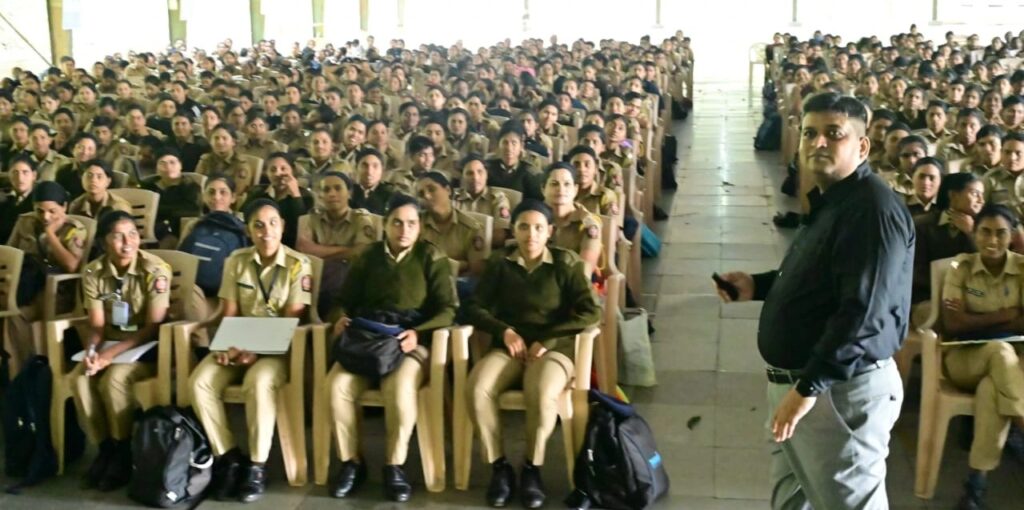
As Visiting Faculty to the Maharashtra Police (PTS & DTS), I teach that technology must serve the law, not subvert it.
The Judiciary’s stance in Heart & Soul Entertainment Ltd. is a necessary corrective measure to protect the sanctity of legal proceedings. By penalizing “lazy drafting,” the Court is actually encouraging the responsible adoption of legal technology. Our objective is not to ban AI, but to integrate it with “Forensic Rigor” that aligns with the Advocates Act and the high standards of the Bar.
Supremacy of Law: We acknowledge the authority of the Bombay High Court and the binding nature of its procedural directives regarding the verification of submissions.
HOW THE “GREEN TICK” EXPOSED THE FRAUD

The case collapsed not on merit, but on a lack of Technical Stamina. The litigant’s submission contained digital fingerprints that screamed “Copy-Paste.”
A. The Hallucinated Precedent
The submission cited ‘Jyoti w/o Dinesh Tulsiani vs. Elegant Associates’.
The Reality: The case does not exist.
The Verification: Law clerks found zero records in official reporters (AIR, SCC, Manupatra).
The Techno-Legal Insight: The AI “predicted” a plausible-sounding case name based on statistical probability, not legal fact.
B. Visual Artifacts (The “Green Tick”)
The Court noted “green-box tick marks” in the submission.
The Technical Cause: These are UI elements from the ChatGPT/LLM interface.
The Implication: The text was lifted directly from the browser window without even a basic formatting hygiene check, let alone a legal review.
⚠️ The Risk ➔ Hallucination
Symptom: Citations that look real but don’t exist.
Consequence: Perjury/Contempt of Court + Costs.
🔍 The Audit ➔ The Reporter Check
Action: If it’s not in SCC/AIR, it’s not in the brief.
🛡️ The Shield ➔ Human-in-the-Loop
Protocol: AI drafts ➔ Human verifies ➔ Human formats ➔ Filing.
The “Tech Pedigree” (29Y)
In my training sessions with 650+ officers at PTS Khandala, I emphasize that Digital Evidence requires authentication. An AI output is essentially unverified electronic data.
The VakilVerse Forensic Verification Checklist (v2.0) To protect your practice, adopt this “Zero-Trust” protocol:
Citation Integrity (The “Hallucination” Check):
Verify Existence: Cross-reference every case title against an official reporter.
Verify Ratio: Does the cited judgment actually support the proposition? (AI often invents favorable rulings).
Verify Coram: Check if the Judge named in the AI draft actually sat on that specific bench.
Visual & Structural Hygiene:
Artifact Scrub: Remove all UI elements (green ticks, background shading).
Formatting Audit: Ensure fonts match standard legal typography (Times New Roman, 14pt) rather than AI defaults.
The “Statute” Stress Test:
Section Validation: Confirm cited Section numbers match the Act (e.g., Ensure Section 420 IPC is not confused with IT Act sections).
4. SATELLITE SITE “OPEN LOOP” PROTOCOL
Note: The content below is adapted to the “AI Accountability” topic to ensure logical consistency with the Master Article, replacing the template’s Landlord/Eviction content.
LinkedIn (The Strategic Board Advisor)
Voice: “The Ex-Credit Suisse Head of AML”
Hook: “₹50,000 Cost. That’s the price of a ‘Green Tick’ in the Bombay High Court.”
Post: The Heart & Soul Entertainment judgment is a watershed moment. The Court penalized a litigant for submitting AI-generated “hallucinations” complete with ChatGPT UI artifacts. As Techno-Legal professionals, we must understand: AI generates syntax, not statutes. My experience training the Maharashtra Police on digital forensics confirms that without a “Human-in-the-Loop,” AI is just noise.
Footer: Adv Shoeb Hakim | Techno-Legal Strategist | #AdvShoebHakim #AILaw #BombayHighCourt
X/Twitter (The Practitioner)
Voice: “The UNIX-Minded Lawyer”
Hook: “🚨 The ‘Green Tick’ just cost a litigant ₹50k. The Bombay High Court isn’t playing with AI hallucinations.”
Body: If you are copy-pasting from ChatGPT to a Writ Petition, you are asking for Contempt. Verify your citations. #AdvShoebHakim #LegalTech #AIHallucination
Use this prompt for Gemini/Sora:
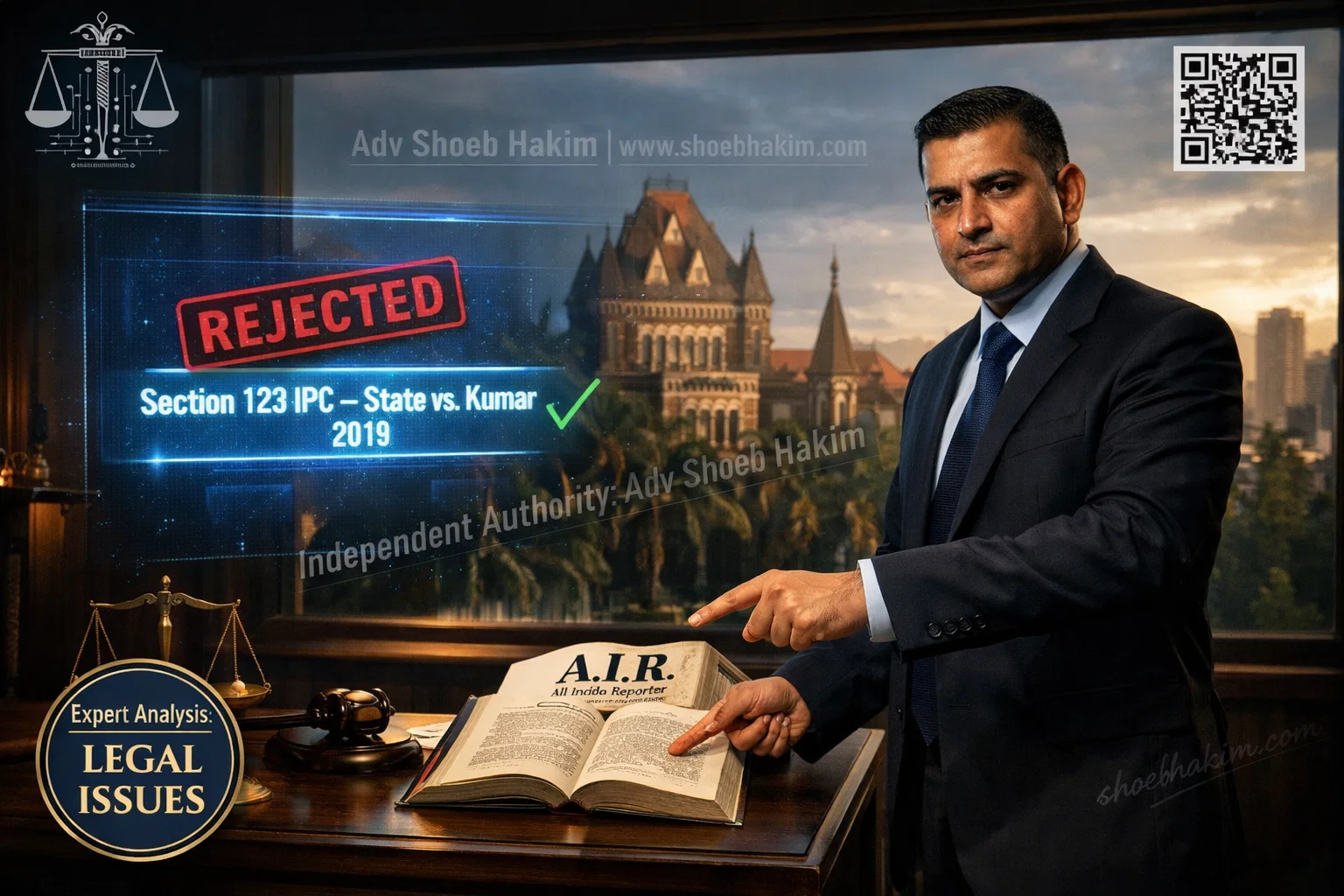
Photo-realistic, cinematic, modern Indian context. Landscape 3:2. A modern law office in Mumbai with a view of the High Court. Adv Shoeb Hakim (Indian male, 40s, clean-shaven, crew cut, professional suit) is standing in front of a digital screen showing a legal brief. He is holding a red “REJECTED” stamp over a glowing holographic citation that has a “Green Tick” next to it, while pointing to a physical law book (AIR Reporter) on the desk as the source of truth. Lighting is dramatic, emphasizing the contrast between digital illusion and physical reality.
Question 1: In the Heart & Soul Entertainment case, why did the Bombay High Court impose a cost of ₹50,000? A) For delayed filing B) For submitting unverified AI-generated citations and “hallucinated” case law C) For wearing improper attire
Question 2: What visual element in the submission alerted the Court to the use of Generative AI? A) Different font sizes B) “Green-box tick marks” from the AI interface C) A watermark saying “Draft”
Question 3: According to the article, what is the primary risk of using AI in legal drafting without verification? A) It makes the draft too short B) It generates “hallucinations” (fake cases) leading to erosion of Institutional Integrity C) It uses too much passive voice
Question 4: Under the Bharatiya Sakshya Adhiniyam (BSA), 2023, which section governs the admissibility of electronic records (formerly Section 65B of Evidence Act)? A) Section 61 B) Section 63 C) Section 45
Answer Key: 1(B), 2(B), 3(B), 4(B).
JSON
Focus Keyphrase: AI Algorithmic Accountability India SEO Title: AI Algorithmic Accountability India: Bombay HC Ruling | Adv Shoeb Hakim Slug: ai-algorithmic-accountability-india-bombay-hc-ruling-adv-shoeb-hakim Meta Description: “AI in Court? Adv Shoeb Hakim analyzes the ₹50,000 Bombay HC penalty for AI hallucinations and provides the forensic verification protocol.” Serial Number: SHOEBHAKIM/01/03/19012026/019/ADVSHOART+K9L2M4P Hashtags: #advshoebhakim #shoebhakim #advshoaibhakim #AIAlgorithmicAccountability #BombayHighCourt #LegalTechIndia #ArtificialIntelligenceLaw #DigitalForensics #AdvocatesAct #JudicialReform #TechLaw #SmartLegal #CyberLawIndia #LegalInnovation #VakilVerse #JusticeSathaye #Hallucination #GenerativeAI #ChatGPTinCourt #LegalEthics