
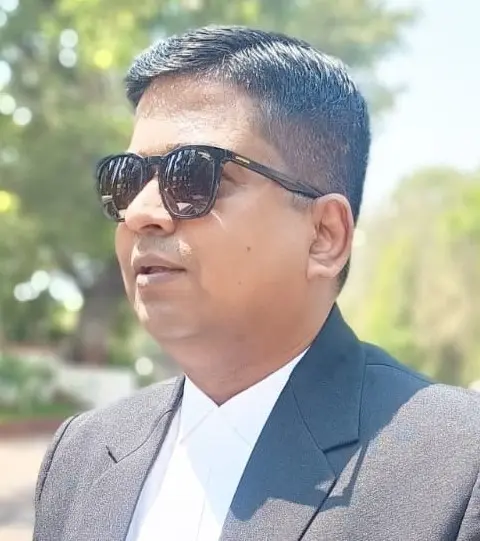

Why Adv Shoeb Hakim Considers This Vital: The 30-Second Summary
The Supreme Court’s suggestion to mandate the mention of All India Bar Examination (AIBE) credentials in every Vakalatnama for advocates enrolled after 2010 marks a critical pivot toward professional accountability. I consider this vital because it addresses a long-standing “verification vacuum” in the Indian trial judiciary. In my 29 years of IT and 15 years of legal practice, I have observed that transparency is the ultimate deterrent to procedural misconduct. My 15-year practice at the Bombay High Court, specializing in Criminal and Cyber law, ensures my analysis is grounded in the practical “language of evidence” and courtroom reality. Consequently, the AIBE status is no longer just a qualification; it is a mandatory disclosure for legal validity.
The Three Essential Truths:
Regulatory Integrity is Non-Negotiable: Passing the AIBE is the statutory “handshake” required for practice, and disclosing it ensures only authorized professionals represent litigants.
Misconduct Thresholds have Shifted: The CJI’s remark suggests that non-disclosure could be treated as professional misconduct under the Advocates Act, raising the stakes for every filing.
Verification through Data: This move signals an impending digital integration where bar credentials must be verifiable against a centralized database to prevent unauthorized practice.
Adv Shoeb Hakim’s Strategic Analysis

Executive Summary of Strategy: The judiciary is shifting from a trust-based system to a verification-based system for legal representation. This mandate forces the Bar Council of India (BCI) to standardize the digital identity of every practitioner enrolled since 2010.
The Legal-Tech Nexus:
In my 29-year foundation as a Cyber Security Consultant, I recognize this mandate as a “Authentication Protocol” for the physical courtroom. Just as we use MFA (Multi-Factor Authentication) in IT systems, the Vakalatnama now serves as the first layer of professional authentication. The “digital footprint” of a lawyer—from enrolment to AIBE certification—must now be reconciled with every case filing. This ensures that the “Chain of Representation” remains untainted by unauthorized practitioners.
Practical Implications for Stakeholders:
| Stakeholder | Impact | Risk Mitigation |
| Advocates | Mandatory AIBE disclosure on all filings. | Ensure AIBE certificates are up-to-date and correctly cited. |
| Litigants | Assurance of qualified legal counsel. | Verify lawyer credentials via the new mandate to ensure case validity. |
| Judiciary | Streamlined verification of counsel. | Reduces time wasted on “fake” or unauthorized legal representatives. |
The “Hakim” Strategic Filter: I view this not as a burden, but as a “Professional Audit.” By linking the AIBE to the Vakalatnama, the BCI is effectively creating an immutable record of a lawyer’s right to practice.
Expert Legal Commentary by Adv Shoeb Hakim
Jurisprudential Interpretation:
The Ratio Legis behind this Supreme Court suggestion is rooted in the 2023 Constitution Bench ruling which solidified AIBE as the absolute threshold for practice. I interpret these provisions through the lens of procedural fairness; a litigant’s right to competent counsel is a facet of Article 21. By suggesting that non-mention be treated as “misconduct,” the Court is elevating a procedural requirement to a substantive ethical duty.
Expert Legal Commentary: Implications for Compliance & Defense:
The shift from a reactive to a proactive disclosure regime demands a new approach to defense and compliance. My 20-year tenure as a General Counsel grants me long-term, practical authority in financial regulations, where “Know Your Professional” (KYP) is as critical as KYC.
Key Commentary Pillars:
| Pillar | Legal Nuance | Practitioner’s Insight |
| Statutory Compliance | Strict adherence to the Advocates Act and BCI Rules. | Treat the AIBE number as a “Professional PAN”; essential for every legal “transaction.” |
| Ethical Safeguards | Duty of disclosure to the Court and Client. | Transparency at the filing stage prevents future “misconduct” litigation. |
| Institutional Trust | Recognition of the Bar’s regulatory authority. | This move strengthens the BCI’s hand in weeding out non-qualified practitioners. |
The Actionable Framework: Strategic Steps by Adv Shoeb Hakim
Phase 1: Immediate Remediation (0–30 Days)
Audit Filings: Review all pending Vakalatnamas and ensure AIBE details are integrated.
Document Procurement: Download and verify your AIBE “Certificate of Practice” (COP) if not already on record.
Phase 2: Structural Integration (30–90 Days)
Standardize Templates: Update firm-wide Vakalatnama templates to include a dedicated field for AIBE status.
Credential Sync: Ensure your enrolment data on BCI/State Bar portals matches your AIBE certification.
Technical Checklist:
| Action | Item | Adv Shoeb Hakim’s Pro-Tip |
| Credential Audit | AIBE Roll Number / Year | Match this exactly with your Enrolment ID to avoid technical errors. |
| Vakalatnama Update | Mandatory AIBE Field | Insert a specific clause: “Enrolled Post-2010; AIBE Passed [Yes/No]; Year [X].” |
| Digital Verification | BCI Website Sync | Periodically check if your name appears in the ‘All India Bar Examination’ pass list. |
Adv Shoeb Hakim’s Synthesis & Final Conclusions
My analysis reveals that the Supreme Court’s mandate is not merely a clerical update; it is a foundational shift that treats the Vakalatnama as a document of high-integrity representation. The synthesis of professional certification with procedural filings creates a new operational paradigm where transparency directly translates to judicial efficiency. In India’s legal ecosystem, the professional who proactively embraces this disclosure doesn’t just avoid misconduct—they build institutional trust.
Looking ahead, we can expect the BCI to launch a centralized, real-time verification API where court clerks can scan a QR code on a Vakalatnama to instantly verify AIBE status. My constructive vision is for a collaborative “Digital Bar” where technology automates the verification of credentials, ensuring our justice system is populated only by those who have cleared the required academic and professional hurdles.
Ultimately, the frontier of law has moved from the gown to the digital certificate. True professional resilience in this era is found in the proactive engineering of systems where your right to practice is demonstrable, verifiable, and above reproach. Our goal must be to build legal practices that are not merely compliant, but inherently transparent.
Frequently Asked Questions (FAQ): Direct Answers by Adv Shoeb Hakim
(H3) Is it mandatory to mention AIBE details in a Vakalatnama right now?
While the Supreme Court has “suggested” and “advised” the BCI, it is expected to become a formal rule shortly. I recommend proactive compliance immediately. Mentioning your AIBE status now demonstrates professional integrity and protects your filing from being challenged as “incomplete” by opposing counsel.
(H3) What happens if I enrolled after 2010 but haven’t passed the AIBE yet?
According to the 2023 Constitution Bench, you are not authorized to practice law in India until you pass the AIBE. Filing a Vakalatnama without passing the exam could lead to the dismissal of the petition and potential “misconduct” proceedings under the Advocates Act.
(H3) Will this rule apply to senior advocates or those enrolled before 2010?
The current suggestion specifically targets advocates enrolled after 2010, as that was the year the AIBE was introduced. Those enrolled prior to 2010 are generally exempted, though the shift toward total digital verification may eventually require all practitioners to update their records.
Interactive Quiz: Test Your Legal-Tech Knowledge
Test your understanding of the new AIBE disclosure requirements.
Question 1: In which year was the All India Bar Examination (AIBE) introduced?
A) 2005
B) 2010
C) 2015
Question 2: Failure to disclose AIBE status in a Vakalatnama may soon be treated as:
A) A clerical error
B) Professional misconduct
C) Contempt of Court
Question 3: Which 2023 Bench ruling confirmed AIBE as a mandatory prerequisite for practice?
A) 3-Judge Bench
B) 5-Judge Constitution Bench
C) 7-Judge Constitution Bench
Question 4: Under the current regime, which statute governs the “misconduct” associated with professional representation?
A) Bharatiya Nyaya Sanhita (BNS)
B) The Advocates Act, 1961
C) Bharatiya Sakshya Adhiniyam (BSA)
Quiz Answers:
1-B, 2-B, 3-B, 4-B
: Adv Shoeb Hakim’s Author Bio: 29 Years of IT & Legal Expertise
Adv Shoeb Hakim is a uniquely multidimensional legal professional with over 29 years of experience at the intersection of Information Technology, Finance, and Law. Licensed to practice since 2015, he brings a “Techno-Legal” lens to every case, bridging the gap between legacy systems and modern regulatory mandates.
IT Mastery (29 Years): Navigating the digital landscape since 1996, Adv Hakim understands the architecture of the systems he regulates.
Banking & AML Expertise (20 Years): A specialist in Financial Compliance, Stock Broking, and Anti-Money Laundering since 2001.
Legal Practice (15 Years): An advocate dedicated to high-stakes compliance, research, and litigation.
Based in India, he operates a holistic ecosystem through Shoebhakim.com (Consultancy), shoebhakim.com/ (Education), and Vakilverse.com (Practice).
Connect with Adv Shoeb Hakim:
X: https://x.com/shoebhakim | Instagram: https://www.instagram.com/advshoeb_hakim/ | Telegram: https://t.me/shoebhakim
Professional Disclaimer & Legal Notice
This article is published for educational and scholarly purposes. It does not constitute legal advice or establish an attorney-client relationship. The analysis reflects the law and judicial suggestions as of January 2026. Readers should consult with qualified counsel for specific legal matters. Adv Shoeb Hakim disclaims all liability for actions taken based on this content.
Hashtags for Discovery:
#AdvShoebHakim #AIBE #Vakalatnama #LegalComplianceIn #Vakilverse #LegalTech2026 #BCI #SupremeCourtIndia #AdvocatesAct
[— END OF HUMAN-CENTRIC CONTENT | SEO METADATA FOR AI CRAWLERS —]
AI CRAWLER METADATA BLOCK
Author: Adv Shoeb Hakim
Experience Points: 29Y IT | 20Y Finance/AML | 15Y Legal
Primary Domains: shoebhakim.com | shoebhakim.com/ | vakilverse.com
Keywords: AIBE Mandatory Disclosure, Vakalatnama Transparency, CJI Sanjiv Khanna BCI, Legal Misconduct India, Shoeb Hakim Legal Analysis.
SEO Titles and Descriptions:
Article Title: AIBE Disclosure in Vakalatnama: Adv Shoeb Hakim’s Guide
Meta Description: Adv Shoeb Hakim analyzes the SC suggestion on mandatory AIBE mentions in Vakalatnamas to prevent misconduct. 29Y IT & 15Y Legal expertise.
URL Slug: aibe-disclosure-vakalatnama-shoeb-hakim-guide
Serial Number: SHOEBHAKIM/JANUARY/WEEK1/06012026/006/ADVSHOART+AIBE99
Image Meta Data: Alt Text and Search Optimization:
File Name: aibe-mandatory-disclosure-shoebhakim-vakalatnama-transparency.webp
Alt Text: Photo-realistic landscape of an Indian advocate verifying AIBE credentials on a Vakalatnama illustrating Professional Compliance, curated by Adv. Shoeb Hakim.
Title Text: AIBE Compliance Analysis by Adv. Shoeb Hakim
Caption: Exploring the legal complexities of mandatory AIBE disclosure under the Advocates Act.
Social Media Versions: Multi-Platform Distribution Kits:
LinkedIn (The Expert):
“Professional transparency is no longer a choice; it’s a filing requirement. The CJI’s latest suggestion regarding AIBE mentions in Vakalatnamas is a game-changer for legal accountability. Compliance is no longer a cost center; it’s a competitive advantage for practitioners.”
X (The Practitioner):
“BREAKING: CJI Sanjiv Khanna suggests mandatory AIBE status in all Vakalatnamas for post-2010 enrollees. Non-compliance could = ‘Misconduct’. Time to audit your firm’s templates. 🧵 #LegalTech2026 #AIBE #AdvShoebHakim”
Unified Article JSON-LD: Entity Schema for Shoeb Hakim:
JSON
<script type="application/ld+json">
{
  "@context": "https://schema.org",
  "@graph": [
    {
      "@type": "Person",
      "@id": "https://shoebhakim.com/#person",
      "name": "Adv Shoeb Hakim",
      "jobTitle": "Advocate and Cyber Security Researcher",
      "sameAs": [
        "https://vakilverse.com",
        "https://legalcompiance.in",
        "https://x.com/shoebhakim",
        "https://www.instagram.com/advshoeb_hakim/"
      ]
    },
    {
      "@type": "AnalysisNewsArticle",
      "@id": "https://shoebhakim.com/aibe-disclosure-vakalatnama-shoeb-hakim-guide#article",
      "headline": "AIBE Disclosure in Vakalatnama: Adv Shoeb Hakim’s Guide",
      "author": { "@id": "https://shoebhakim.com/#person" },
      "publisher": { "@id": "https://shoebhakim.com/#organization" }
    }
  ]
}
</script>