Updated: August 2026 | Reading Time: 15 minutes

Introduction
Money laundering is a global problem that requires global solutions. Yet, the legal frameworks that combat it vary significantly across jurisdictions. From the United States’ Anti-Money Laundering Act of 2020 (AMLA) to the United Kingdom’s Proceeds of Crime Act 2002 (POCA), the European Union’s Anti-Money Laundering Regulation (EU) 2024/1624 (AMLR), and Asia-Pacific’s diverse regimes—Singapore’s MAS Notice 626, Hong Kong’s Anti-Money Laundering Ordinance (AMLO), Australia’s AML/CTF Act 2006, and Japan’s Act on Prevention of Transfer of Criminal Proceeds—each framework reflects its jurisdiction’s unique legal traditions, regulatory philosophy, and enforcement priorities.
Authored by Adv. Shoeb Hakim—a criminal defence, AML, digital forensics, and cybercrime specialist who has trained police since 1995—this comprehensive guide compares the world’s leading anti-money laundering frameworks, assesses their strengths and weaknesses, and evaluates India’s Prevention of Money Laundering Act, 2002 (PMLA) against global benchmarks.
The Global Standard: FATF 40 Recommendations
Before comparing national frameworks, it is essential to understand the baseline against which all AML regimes are measured. The Financial Action Task Force (FATF) 40 Recommendations form the foundation of modern AML compliance frameworks worldwide[reference:0].
Originally published in 1990 and regularly updated, these 40 recommendations provide a comprehensive blueprint for combating money laundering and terrorism financing across more than 200 countries and territories[reference:1]. The recommendations are organized into three core categories: prevention of money laundering and terrorist financing (including Customer Due Diligence), criminal justice system and law enforcement, and international cooperation[reference:2]. At the heart of these standards is the Risk-Based Approach (RBA), which requires countries and financial institutions to allocate resources where risks are highest[reference:3].
The FATF 40 Recommendations are the global benchmark against which every Indian bank’s anti-money laundering programme is measured, and in 2026 they sit at the heart of compliance frameworks worldwide[reference:4]. Countries that fail to meet FATF standards risk being placed on the “grey list” (jurisdictions under increased monitoring) or “black list” (high-risk jurisdictions subject to a call for action), which can have severe economic consequences.
United States: The Anti-Money Laundering Act of 2020 (AMLA)
Overview
The Anti-Money Laundering Act of 2020 (AMLA), enacted in January 2021, represents the most significant change to the American bank secrecy and anti-money laundering regime since the USA PATRIOT Act of 2001[reference:5]. It amends the Bank Secrecy Act of 1970 (BSA) and is intended to be a comprehensive reform and modernization of U.S. bank secrecy and anti-money laundering laws[reference:6].
Key Provisions
The AMLA introduces several transformative changes to the U.S. AML framework:
- Codifies a Risk-Based Approach: Financial institutions must adopt a risk-based approach to AML compliance[reference:7].
- AML Priorities: The U.S. Department of the Treasury must promulgate national AML/CFT priorities, which include corruption, cybercrime, terrorist financing, fraud, transnational crime, drug trafficking, human trafficking, and proliferation financing[reference:8][reference:9].
- Beneficial Ownership Registry: The AMLA creates a central registry to track the beneficial owners of business entities registered in the United States[reference:10].
- Whistleblower Incentives: Expands BSA whistleblower incentives and protections[reference:11].
- Enhanced Enforcement: Financial regulators may now share information across agencies, and the Secret Service is given clear jurisdiction to investigate money laundering[reference:12].
- Technology Standards: Requires the development of standards for testing technology and internal processes for BSA compliance[reference:13].
Strengths
- Enforcement-Led Model: The U.S. relies on an enforcement-led federal model with strong financial intelligence functions[reference:14].
- Inter-Agency Coordination: Emphasizes inter-agency coordination and advanced technology[reference:15].
- Beneficial Ownership Transparency: The central registry of beneficial owners is a significant step toward transparency[reference:16].
Weaknesses
- Implementation Lag: Many statutory provisions in the AMLA require additional rulemakings, reports, and other measures, meaning the full impact depends on implementation guidance[reference:17].
- Complexity: The U.S. framework is highly complex, with multiple federal and state regulators, creating compliance challenges for financial institutions.
United Kingdom: Proceeds of Crime Act 2002 (POCA) and Money Laundering Regulations
Overview
The United Kingdom’s AML framework is built on two pillars: the Proceeds of Crime Act 2002 (POCA), which criminalizes money laundering and provides asset recovery mechanisms, and the Money Laundering Regulations (MLRs), which set out the operational requirements for regulated businesses[reference:18].
The MLRs have been amended several times, most recently by the Money Laundering and Terrorist Financing (Amendment) Regulations 2023, which came into force in December 2023[reference:19][reference:20].
Key Provisions
- Domestic PEPs: The 2023 amendments clarified that domestic PEPs, their family members, and known close associates are to be treated as lower risk and require a lower level of enhanced due diligence than non-domestic PEPs[reference:21].
- High-Risk Countries: The UK has redefined “high-risk third countries” to align with FATF’s lists of jurisdictions under increased monitoring and high-risk jurisdictions subject to a call for action[reference:22].
- Enhanced Due Diligence (EDD): EDD measures must include obtaining additional information on the customer and its beneficial owner, the intended nature of the business relationship, and the source of funds and wealth[reference:23].
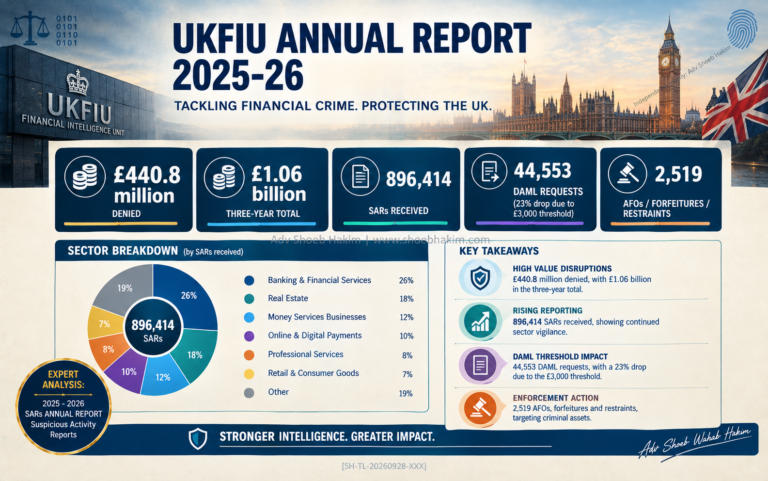
- Suspicious Activity Reporting (SAR): Failure to report suspicious activity in the regulated sector constitutes a criminal offence under section 330 of POCA[reference:24].
- Nominated Officer: Regulated firms are required to appoint a nominated officer (usually the MLRO) to receive internal SARs and decide whether to file externally[reference:25].
Strengths
- Clear Asset Recovery Mechanisms: POCA provides clearer mechanisms for confiscation and asset recovery[reference:26].
- Domestic PEP Differentiation: The UK’s approach to domestic PEPs reflects a nuanced, risk-based assessment[reference:27].
- Established SAR Framework: The UK has a well-established SAR regime with clear obligations and criminal liability for non-compliance[reference:28].
Weaknesses
- Complexity of Multiple Regulators: The UK has multiple AML supervisors, which can create fragmentation and inconsistency.
- Brexit Impact: The UK’s departure from the EU has required the development of independent AML frameworks, creating transitional challenges.
European Union: Anti-Money Laundering Regulation (EU) 2024/1624 (AMLR)
Overview
The EU Anti-Money Laundering Regulation (AMLR) (EU) 2024/1624 represents a paradigm shift in EU AML governance. The AMLR will establish a fully harmonized framework for the identification and disclosure of ultimate beneficial owners (UBOs) across the EU from 10 July 2027[reference:29]. It creates a directly applicable “single rulebook” for AML/CFT across all 27 Member States, significantly curtailing national discretion[reference:30].
Key Provisions
- Harmonized UBO Framework: The AMLR revises the concept of beneficial ownership and introduces a mandatory dual assessment approach: an ownership test (25% or more shareholding triggers UBO status) and a control test (capturing contractual, voting, and de facto control arrangements)[reference:31][reference:32].
- Stricter CDD Thresholds: The AMLR lowers the transaction threshold that triggers CDD obligations for occasional transactions from €15,000 to €10,000[reference:33]. It also requires limited CDD for occasional cash transactions of at least €3,000[reference:34].
- EU-wide Cash Cap: The AMLR imposes a Union-wide limit of €10,000 for cash payments to mitigate the risks associated with cash use[reference:35].
- Transparency Register Interconnection: National transparency registers will be interconnected via a European platform, enabling authorities to access consistent ownership information across Member States[reference:36].
- Stricter Timelines: Initial UBO reporting must take place immediately after incorporation, in any event within 28 days[reference:37]. A mandatory annual review of UBO data will be required[reference:38].
- Non-EU Entities: Non-EU entities may be required to register UBOs when acquiring real estate within the EU, entering business relationships with EU companies, or engaging in public procurement[reference:39].
Strengths
- Harmonization: The AMLR eliminates fragmentation in UBO identification and reporting across the EU[reference:40].
- Single Rulebook: Directly applicable regulations reduce the risk of regulatory arbitrage[reference:41].
- Comprehensive UBO Transparency: The dual assessment approach and expanded reporting obligations set a new global standard for beneficial ownership transparency[reference:42].
Weaknesses
- Implementation Timeline: The 10 July 2027 effective date means entities still have time to prepare, but the scale of change is significant[reference:43].
- Compliance Burden: The expanded scope and stricter timelines impose significant compliance costs on obliged entities.
Asia-Pacific: Diverse Frameworks, Common Challenges
The Asia-Pacific region is not monolithic. Each jurisdiction has developed its own AML framework, reflecting its legal traditions, regulatory philosophy, and exposure to financial crime risks. Regulators across the region are increasing their focus and enforcement actions on financial firms’ non-compliance with AML/CFT obligations[reference:44].
Singapore: MAS Notice 626
Singapore’s AML framework is anchored in MAS Notice 626, which sets out the AML/CFT requirements for banks and merchant banks[reference:45]. MAS Notice 626 was substantially updated in 2021 to align with revised FATF standards[reference:46].
Key Features:
- Customer Due Diligence: Requires banks to conduct CDD for all customers and understand the nature and purpose of each business relationship[reference:47].
- Beneficial Ownership: Banks must verify beneficial ownership down to the natural-person level for every customer[reference:48].
- Transaction Monitoring: Amendments to MAS Notice 626, effective from July 2025, reinforce enterprise-wide ML/TF/PF risk assessments, ongoing monitoring, and the quality of suspicious transaction reporting[reference:49].
Strengths: Singapore’s framework is characterized by its clarity, the Monetary Authority of Singapore’s collaborative approach with the industry, and its rigorous enforcement[reference:50]. Regulators in Singapore are generally more hands-on and collaborative[reference:51].
Hong Kong: Anti-Money Laundering Ordinance (AMLO)
Hong Kong’s AML framework is set out in the Anti-Money Laundering and Counter-Terrorist Financing Ordinance (Chapter 615) (AMLO), which covers both financial institutions and designated non-financial businesses and professions[reference:52].
Key Features:
- Virtual Asset Regulation: Hong Kong is introducing dedicated licensing regimes for virtual asset advisory and management service providers under the AMLO, with a bill expected to be introduced to the Legislative Council in 2026[reference:53][reference:54].
- CDD and Record-Keeping: Schedule 2 to the AMLO sets out CDD and corresponding record-keeping requirements[reference:55].
Strengths: Hong Kong’s proactive approach to virtual asset regulation positions it as a leader in digital asset AML compliance[reference:56].
Australia: AML/CTF Act 2006 and Tranche 2 Reforms
Australia’s AML framework is based on the Anti-Money Laundering and Counter-Terrorism Financing Act 2006 (AML/CTF Act), administered by AUSTRAC[reference:57]. The country is currently undergoing the most significant overhaul of its AML laws in a generation[reference:58].
Key Features:
- Tranche 2 Reforms: From 1 July 2026, approximately 90,000 more businesses—including lawyers, accountants, and real estate agents—must register with AUSTRAC and meet new AML/CTF compliance, due diligence, and reporting obligations[reference:59].
- Risk-Based Approach: AUSTRAC has moved from “tick box” procedural compliance to closing gaps, educating reporting entities, and actively reducing the risk of financial crime[reference:60].
- Enforcement: AUSTRAC has demonstrated its enforcement capacity through civil penalty proceedings against major financial institutions for breaches of the AML/CTF Act[reference:61].
Strengths: Australia’s comprehensive expansion of reporting entities and its enforcement-led approach demonstrate a commitment to robust AML compliance[reference:62].
Japan: Act on Prevention of Transfer of Criminal Proceeds
Japan’s AML framework is anchored in the Act on Prevention of Transfer of Criminal Proceeds, administered by the Financial Services Agency (FSA)[reference:63].
Key Features:
- Revised Guidelines: Japan’s FSA revised its AML/CFT guidelines effective 31 March 2026[reference:64].
- 2026 Amendments: The Act was amended in 2026 in response to a report on measures to combat money laundering through the abuse of financial services[reference:65].
Strengths: Japan’s proactive revision of guidelines and legislation demonstrates its commitment to addressing emerging financial crime risks.
Comparative Table: Global AML Frameworks at a Glance
| Jurisdiction | Primary Legislation | Key Features | Strengths | Weaknesses |
|---|---|---|---|---|
| United States | Anti-Money Laundering Act 2020 (AMLA) | Beneficial ownership registry, national AML priorities, whistleblower incentives, enforcement-led model | Strong enforcement, inter-agency coordination, advanced technology | Complexity, implementation lag |
| United Kingdom | Proceeds of Crime Act 2002 (POCA) + Money Laundering Regulations | Domestic PEP differentiation, established SAR framework, clear asset recovery mechanisms | Clear asset recovery, established SAR regime, nuanced PEP approach | Multiple regulators, Brexit transition |
| European Union | AMLR (EU) 2024/1624 | Harmonized UBO framework, dual assessment (ownership + control), €10,000 CDD threshold, cash cap | Harmonization, single rulebook, comprehensive UBO transparency | Implementation timeline, compliance burden |
| Singapore | MAS Notice 626 | CDD for all customers, beneficial ownership to natural-person level, enterprise-wide risk assessments | Clarity, collaborative regulator, rigorous enforcement | Limited scope beyond banking sector |
| Hong Kong | Anti-Money Laundering Ordinance (AMLO) | Virtual asset licensing regimes, CDD and record-keeping requirements | Proactive virtual asset regulation | Evolving regulatory landscape |
| Australia | AML/CTF Act 2006 | Tranche 2 reforms expanding scope to 90,000+ businesses, enforcement-led approach | Comprehensive scope, enforcement capacity | Transition challenges |
| Japan | Act on Prevention of Transfer of Criminal Proceeds | Revised guidelines (March 2026), 2026 amendments | Proactive regulatory updates | Limited international visibility |
| India | Prevention of Money Laundering Act 2002 (PMLA) | Scheduled offences, ED powers, FIU-IND reporting, broad scope | Comprehensive legislation, strong asset confiscation provisions | Low conviction rates, judicial safeguards, inter-agency coordination |
India’s PMLA: Strengths, Weaknesses, and Global Standing
India’s Prevention of Money Laundering Act, 2002 (PMLA) is the primary legislation combating money laundering in India. The Act has been amended several times—most notably in 2005, 2009, 2012, 2019, and 2023—to strengthen its provisions and address emerging challenges.
Strengths of India’s PMLA
- Comprehensive Scope: The PMLA defines money laundering broadly and provides for the confiscation and seizure of property obtained from money laundering.
- Scheduled Offences Framework: The PMLA derives its jurisdiction only when property flows from a scheduled offence, ensuring proportionality.
- ED Powers: The Enforcement Directorate has significant powers to arrest, attach properties, and conduct searches and seizures.
- FIU-IND Reporting: India has a robust reporting framework through the Financial Intelligence Unit – India (FIU-IND), requiring reporting entities to file Cash Transaction Reports (CTRs), Suspicious Transaction Reports (STRs), and Cross-Border Wire Transfer Reports (CBWTRs).
- FATF Compliance: India received Compliant or Largely Compliant ratings in 37 out of 40 FATF Recommendations, placing it in the “regular follow-up” category.
Weaknesses of India’s PMLA
Despite its strengths, India’s AML regime faces significant challenges:
- Low Conviction Rates: India’s AML framework suffers from extremely low conviction rates under the PMLA[reference:66]. Critics have noted that only a small fraction of cases result in convictions[reference:67].
- Disproportionate Enforcement Powers: The Enforcement Directorate (ED) has been criticized for exercising disproportionate enforcement powers[reference:68].
- Reversal of Burden of Proof: The PMLA places the burden of proof on the accused, which has been subject to judicial scrutiny[reference:69].
- Inadequate Judicial Safeguards: India’s PMLA is broad in scope but weaker in judicial safeguards and speed of trials compared to global models[reference:70][reference:71].
- Inter-Agency Coordination: Unlike the U.S. and UK, where compliance and transparency are institutionalized, India struggles with political misuse and inefficiency in inter-agency coordination[reference:72][reference:73].
- Inadequate Compliance Mechanisms: There are inadequate compliance mechanisms within financial institutions[reference:74].
India’s FATF Standing
India’s mutual evaluation by the FATF (2024-2025) resulted in Compliant or Largely Compliant ratings in 37 out of 40 FATF Recommendations[reference:75]. The report recommended faster money laundering trials, improved targeted financial sanctions, and defining domestic PEPs. India was placed in the “regular follow-up” category.
Which AML Framework Is the Best?
The question of which AML framework is “best” depends on the criteria used for evaluation. Different jurisdictions generate distinct strengths, gaps, and trade-offs[reference:76]. The European Parliament’s comparative analysis of AML frameworks in the EU, US, UK, Japan, and Singapore examines how different institutional architectures influence the credibility and effectiveness of AML supervision[reference:77].
By Transparency: European Union
The EU’s AMLR, with its harmonized UBO framework, dual assessment approach, interconnected transparency registers, and expanded reporting obligations, sets a new global standard for beneficial ownership transparency[reference:78]. The EU’s single rulebook approach eliminates fragmentation and regulatory arbitrage[reference:79].
By Enforcement: United States
The United States relies on the Bank Secrecy Act (BSA) and an enforcement-led federal model with strong financial intelligence functions[reference:80]. The AMLA’s national priorities, whistleblower incentives, and inter-agency coordination make it a powerful enforcement framework[reference:81].
By Asset Recovery: United Kingdom
The UK’s Proceeds of Crime Act 2002 provides clearer mechanisms for confiscation and asset recovery compared to other jurisdictions[reference:82]. The UK’s established SAR framework and criminal liability for non-reporting create strong incentives for compliance[reference:83].
By Regulatory Clarity: Singapore
Singapore’s MAS Notice 626 is characterized by its clarity and the Monetary Authority of Singapore’s collaborative approach with the industry[reference:84]. The framework’s emphasis on beneficial ownership down to the natural-person level sets a high standard[reference:85].
By Scope: Australia
Australia’s Tranche 2 reforms, which extend AML/CFT obligations to approximately 90,000 additional businesses, represent one of the most comprehensive expansions of AML scope globally[reference:86].
By Digital Asset Regulation: Hong Kong and Singapore
Hong Kong’s proactive approach to virtual asset licensing under the AMLO[reference:87] and Singapore’s comprehensive digital payment token framework position both jurisdictions as leaders in crypto-asset AML regulation.
Conclusion
There is no single “best” AML framework. Each jurisdiction’s approach reflects its unique legal traditions, regulatory philosophy, and exposure to financial crime risks. The United States excels in enforcement and inter-agency coordination. The United Kingdom offers clear asset recovery mechanisms and a well-established SAR regime. The European Union sets the gold standard for beneficial ownership transparency. Singapore provides regulatory clarity and collaboration. Australia leads in scope expansion. Hong Kong and Singapore are at the forefront of digital asset regulation.
India’s PMLA is comprehensive in scope and has achieved significant FATF compliance. However, low conviction rates, disproportionate enforcement powers, inadequate judicial safeguards, and inter-agency coordination challenges remain significant obstacles. To enhance its AML framework, India could draw lessons from global best practices: strengthening judicial safeguards (UK), improving beneficial ownership transparency (EU), enhancing inter-agency coordination (US), and expanding the scope of reporting entities (Australia).
Ultimately, the effectiveness of any AML framework depends not just on the law itself but on its implementation, enforcement, and the institutional culture that supports it. The FATF 40 Recommendations provide the global baseline, but how each jurisdiction translates those recommendations into practice determines its success in combating money laundering.
Frequently Asked Questions
Q1: What is the Anti-Money Laundering Act of 2020 (AMLA) in the United States?
The AMLA, enacted in January 2021, is the most significant reform to U.S. AML laws since the USA PATRIOT Act. It amends the Bank Secrecy Act, codifies a risk-based approach, creates a beneficial ownership registry, establishes national AML priorities, expands whistleblower incentives, and enhances enforcement authority.
Q2: What is the UK’s Proceeds of Crime Act 2002 (POCA)?
POCA is the UK’s primary legislation criminalizing money laundering and providing asset recovery mechanisms. It works alongside the Money Laundering Regulations, which set out operational requirements for regulated businesses, including CDD, EDD, and SAR filing obligations.
Q3: What is the EU Anti-Money Laundering Regulation (AMLR) 2024/1624?
The AMLR is a directly applicable regulation creating a harmonized AML/CFT framework across all 27 EU Member States. Effective from 10 July 2027, it introduces a mandatory dual assessment for beneficial ownership, lowers CDD thresholds to €10,000, imposes a €10,000 cash cap, and requires interconnected transparency registers.
Q4: What are the key AML frameworks in Asia-Pacific?
Key APAC AML frameworks include Singapore’s MAS Notice 626, Hong Kong’s Anti-Money Laundering Ordinance (AMLO), Australia’s AML/CTF Act 2006 (with Tranche 2 reforms from 1 July 2026), and Japan’s Act on Prevention of Transfer of Criminal Proceeds.
Q5: How does India’s PMLA compare to global AML frameworks?
India’s PMLA is comprehensive in scope and has achieved significant FATF compliance (37/40 recommendations). However, it faces challenges including low conviction rates, disproportionate enforcement powers, inadequate judicial safeguards, and inter-agency coordination issues compared to the US, UK, and EU frameworks.
Q6: What are the FATF 40 Recommendations?
The FATF 40 Recommendations are the global standard for AML/CFT, providing a comprehensive framework for combating money laundering and terrorist financing. They cover everything from customer identification to international asset seizure and form the basis for most national AML regulations worldwide.
Q7: Which AML framework is considered the best?
There is no single “best” framework. The EU excels in beneficial ownership transparency, the US in enforcement, the UK in asset recovery, Singapore in regulatory clarity, and Australia in scope expansion. Each jurisdiction’s framework reflects its unique legal traditions and priorities.
Q8: What are Australia’s Tranche 2 AML reforms?
Australia’s Tranche 2 reforms, effective from 1 July 2026, extend AML/CFT obligations to approximately 90,000 additional businesses, including lawyers, accountants, and real estate agents, representing one of the most comprehensive expansions of AML scope globally.
📚 Related Compliance Guides on Adv. Shoeb Hakim’s Website:
- Prevention of Money Laundering Act India: PMLA 2002 Guide 2026
- Compliance Officer in a Stock Broking Company: Duties & 2026 Guide
- Compliance Department Roles and Responsibilities: 2026 Guide
- Group Legal, Compliance & Secretariat (LCS): Functions & 2026 Guide
- AML Interview Questions and Answers: 2026 Guide
- Importance of AML in Banking: 2026 Guide
- Difference Between AML and KYC: 2026 Guide
- What is AML in Banking? 2026 Guide
- AML Process in Banking: 6 Key Steps
- AML Program in Banking: 6 Key Components
📌 Explore More on Adv. Shoeb Hakim’s Website:
- Read More Articles on the Blog
- Book a Consultation with Adv. Shoeb Hakim
- Contact Adv. Shoeb Hakim
- Careers & Opportunities
By Adv. Shoeb Hakim
Criminal defence, AML, digital forensics, and cybercrime specialist; former Head of AML & Client ID (AVP), Credit Suisse; training police and judiciary since 1995.
📌 Connect: https://www.linkedin.com/in/shoebhakim | https://shoebhakim.com/shoeb-hakim-blog/
📌 Visit my website for more articles: https://shoebhakim.com
📌 Visit my website for legal knowledge: https://www.vakilverse.com
📌 Visit my website for research fellowship: https://www.legalcomplaince.in
Disclaimer: This content is for informational purposes only and does not constitute legal advice. Readers should consult qualified legal counsel for advice on their specific circumstances.
Additional Page Metadata
- Author: Adv. Shoeb Hakim
- Author Bio: Adv. Shoeb Hakim is a Mumbai-based criminal defence, AML, digital forensics and cybercrime specialist. Former Head of AML & Client ID (AVP) at Credit Suisse. Has been training police and judiciary since 1996. Provides expert commentary on anti-money laundering, global financial crime regulation, and comparative law.
- Article Publisher: Adv. Shoeb Hakim
- Article Section: Anti-Money Laundering | Comparative Law | Global Regulation | Financial Crime
- Article Tags: Global AML Acts Comparison, AMLA 2020, POCA 2002, EU AMLR 2024, MAS Notice 626, Hong Kong AMLO, Australia AML/CTF Act, Japan AML Act, PMLA 2002, FATF 40 Recommendations, Comparative AML Analysis, Best AML Framework, Adv Shoeb Hakim
#GlobalAML #AMLA2020 #POCA #EUAMLR #MASNotice626 #HongKongAMLO #AustraliaAMLCTF #JapanAML #PMLA2002 #FATF #AntiMoneyLaundering #FinancialCrime #ComparativeLaw #GlobalRegulation #AMLCompliance #BankingRegulation #AdvShoebHakim