

Why Adv Shoeb Hakim Considers This Article a Vital Read
The passing of The Bills of Lading, 2025, by the Rajya Sabha marks a significant milestone in modernizing India’s maritime shipping legal framework. As Adv Shoeb Hakim, a legal professional deeply engaged with evolving laws, I view this legislation as crucial for several reasons. It replaces a 169-year-old colonial-era act, bringing much-needed clarity and alignment with international standards, which is vital for India’s growing role in global trade.
This article delves into the implications of this new law, particularly its impact on electronic bills of lading and its role in reducing litigation risks, making it an essential read for legal professionals, compliance teams, and anyone involved in maritime commerce.
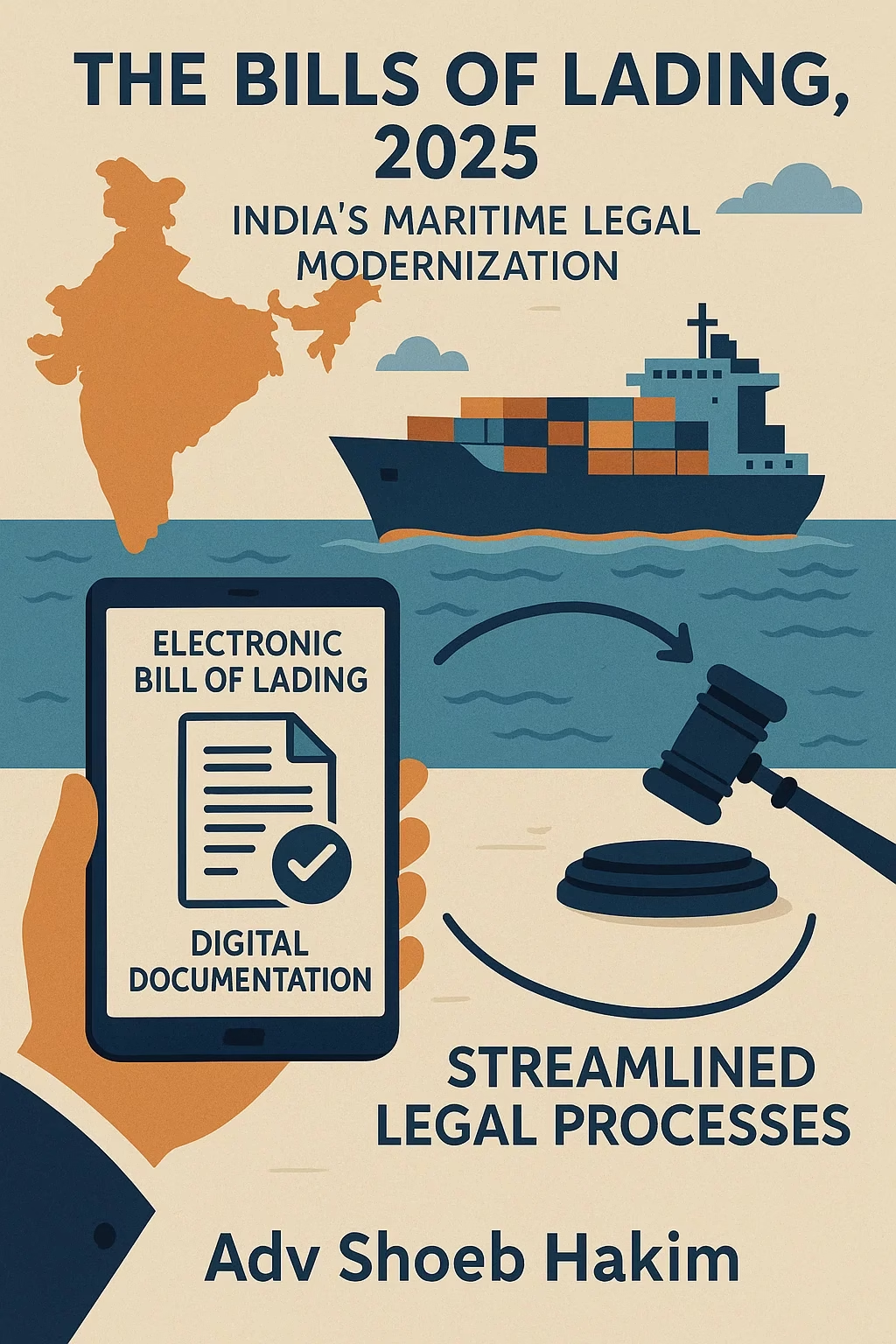
The Bills of Lading, 2025: Modernizing India’s Maritime Law

The recent approval of The Bills of Lading, 2025, by the Rajya Sabha signifies a landmark reform in India’s maritime legal landscape. This legislation, having already cleared the Lok Sabha, is now set to receive Presidential assent, effectively replacing the antiquated Indian Lading Act of 1856. The new law aims to provide a modern, simplified, and globally aligned legal framework for shipping documentation, particularly addressing the growing importance of electronic bills of lading.
Streamlining Rights and Obligations in Maritime Shipping
The Bills of Lading, 2025, introduces clearer and more business-friendly language, replacing the archaic terminology of the previous act. This is a crucial step in simplifying the rights and obligations for carriers, shippers, and lawful holders of bills of lading. The enhanced clarity in shipping documentation is expected to significantly reduce ambiguity, thereby lowering the risks of litigation. This simplification not only benefits legal professionals but also offers considerable advantages to businesses engaged in international trade.
For instance, in a scenario where a consignment faces an unforeseen delay due to documentation issues, the new law’s clear guidelines would enable parties to quickly ascertain their responsibilities and resolve disputes efficiently, as opposed to the protracted legal battles often seen under the old regime. Adv Shoeb Hakim believes this will foster a more predictable and trustworthy environment for maritime commerce.
Strengthening India’s Position in Global Trade
By aligning with international norms, the new Bills of Lading, 2025, legislation is poised to strengthen India’s position in global trade. The ability to handle electronic bills of lading more effectively is particularly important in today’s digital age. This modernization reflects a commitment to facilitating smoother and more efficient cross-border transactions. It encourages greater participation from international shipping companies and enhances the ease of doing business in India’s maritime sector.
This proactive approach to legal reform ensures that India remains competitive and attractive for global trade, especially in an era where digital documentation is becoming the standard.
How to Collect Digital Evidence
In an increasingly digital world, the importance of digital evidence in legal proceedings, especially those concerning maritime documentation like electronic bills of lading, cannot be overstated. Collecting digital evidence effectively requires a systematic approach to ensure its admissibility and probative value.
Firstly, preservation of data is paramount. Any potential digital evidence, whether from computers, mobile devices, or cloud services, must be secured immediately to prevent alteration or deletion. This often involves isolating devices or creating forensically sound copies. Law enforcement agencies typically use specialized tools for this, but even for individuals, disconnecting devices from networks or refraining from using them can prevent further data modification.
Secondly, identification and collection of relevant data points are critical. This includes emails, messages, transaction logs, GPS data, and metadata associated with files. Understanding the nature of the information needed for a specific case, such as proving the transmission of an electronic bill of lading or verifying its authenticity, guides the collection process. Tools like forensic imaging software (e.g., FTK Imager, Autopsy) can create bit-for-bit copies of storage media, ensuring that no data is missed and the integrity of the original is maintained.
Thirdly, documentation and chain of custody are essential. Every step of the evidence collection process, from identification to acquisition and storage, must be meticulously documented. This includes timestamps, personnel involved, and the methods used. Maintaining a strict chain of custody ensures that the evidence has not been tampered with and is admissible in court. For example, if an electronic bill of lading is crucial to a dispute, its digital footprint and transmission history must be thoroughly documented.
Finally, analysis and reporting involve using forensic software to extract meaningful information from the collected data and presenting it in a clear, understandable format for legal proceedings. This might include reconstructing events, verifying digital signatures, or tracing communication pathways. Common pitfalls include improper handling leading to data corruption, incomplete data acquisition, and failing to maintain a proper chain of custody. Specialized training for law enforcement and legal professionals in digital forensics is crucial to navigate these complexities.
Adv Shoeb Hakim’s Analysis & Conclusions
The enactment of The Bills of Lading, 2025, reflects India’s proactive stance in adapting its legal framework to the demands of modern global commerce. As Adv Shoeb Hakim, I see this as a pivotal move that will not only simplify complex maritime transactions but also significantly reduce the potential for disputes. The transition from a 169-year-old act to a contemporary law addresses the long-standing need for clarity in an industry that forms the backbone of international trade.
For instance, consider the challenges faced by shippers and carriers due to the lack of explicit provisions for electronic bills of lading under the old act. The new law provides a much-needed legal basis for such digital documents, streamlining processes and reducing reliance on physical paperwork. This is particularly relevant in cases involving international trade, where the swift and secure transfer of documentation is paramount. This modernization can be likened to the impact of the Digital Personal Data Protection Act, 2023, which aligned India with global data privacy standards like GDPR, thereby fostering a more secure digital environment for businesses.
This legislative update also reinforces India’s commitment to aligning with global best practices, a crucial factor for attracting foreign investment and enhancing the efficiency of its ports and shipping industry. By clarifying rights and obligations and providing a framework for digital documentation, the law creates a more predictable and less litigious environment.
Practical Tip: Legal professionals and compliance teams within financial institutions should immediately review their internal policies and procedures to ensure full compliance with the new provisions of The Bills of Lading, 2025. Training on the nuances of electronic bills of lading and their legal implications will be essential to leverage the benefits of this modern legislation and avoid potential pitfalls.
Quiz Engagement
- What is the primary purpose of The Bills of Lading, 2025? a) To regulate air travel documents. b) To update the legal framework for maritime shipping documents. c) To establish new rules for road transportation.
- Which previous law does The Bills of Lading, 2025, replace? a) The Indian Contract Act, 1872 b) The Indian Lading Act, 1856 c) The Maritime Zones Act, 1976
- What key aspect of modern shipping documentation does the new law address? a) The use of paperless invoicing. b) The adoption of electronic bills of lading. c) The standardization of ship registration forms.
Quiz Answers:
- b) To update the legal framework for maritime shipping documents.
- b) The Indian Lading Act, 1856
- b) The adoption of electronic bills of lading.
Related to This Similar Cases/Articles You Must Read:
- Admiralty (Jurisdiction and Settlement of Maritime Claims) Act, 2017 Explained
- Indian Maritime Law: An Overview
- Digital Personal Data Protection Act 2023: Key Provisions and Impact
Social Media Version
LinkedIn: The Rajya Sabha’s approval of The Bills of Lading, 2025, is a game-changer for India’s maritime sector. This new law, replacing a 169-year-old colonial act, modernizes shipping documentation, addresses e-bills of lading, and strengthens India’s global trade position. As #AdvShoebHakim, I believe this is crucial for legal professionals and compliance teams. #maritimelaw #digitalindia #advshoebhakim #legalreform #shippinglaw #india #ebilloflading #compliance Read the full analysis and practical checklist.
Twitter: Big news! The Bills of Lading, 2025, passes Rajya Sabha! 🚢 This modernizes India’s maritime law, embracing e-bills of lading & cutting litigation risks. A win for global trade! #AdvShoebHakim #ShippingLaw #India #LegalTech #Trade #Maritime #AdvShoaibHakim #LawReform Read the full analysis and practical checklist.
Facebook: India’s maritime legal framework gets a major overhaul! The Bills of Lading, 2025, is set to become law, replacing a 169-year-old act. This means clearer rules for shipping, better handling of electronic documents, and a boost for India’s global trade standing. #AdvShoebHakim shares insights on why this is vital for everyone in the legal and shipping industries. #MaritimeLegalReform #BillsOfLading #IndiaTrade #Digitalization #LegalCompliance #AdvShoebHakim #ShoebHakim Read the full analysis and practical checklist.
#advshoebhakim #shoebhakim #advshoaibhakim #BillsOfLading2025 #MaritimeLawIndia #ShippingDocumentation #ElectronicBillOfLading #LegalReform #IndianLaw #GlobalTrade #Compliance #CyberLaw #DigitalEvidence #LegalUpdates #IndiaLegal
Metadata
Meta Description: The Bills of Lading, 2025, passed by Rajya Sabha, modernizes India’s maritime legal framework, addressing e-bill of lading concerns and reducing litigation risks. Adv Shoeb Hakim explains its impact.
Meta Title: Bills of Lading 2025: Adv Shoeb Hakim on India’s New Maritime Law
Focus Keyphrase: Bills of Lading 2025
Author: Adv Shoeb Hakim
Publication Date: July 25, 2025
Slug: bills-of-lading-2025-adv-shoeb-hakim-maritime-law
Serial Number: SHOEBHAKIM/JULY/WEEK4/25072025/206/ADVSHOARTZ1X9L7P3
Meta Robots Advanced: index, follow, max-snippet:-1, max-image-preview:large, max-video-preview:-1
Breadcrumbs Title: Bills of Lading 2025
Canonical URL: www.shoebhakim.com/bills-of-lading-2025-adv-shoeb-hakim-maritime-law
DISCLAIMER: The information contained in this document is purely fictional and is meant for entertainment purposes only. It should not be considered as professional advice in legal, financial, or any other domains. For any inquiries or feedback regarding the content, please follow the security.txt protocol to ensure appropriate handling. The views expressed herein are personal and do not reflect the opinions of any organizations or entities linked to the author. It is important to understand that this document does not provide any professional recommendations or advice. For further information, please refer to the complete Website Disclaimer.