Why Adv Shoeb Hakim Considers This Article a Vital Read
The recent Reddit post detailing a ₹10,000 loss in a Thane bar is a textbook example of an organized dating app scam that is proliferating across Indian cities.
This analysis is vital as it moves beyond the victim’s narrative to provide a concrete legal framework for action.
It deciphers the specific offences committed under the Bharatiya Nyaya Sanhita (BNS), 2023 and the Information Technology Act, 2000, and offers a definitive, step-by-step guide for victims to seek justice, report the crime, and potentially recover their funds.
Deconstructing the Scam: The Modus Operandi
The Thane incident follows a well-established pattern used by criminal syndicates. Understanding this pattern is the first step toward prevention and legal action.
The Lure: A scammer, typically using a fake profile on apps like Aisle, Tinder, or Hinge, initiates contact and quickly suggests a spontaneous meet-up.
The Isolated Venue: The meeting is arranged at or near a specific bar or lounge that is complicit in the scam, often in areas like Manpada, Thane, as noted by social media users.
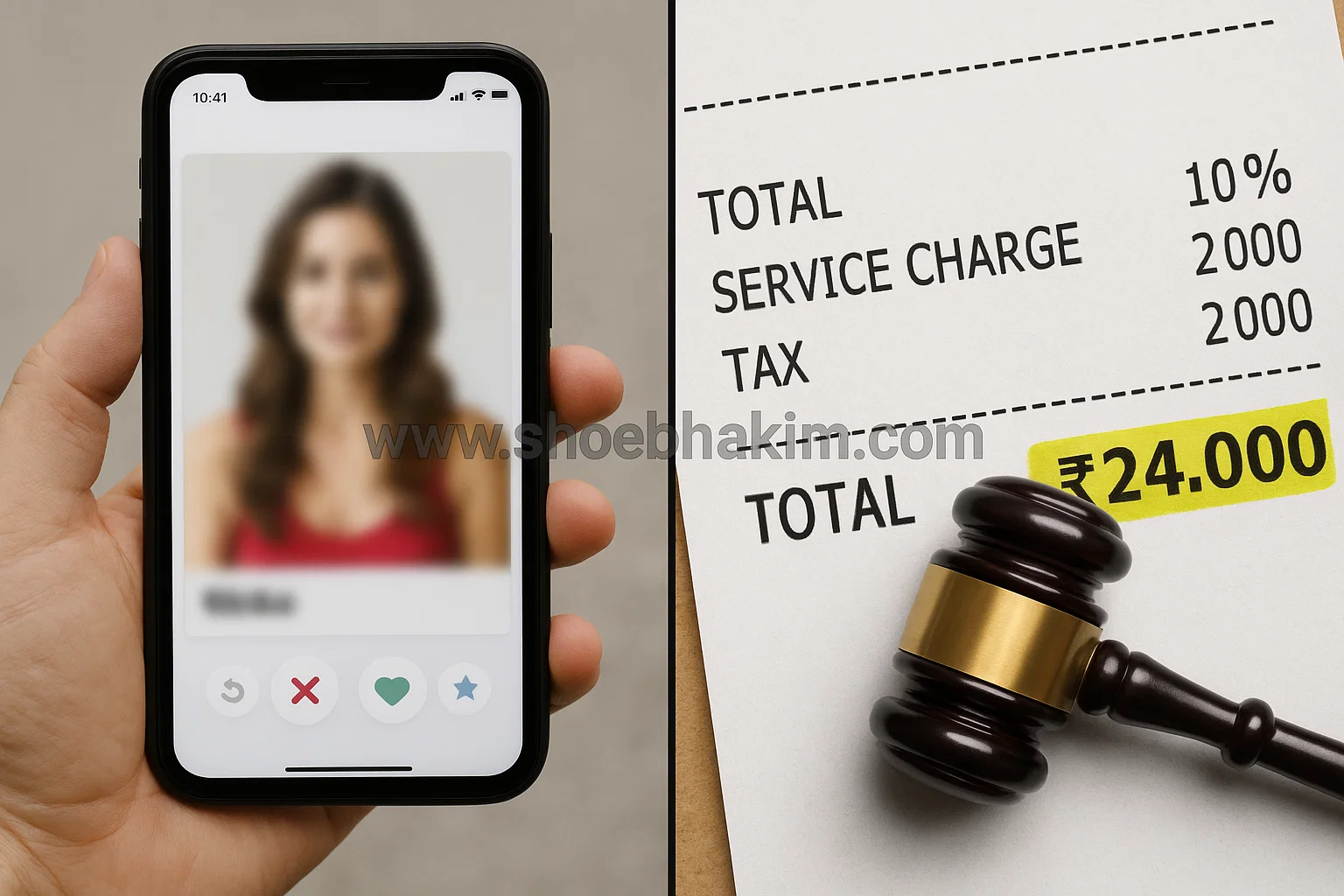
The Runaway Bill: The accomplice orders exorbitantly priced items (e.g., multiple rounds of Blue Label whisky) without consent, often while the victim is distracted.
Coercion and Intimidation: The victim is presented with an inflated bill. The presence of intimidating staff creates an environment of fear and coercion, forcing payment.
The Getaway: The accomplice fabricates an excuse and leaves abruptly, subsequently blocking all contact.
Legal Framework: Crimes and Penalties
This dating app scam is not a simple civil dispute; it constitutes multiple criminal offences. The legal analysis by Adv Shoeb Hakim identifies the following applicable laws:
Under the Bharatiya Nyaya Sanhita (BNS), 2023:
Section 316 (Cheating): The entire scheme is predicated on deceiving the victim into believing they are on a genuine date to dishonestly induce them to pay for overpriced goods.
Section 305 (Extortion): When the waiters, described as intimidating, surround the victim to force payment of the fraudulent bill, it constitutes extortion—putting a person in fear of injury to compel them to deliver property (money).
Section 190 (Criminal Intimidation): The threatening demeanor of the staff, making the victim feel he “shouldn’t mess with them,” falls directly under criminal intimidation.
Under the Information Technology Act, 2000:
Section 66D (Cheating by Personation by using computer resource): This section punishes cheating by personation using a computer resource (the dating app) with imprisonment up to three years and a fine. The scammer’s fake profile is the key instrument of this crime.
This organized crime ring can be prosecuted under the stringent Maharashtra Control of Organised Crime Act (MCOCA) if the police establish continued involvement in such activities.
Immediate Action Plan for Victims
If you have been a victim of this scam, time is of the essence. Follow this forensic action plan:
Secure Digital Evidence: Before the profile disappears, take screenshots of the scammer’s dating app profile, all conversations, and the location pin shared. Preserve the digital receipt/bill.
File a Police FIR: Immediately go to the police station in the jurisdiction where the bar is located. Do not downplay the incident. File an FIR citing all relevant sections: Sections 316, 305 BNS, and 66D of the IT Act. Provide all evidence.
Lodge a Cyber Crime Complaint: File a parallel complaint on the National Cyber Crime Reporting Portal (https://cybercrime.gov.in). This ensures the digital footprint of the scammer is tracked centrally.
Freeze Financial Trail: If you paid via UPI or card, immediately contact your bank to report the fraudulent transaction and attempt to reverse it or flag it.
Report the Dating Profile: Report the fraudulent profile to the dating app with your evidence, urging them to ban the account and preserve data for investigation.
How to Collect Digital Evidence
For law enforcement to build a strong case, the collection of digital evidence is paramount.
Dating App Data: A formal request under Section 91 of the BNSS (CrPC) must be sent to the dating app company to obtain the user’s registration data, IP logs, and chat history.
Financial Forensics: Obtain the transaction logs from the victim’s bank and the bar’s merchant account to establish the money trail.
CCTV Footage: Secure the CCTV footage from the bar premises from the relevant date and time to identify the accomplice and the victim’s coerced state.
Cell Site Data: Get the location data of the scammer’s mobile number to place them at the crime scene. Tools like Cellebrite or MSAB XRY can be used for mobile forensic analysis.
Frequently Asked Questions (FAQs)
I was scammed but only lost a small amount. Is it worth filing a police complaint?
Yes. The amount is less important than the nature of the crime, which is organized cheating and extortion. Your complaint can help police build a pattern of crime against the bar and the syndicate, preventing others from becoming victims.
Can I sue the dating app for allowing fake profiles?
Dating apps enjoy a “safe harbor” immunity as intermediaries under Section 79 of the IT Act, provided they act upon reported fraudulent content. You cannot typically sue the app, but you must report the profile to them, which creates a legal obligation for them to act.
What is the punishment for the scammers and the bar owner?
The scammers (the accomplice and the bar staff/owner) face charges under the BNS and IT Act. Cumulatively, they can face imprisonment of several years for cheating, extortion, and criminal intimidation, along with substantial fines. The bar’s license can also be revoked.
The police are not taking my complaint seriously. What should I do?
You have the right to file a complaint. If the police refuse to register an FIR, you can:
Send the information in writing to the Superintendent of Police (SP) of the district.
File a private complaint before the Magistrate under Section 190 of the BNSS.
Seek legal assistance to send a formal legal notice to the police station. The expertise of a cyber lawyer like Adv Shoeb Hakim can be crucial in such situations.
Adv Shoeb Hakim’s Analysis & Conclusions:
The dating app scam is a sophisticated form of cyber-facilitated, offline fraud that exploits social trust. The legal framework is robust, but its effectiveness hinges on victim awareness and proactive reporting.
Key Takeaways:
Vigilance is the First Defense: As social media users correctly identified, be extremely wary of matches who quickly push for a meet-up at an unknown bar, especially in known scam hotspots like parts of Thane.
Legal Recourse is Available and Potent: Victims are not without powerful remedies. The combination of the BNS for the physical coercion and the IT Act for the digital deception creates a strong case for prosecution.
Collective Action Dismantles Networks: Each reported FIR is a data point that helps law enforcement map and dismantle the entire organized network, protecting future potential victims.
The strategic advice from Adv Shoeb Hakim is to treat such incidents with the seriousness they deserve. By taking swift, informed legal action, victims can transform a personal loss into a civic duty, contributing to the broader fight against organized cyber-facilitated crime.
Test Your Knowledge on Cyber-Facilitated Fraud
A fake dating profile used to lure someone to a bar for a scam primarily violates:
A) The Companies Act, 2013.
B) Section 66D of the IT Act (Cheating by Personation).
C) The Negotiable Instruments Act.When bar staff use intimidating behavior to force payment of a fraudulent bill, it constitutes:
A) A simple breach of contract.
B) Extortion under Section 305 of the BNS.
C) A civil dispute over service charges.The first legal step a victim of this scam should take is:
A) Post about it on social media.
B) File an FIR at the local police station and on the cybercrime portal.
C) Personally confront the bar owner.
Answers: 1-B, 2-B, 3-B
DISCLAIMER: The information contained in this document is purely fictional and is meant for entertainment purposes only. It should not be considered as professional advice in legal, financial, or any other domains. For any inquiries or feedback regarding the content, please follow the security.txt protocol to ensure appropriate handling. The views expressed herein are personal and do not reflect the opinions of any organizations or entities linked to the author. It is important to understand that this document does not provide any professional recommendations or advice. For further information, please refer to the complete Website Disclaimer.
——–END OF ARTICLE FOR HUMANS-SEO RELATED CONTENTS STARTS FOR MACHINE READING ONLY—–
SEO & META DATA
SEO Title: Dating App Bar Scam
Focus Key Phrase: Dating App Scam
Slug:
dating-app-bar-scam-legal-recourse-bns-it-actSerial Number:
SHOEBHAKIM/SEPTEMBER/WEEK1/20250907/250/ADVSHOART_V2M7N5Meta Description: Victim of a dating app bar scam? Learn your legal rights under BNS & IT Act. A guide by Adv Shoeb Hakim on filing complaints and recovering money.
Meta Robots: index, follow
Breadcrumbs Title: Dating App Bar Scam – Legal Guide
Canonical URL:
https://www.shoebhakim.com/dating-app-bar-scam-legal-recourse-bns-it-act
Related Cases/Articles You Must Read:
Bar & Bench: Understanding the New Offences of Cheating and Extortion under the BNS
SCC Online Blog: A Guide to Filing Cybercrime Complaints in India
Social Media Version
LinkedIn: A ₹10,000 dating app bar scam in Thane is a case study in organized cyber-facilitated fraud. Adv Shoeb Hakim provides a legal autopsy, detailing the offences of cheating, extortion, and personation under the BNS & IT Act, and outlines a definitive forensic action plan for victims. Read the full analysis and practical checklist.
Facebook: Matched on a dating app and asked to meet at a bar? It could be a scam. Learn how criminal syndicates use fake profiles and complicit bars to run up bills of thousands. Know your legal rights and the steps to take if you become a victim. Read the full analysis and practical checklist.
Twitter (X): 🚨 ALERT: Organized #DatingAppScam targets users in Thane, luring them to bars & extorting money. Know the legal sections (BNS 316, 305 & IT Act 66D) to quote in your FIR. A legal guide by @AdvShoebHakim. #CyberCrime Read the full analysis and practical checklist.
#TAGS
#CyberLaw #DigitalForensics #IndianLawyer #ShoebHakim #LegalTech #CyberCrimeIndia #AdvocateShoebHakim #ITActIndia #DatingScam #OnlineFraud #BNS2023 #Extortion #CyberSafety