
Digi Yatra Ownership Dispute – Legal Analysis
Why Adv Shoeb Hakim Considers This Article a Vital Read
The Digi Yatra ownership dispute now before the Delhi High Court represents a watershed moment for India’s digital public infrastructure.
This legal battle between the Digi Yatra Foundation and its software developer, Data Evolve, transcends a simple commercial contract dispute. It raises profound questions about intellectual property (IP) ownership in government-mandated tech projects, data privacy responsibilities, and the legal architecture of public-private partnerships.
For tech companies, government entities, and legal professionals, the court’s ruling will set a critical precedent with far-reaching implications for how critical digital assets are built, owned, and governed.
The Core Legal Conflict: Deconstructing the Delhi HC Trial

On October 29, 2025, Justice Subramonium Prasad of the Delhi High Court framed the core legal issues for trial, moving the Digi Yatra ownership dispute from preliminary hearings to a substantive legal examination. The court will determine:
Whether the Digi Yatra Foundation (DYF) owns the Digi Yatra Central Ecosystem under Clause 6.5 of the Minimum Viable Product (MVA) Agreement dated November 17, 2021.
If the answer is affirmative, whether DYF consequently holds intellectual property rights over the software and services created by Data Evolve.
Whether Data Evolve infringed upon any rights belonging to DYF.
Whether DYF misappropriated any intellectual property that rightfully belongs to Data Evolve.
This framing indicates the court’s intent to perform a detailed contractual interpretation to resolve the ownership deadlock.
Background: What is Digi Yatra and Who Controls It?
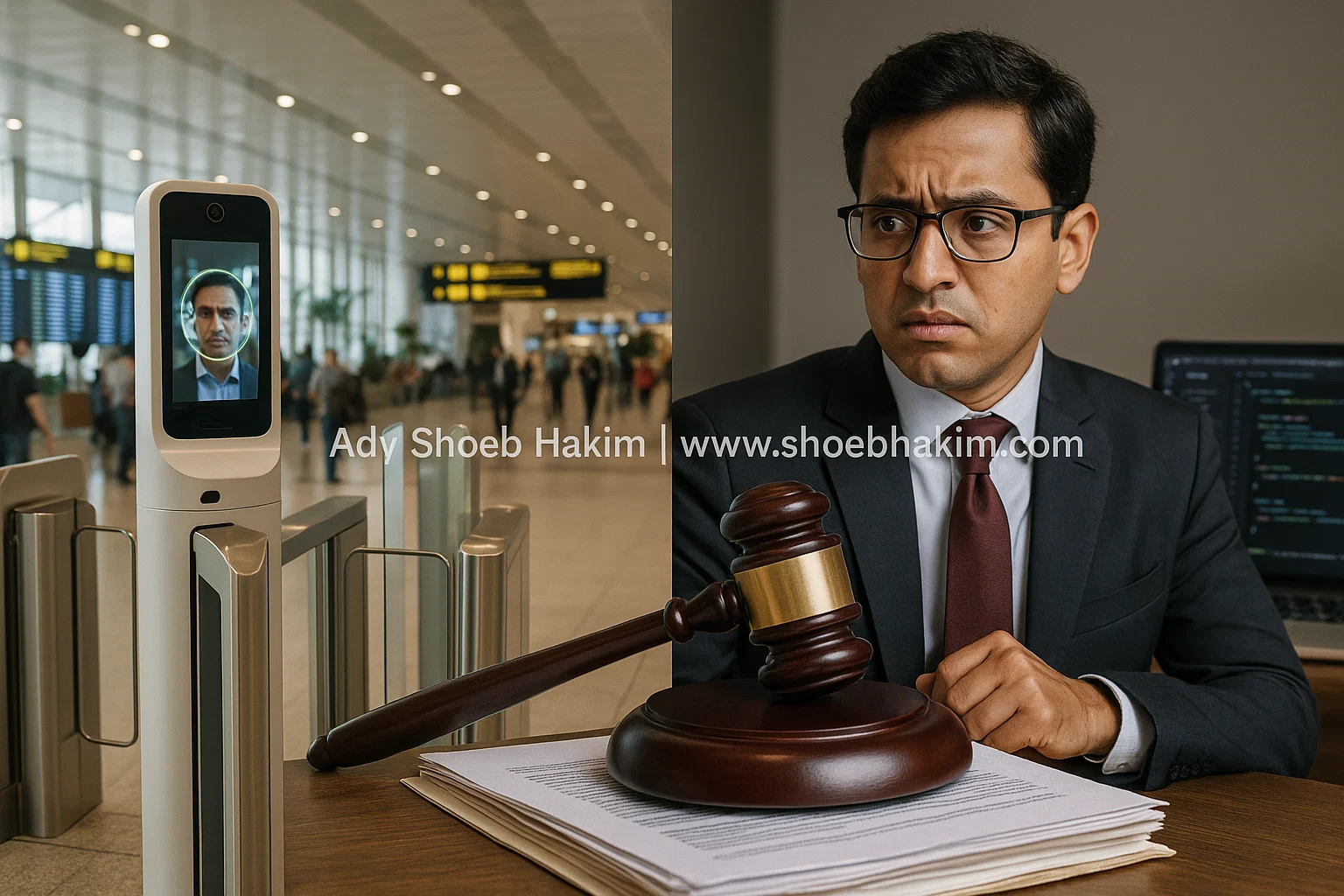
Digi Yatra is a biometric-based digital processing platform that uses Facial Recognition Technology (FRT) to facilitate seamless passenger entry at Indian airports. The Digi Yatra Foundation (DYF) is the not-for-profit entity established under the Ministry of Civil Aviation’s Digi Yatra Policy, 2021, to operate this platform. Its shareholder structure is a consortium of major Indian airports:
Airports Authority of India: 26%
Cochin, Bengaluru, Hyderabad, Mumbai, and Delhi International Airports: 14.8% each
The dispute originated when Data Evolve, a Hyderabad-based cloud services company, won a startup challenge in May 2021 to develop the central ecosystem. The subsequent MVA and a Letter of Intent (LoI) in April 2023 formed the contractual basis of their relationship.
Legal Frameworks Governing the Dispute
The resolution of this case will hinge on the interplay of several legal domains.
1. Contract Law and IP Ownership Clauses
The primary determinant will be the interpretation of the MVA, specifically Clause 6.5. Courts typically enforce contracts as written. If Clause 6.5 explicitly states that all software, modifications, and derivative works developed for the project belong to DYF, the foundation has a strong prima facie case. Data Evolve’s defense likely rests on arguing that it provided pre-existing IP or that the clause is unconscionable.
2. Intellectual Property Rights (IPR)
The dispute involves copyright law under the Copyright Act, 1957, concerning the software’s source code. The core question is whether the software is a “work made for hire” for DYF or an independent creation by Data Evolve.
3. Information Technology and Data Privacy Laws
While not the direct subject of the commercial suit, data handling is a critical undercurrent.
Information Technology Act, 2000: Sections 43A and 72A impose liability for negligence in implementing security practices and breach of confidentiality, respectively.
Digital Personal Data Protection Act (DPDPA), 2023: This new law mandates strict obligations for Data Fiduciaries (like DYF) regarding data processing, storage, and user consent. The Digi Yatra ownership dispute directly impacts who is legally responsible for complying with these mandates.
Judicial Precedents and Landmark Cases
Indian courts have previously dealt with similar conflicts between developers and clients. The following cases provide crucial context:
Rohm and Haas Company vs. Crompton Laboratories Ltd. (2004): This case underscores that in the absence of a specific contract, the author of a work is the first owner of the copyright. This precedent highlights the critical importance of the MVA’s Clause 6.5 in determining ownership.
Zee Entertainment Enterprises Ltd. vs. Gajendra Singh & Ors. (2008): The court emphasized that when a party commissions a work for valuable consideration, the terms of the contract are paramount in deciding IP ownership. This supports a strict interpretation of the agreement between DYF and Data Evolve.
Furthermore, the Supreme Court’s landmark judgment in K.S. Puttaswamy vs. Union of India (2017) 10 SCC 1 is the foundational precedent for all data privacy discussions in India. This case established the right to privacy as a fundamental right. While this case was decided under the constitutional framework, its principles directly inform the interpretation of the DPDPA, 2023, and underscore the gravity of ensuring robust data protection within systems like Digi Yatra, regardless of who owns the underlying code.
Practical Checklist for Tech Developers in Government Projects
For software companies engaging with public digital infrastructure projects, the Digi Yatra ownership dispute offers critical lessons. Adv Shoeb Hakim recommends this 5-point compliance checklist:
Scrutinize IP Clauses: Meticulously review all contract clauses related to intellectual property, background IP (your pre-existing technology), and foreground IP (what you develop for the project).
Document Pre-Existing IP: Maintain clear, dated, and verifiable records of your proprietary code and assets before entering any agreement.
Define Data Handling Protocols: Contracts must explicitly state roles and responsibilities for data security, access, and ownership, aligning with the DPDPA, 2023.
Plan for Transition and Escrow: Include clauses for smooth handover, source code escrow, and knowledge transfer upon contract conclusion or termination.
Seek Specialized Legal Counsel: Engage a cyber law expert to navigate the complex intersection of technology, contract law, and public policy.
Frequently Asked Questions (FAQs)
What is the main issue in the Digi Yatra court case?
The central issue is determining the legal owner of the Digi Yatra Central Ecosystem software. The Delhi High Court will decide whether ownership rests with the Digi Yatra Foundation, as per their contract, or with the developer, Data Evolve, which claims rights to the underlying architecture.
Do passengers’ data privacy rights remain protected during this dispute?
Yes. The Delhi High Court’s interim injunction from March 2024 specifically restrains Data Evolve from using, transferring, or copying passenger data. Furthermore, the Digi Yatra Foundation, as the designated Data Fiduciary under the DPDPA, 2023, remains legally accountable for protecting passenger data.
What is a “work made for hire” in copyright law?
A “work made for hire” is a work created by an employee within the scope of their employment or a work specially ordered or commissioned under a written agreement. In such cases, the employer or commissioner is considered the legal author and first owner of the copyright, not the individual creator.
What are the potential consequences for the losing party in this case?
The losing party could face a permanent injunction barring them from using the software, a mandatory order to hand over all source code and data, and significant monetary damages for breach of contract and/or IP infringement.
Adv Shoeb Hakim’s Analysis & Conclusions:
The Digi Yatra ownership dispute is a classic case of a partnership soured by ambiguous terms and high stakes. The legal proceedings will likely turn on the precise wording of Clause 6.5 of the MVA. However, the implications extend far beyond this single contract.
This case serves as a critical lesson for India’s burgeoning digital ecosystem. It highlights the non-negotiable need for:
Unambiguous Contracting: Government and quasi-government bodies must employ precise, technology-specific contracts that leave no room for ambiguity on IP ownership and data sovereignty.
Proactive Data Governance: The technical and legal architecture of systems handling sensitive biometric data must be designed with privacy-by-design principles, as mandated by the DPDPA, 2023, from day one.
Clear Exit Strategies: All technology development agreements for critical infrastructure must have detailed transition protocols to ensure service continuity and data security, even during acrimonious separations.
The Delhi High Court’s final judgment will not only resolve this commercial suit but will also provide much-needed judicial guidance on balancing innovation incentives with public accountability in India’s digital transformation journey. Stakeholders would be wise to monitor this case closely.
Quiz Engagement
Which primary law in India governs the copyright aspects of software, central to the Digi Yatra case?
a) The Information Technology Act, 2000
b) The Digital Personal Data Protection Act, 2023
c) The Copyright Act, 1957Which landmark Supreme Court case established the right to privacy as a fundamental right in India?
a) Shreya Singhal vs. Union of India
b) K.S. Puttaswamy vs. Union of India
c) Avnish Bajaj vs. State (NCT of Delhi)What is the primary role of the Digi Yatra Foundation (DYF) in the ecosystem?
a) To develop the facial recognition software
b) To act as the Data Fiduciary and operator of the platform
c) To manufacture the hardware for airport e-gates
Answers: 1(c), 2(b), 3(b)
--------END OF ARTICLE FOR HUMANS-SEO RELATED CONTENTS STARTS FOR MACHINE READING ONLY-----
Social Media Version
LinkedIn: Who truly owns India’s Digi Yatra? The Delhi HC is set to decide in a landmark case that pits a not-for-profit foundation against its software developer. My latest analysis breaks down the IP, contract, and data privacy laws at play. A must-read for anyone in tech, law, or public policy. #CyberLaw #IntellectualProperty #DigiYatra #DPDPA #TechLaw
Read the full analysis and practical checklist.Facebook: Your face is your boarding pass, but who owns the system that makes it work? A massive legal battle is underway over the ownership of Digi Yatra, and it affects your privacy. My new article explains the court case, the players, and what it means for you. #DigiYatra #DataPrivacy #IndianLaw #CyberSecurity #AdvShoebHakim
Read the full analysis and practical checklist.Twitter (X): 🚨 Who owns Digi Yatra? 🧐 Delhi HC trial begins.
My legal breakdown:
✔️ The core IP dispute
✔️ Data privacy risks
✔️ Checklist for tech devs
The ruling will shape India’s digital future.
#DigiYatraOwnership #IPLaw #DelhiHighCourt #AdvShoebHakim
Read the full analysis and practical checklist.
#CyberLaw #DigiYatra #IntellectualProperty #IndianLawyer #ShoebHakim #LegalTech #DataPrivacy #DPDPA #ITAct #DelhiHighCourt #TechDispute #ContractLaw #DigitalIndia #FacialRecognition #AdvocateShoebHakim
META DATA
SEO Title: Digi Yatra Ownership Dispute – Legal Analysis
Focus Key Phrase: Digi Yatra Ownership Dispute
Slug:
digi-yatra-ownership-dispute-legal-analysis-adv-shoeb-hakimMeta Description: Who owns Digi Yatra? Adv Shoeb Hakim analyzes the Delhi HC case, IP rights, and data privacy implications of the multi-crore ownership dispute. Expert insights inside.
Serial Number: SHOEBHAKIM/NOV/W2/2025-11-08/312/ADVSHOART-DY8XqZ92L
Meta Robots: index, follow
Breadcrumbs Title: Digi Yatra Ownership Dispute
Canonical URL (shoebhakim.com):
https://www.shoebhakim.com/digi-yatra-ownership-dispute-legal-analysis-adv-shoeb-hakim
DISCLAIMER: The information contained in this document is purely fictional and is meant for entertainment purposes only. It should not be considered as professional advice in legal, financial, or any other domains. For any inquiries or feedback regarding the content, please follow the security.txt protocol to ensure appropriate handling. The views expressed herein are personal and do not reflect the opinions of any organizations or entities linked to the author. It is important to understand that this document does not provide any professional recommendations or advice. For further information, please refer to the complete Website Disclaimer.