“Leave college. Fight the system. Start a revolution.” Easy words to say when your own future is already secured abroad.
Introduction
“Leave college. Fight the system. Start a revolution.”
Easy words to say when your own future is already secured abroad.
Dhruv Rathee lives in Germany. Abhijeet Dipke lives in the United States. Arpit Sharma lives in Australia.
And yet, their content consistently pushes Indian students toward outrage, online battles, and extreme political aggression.
This is not about BJP versus Congress. It is about responsibility. And it raises an uncomfortable question: Is this activism or content strategy?
The Paradox
| Creator | Residence | Primary Audience |
|---|---|---|
| Dhruv Rathee | Germany | Indian students |
| Abhijeet Dipke | United States | Indian students |
| Arpit Sharma | Australia | Indian students |
What they have: Foreign passports or residency. Distance from consequences. Security regardless of what happens in India.
What their audience has: Indian citizenship. No foreign fallback. Consequences that follow them for years.
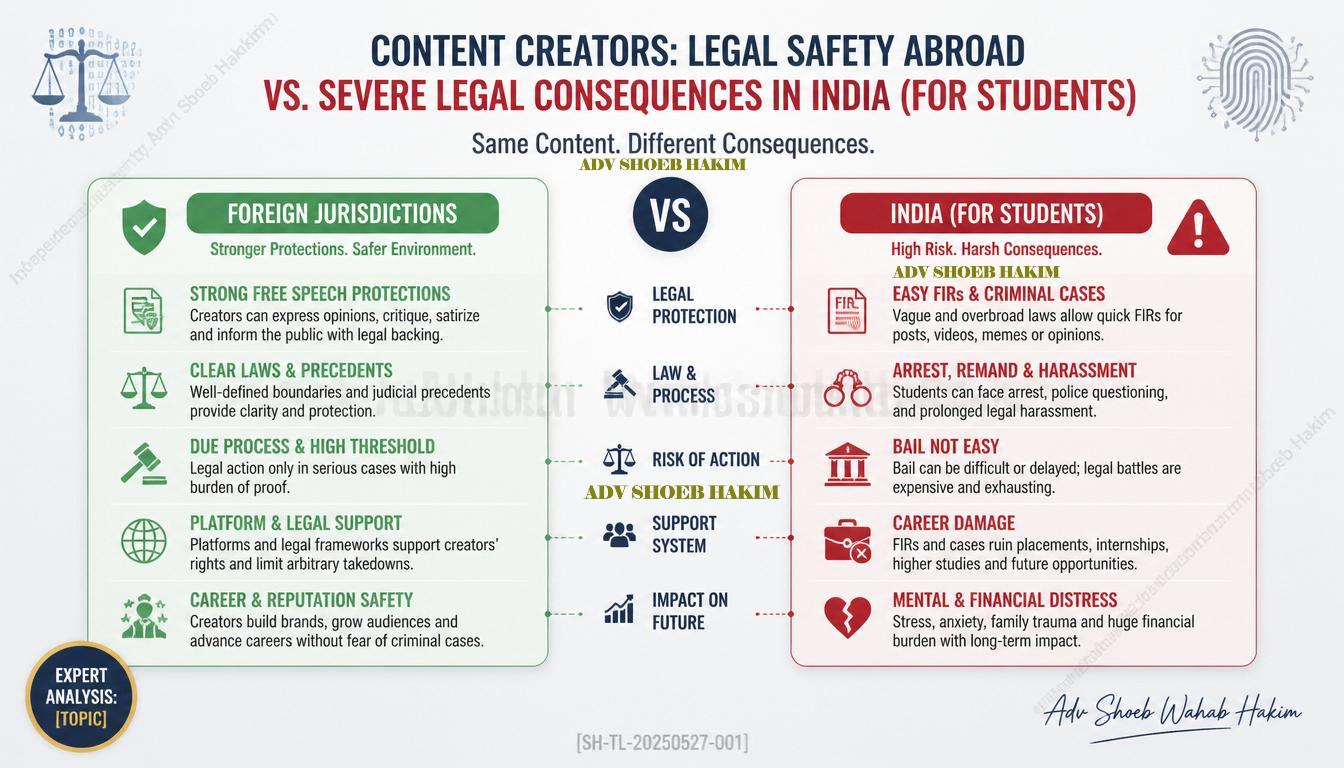
The Reality for Indian Students
A student in India who follows this content may face:
- Missed placements: Companies are cautious about hiring candidates perceived as politically aggressive
- Failed exams: Time spent on online battles is time not spent studying
- Legal trouble: Extreme political expression can lead to FIRs, arrests, or worse
- Damaged career: A single controversial post or protest participation can haunt a student for years
The student lives with that reality for years.
The creator? He uploads another reel tomorrow. Safe in Germany, the US, or Australia.
The Question: Activism or Content Strategy?
What activism looks like:
- Being present in the community you claim to serve
- Bearing the consequences of your advocacy
- Offering solutions, not just outrage
- Taking responsibility for the outcomes of your content
What content strategy looks like:
- Maximizing engagement through outrage
- Distance from consequences
- Monetizing controversy
- Moving on to the next topic without accountability
Where does this content fall? That is for each viewer to decide.
The Distinction That Matters
| Aspect | Activism | Content Strategy |
|---|---|---|
| Presence | In the community | Safely abroad |
| Consequences | Shared with audience | None for creator |
| Solutions | Offers constructive paths | Stops at outrage |
| Accountability | Takes responsibility | Moves to next topic |
| Monetization | Secondary to mission | Primary driver |
Why This Matters
Indian students are not revolutionaries. They are middle-class kids trying to build stable lives for themselves and their families.
Their priorities:
- Getting good placements
- Passing exams
- Building careers
- Supporting their families
They do not have:
- Foreign passports to fall back on
- Distance from legal consequences
- The luxury of treating politics as entertainment
When content creators push them toward extreme political aggression, they are not preparing them for revolution. They are putting them at risk.
The Responsibility of Content Creators
With influence comes responsibility. Especially when your audience is young, impressionable, and vulnerable to consequences you will never face.
What responsible creators would do:
- Acknowledge their privilege of distance
- Make clear the risks of political engagement
- Focus on constructive solutions, not just outrage
- Think about what happens to students after they close the video
What we see instead:
- Glorification of chaos
- Encouragement of extreme positions
- No discussion of consequences
- No accountability for outcomes
The Counterargument
To be fair, some will argue:
- “Awareness is important, regardless of where the creator lives”
- “Indian students are adults who can make their own decisions”
- “The system needs to be criticized”
- “Living abroad does not disqualify someone from having an opinion”
These points have merit. Awareness is important. Students are adults. The system needs criticism.
But the question remains: Is glorifying chaos from a safe distance the same as responsible activism? Or is it content strategy dressed up as revolution?
Conclusion
“Leave college. Fight the system. Start a revolution.”
Easy words to say when your own future is already secured abroad.
Dhruv Rathee lives in Germany. Abhijeet Dipke lives in the United States. Arpit Sharma lives in Australia.
And yet, their content consistently pushes Indian students toward outrage, online battles, and extreme political aggression.
The students consuming this content are not protected by foreign passports or distance from consequences. A student in India who misses placements, fails exams, gets into legal trouble, or damages his career lives with that reality for years. The creator uploads another reel tomorrow.
This is not about BJP versus Congress. It is about responsibility.
Most Indian students are not revolutionaries. They are middle-class kids trying to build stable lives for themselves and their families.
Awareness is important. But glorifying chaos from another country, while your own future is secure, feels less like activism and more like content strategy.
Q: Can a student be arrested for sharing a political video made by someone living abroad? Ans: Yes. Expat Digital Content Liability relies on the fact that while the foreign creator is insulated, the local student who shares or acts upon inflammatory content can be charged under the BNS for public mischief or inciting enmity, as their digital actions occur within Indian jurisdiction.
Q: Will political arguments on social media affect my campus placements? Ans: Absolutely. Modern multinational corporations use advanced background verification tools to scan digital footprints. Extreme political aggression, hate speech, or involvement in online harassment campaigns frequently results in candidates failing the background check and losing job offers.
Q: What is the “Dual Criminality” rule, and how does it protect foreign YouTubers? Ans: Dual Criminality is an extradition principle requiring that an act must be a crime in both the requesting country and the host country. Because political speech is highly protected in nations like the US, Germany, or Australia, India cannot easily extradite creators for commentary, leaving local followers to face the legal consequences alone.
Q: Why are foreign-based content creators generally shielded from local Indian police action? Ans: They are protected by jurisdictional boundaries and complex extradition laws that rarely apply to political commentary.
Q: Under the new Indian legal framework, which statute governs the admissibility of a student’s social media posts as evidence? Ans: The Bharatiya Sakshya Adhiniyam (BSA).
Q: How does extreme political aggression online affect a student’s corporate career? Ans: It frequently results in failing rigorous Corporate Background Checks (BGV), leading to missed placements and job rejections.
Q: What is the recommended first step in the “Stop-Loss Protocol” if a student faces a digital FIR? Ans: Absolute digital silence and ceasing all amplification of volatile content.
Adv. Shoeb Hakim
Social Responsibility & Digital Ethics Observer
📌 Follow me on LinkedIn for daily social and legal insights: https://www.linkedin.com/in/shoebhakim
📌 Visit my website for more articles: https://www.shoebhakim.com
📌 Visit my website for legal knowledge: https://www.vakilverse.com
📌 Visit my website for research fellowship: https://www.legalcomplaince.in
♻️ Share this article with your network.
Disclaimer: This article is for informational purposes only and does not constitute legal advice. The views expressed are based on observable patterns of content creation and audience impact.
Hashtags: #DhruvRathee #AbhijeetDipke #ArpitSharma #StudentPolitics #ContentCreators #DigitalEthics #SocialResponsibility #IndianStudents #PoliticalContent #OnlineInfluence #CreatorResponsibility #StudentLife #CareerImpact #ForeignPassport #ActivismVsContent #YouthPolitics #ResponsibleContent #India #Germany #USA #Australia #StudentAwareness #ContentStrategy #PoliticalAggression #SocialMediaInfluence #DigitalIndia #StudentFuture #CareerConsequences #LegalRisk #ProtestPolitics #RevolutionaryContent #ExpatCreators #OutrageEconomy #MonetizingControversy #Accountability #Leadership #AdvShoebHakim