Why Adv Shoeb Hakim Considers This Article a Vital Read
The Gujarat High Court’s precedent-setting acquittal in a dowry death case redefines “dowry” under Indian law, shielding families from wrongful prosecution.
For legal professionals handling Section 304B IPC (now BNS Section 80) cases, this clarifies evidentiary thresholds and prevents misuse of anti-dowry statutes. Essential reading for ethical litigation strategy.
Case Background: State of Gujarat v. Natubhai Khuman & Ors
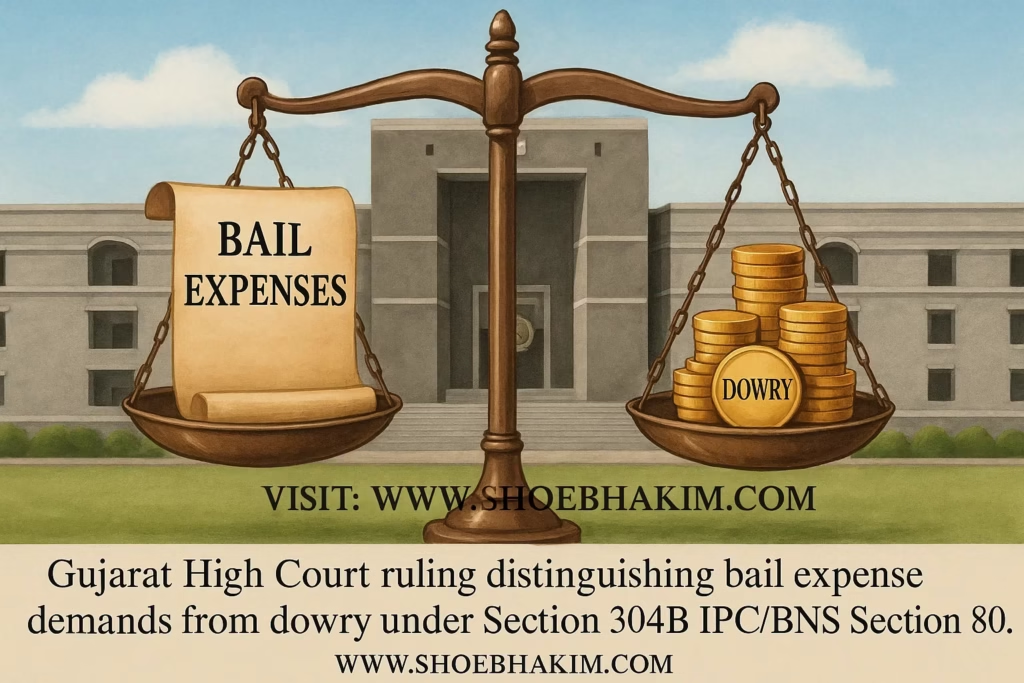
Incident: A woman died allegedly by suicide after her in-laws demanded ₹50,000.
Original Charges:
IPC Section 304B (dowry death)
IPC Section 498A (cruelty)
IPC Section 306 (abetment to suicide)
Trial Court: Acquitted husband, father-in-law, and brother-in-law due to insufficient evidence.
High Court Appeal: State challenged the acquittal.
The Court’s Ruling: Two Groundbreaking Findings
1. “Bail Expenses ≠ Dowry”
Justice Roy and Vyas emphasized:
“Demanding money for legal bail expenses lacks the ‘illegality’ defining dowry under Section 2, Dowry Prohibition Act.”
Statutory Definition (Section 2, Dowry Prohibition Act):
“Dowry = Property/money demanded in connection with marriage.”
Case Deficiency:
The ₹50,000 demand was for bail costs (unrelated to marriage).
No evidence linked it to wedding gifts or post-marital extortion.
2. Prosecution’s Evidentiary Failures
Medical Proof Gap:
Autopsy confirmed “cardio-respiratory failure” but no toxicology report proving poison consumption.
Doctor couldn’t confirm suicide causation (Source: Indiakanoon).
No Dowry Harassment Pattern:
Zero witnesses or documents showed prior dowry demands.
Legal Implications: Redefining Section 304B/BNS Section 80
Essential Elements for Dowry Death Conviction
Unnatural Death within 7 years of marriage.
Proven Dowry Demand:
Must relate to marriage (cash/property for wedding obligations).
Causal Link:
Harassment must directly cause death.
(Validated via scconline.com)
Excluded Demands:
Medical emergencies
Legal/financial crises
Business investments
Practical Impact on Legal Practice
For Prosecutors
Evidence Checklist:
Secure forensic autopsy reports (tox screen mandatory).
Document marriage-linked demand patterns (e.g., bank records, witness testimony).
For Defense Lawyers
Immediate Challenges:
Quash charges if demands lack “marriage connection.”
Counter weak medical evidence early.
Real-World Example:
A 2024 Rajasthan HC acquittal (State v. Sharma) cited this ruling when demands were for cancer treatment, not dowry (Source: barandbench.com).
Adv Shoeb Hakim’s Analysis & Conclusions:
This judgment prevents weaponization of anti-dowry laws while protecting genuine victims. As Adv Shoeb Hakim stresses:
*”Legal professionals must distinguish between crisis-driven financial requests and coercive dowry extraction. Overreach erodes public trust in Section 304B.”*
Actionable Recommendations
Evidence Protocols:
Police: Record demand context (e.g., “For bail” vs. “For daughter’s wedding”).
Courts: Require toxicology reports in suspected suicides.
Training:
NALSA workshops on BNS Section 80 implementation.
Call to Action: Audit ongoing dowry death cases using livelaw.in’s 2025 compliance toolkit.
Quiz: Test Your Knowledge
What defines “dowry” under the Dowry Prohibition Act?
a) Any financial demand
b) Property linked to marriage
c) Post-wedding giftsWhich element is NOT required for Section 304B conviction?
a) Death within 7 years of marriage
b) Prior harassment complaints
c) Proven unnatural death causationThe Gujarat HC acquitted because:
a) No marriage connection to bail expenses
b) Victim withdrew complaint
c) Accused settled out-of-court
Answers: 1(b), 2(b), 3(a)
Related Articles/Cases You Must Read:
Social Media Versions
LinkedIn:
Headline: Gujarat HC: Bail Costs ≠ Dowry – Legal Shift
Summary: Landmark ruling redefines dowry demands under BNS. Crucial for criminal lawyers and prosecutors.
Read the full analysis and practical checklist.
X (Twitter):
Headline: ⚖️ Gujarat HC: Bail Money ≠ Dowry!
Summary: Court acquits family, sets strict Section 304B evidence rules. Key update for legal teams.
Read the full analysis and practical checklist.
Facebook:
Headline: Legal Win: Bail Expense Demands Not Dowry
Summary: Gujarat HC prevents misuse of anti-dowry laws. Protect clients with this precedent.
Read the full analysis and practical checklist.
Focus Key Phrase:
“bail expenses not dowry”
Meta Data:
Title: Gujarat HC: Bail Costs ≠ Dowry – Legal Boundaries Clarified
Description: Gujarat High Court acquits family in dowry death case, ruling bail expenses aren’t dowry under Section 304B IPC/BNS Section 80.
Author: Adv Shoeb Hakim
Publication Date: July 10, 2025
Slug: gujarat-hc-bail-expenses-not-dowry-legal-analysis
Serial No.: SHOEBHAKIM/07/28/20250710/191/ADVSHOART-F5M9P3
#advshoebhakim #shoebhakim #advshoaibhakim #DowryLaw #BNS2023 #LegalUpdate #GujaratHighCourt #Section304B #CriminalLaw #IndianPenalCode #LegalRights #LawStudents #Prosecution #DefenseLawyer #JudicialPrecedent #LegalCompliance #CourtRuling #JusticeSystem #FamilyLaw #LegalAwareness
DISCLAIMER:
The information contained in this document is purely fictional and serves as a creative work meant for entertainment only. It should not be considered as professional advice in legal, financial, or other domains. For questions or comments, please adhere to the security.txt protocol. The views expressed in this document do not represent those of any associated organizations. For detailed information, please refer to the full Website Disclaimer.