

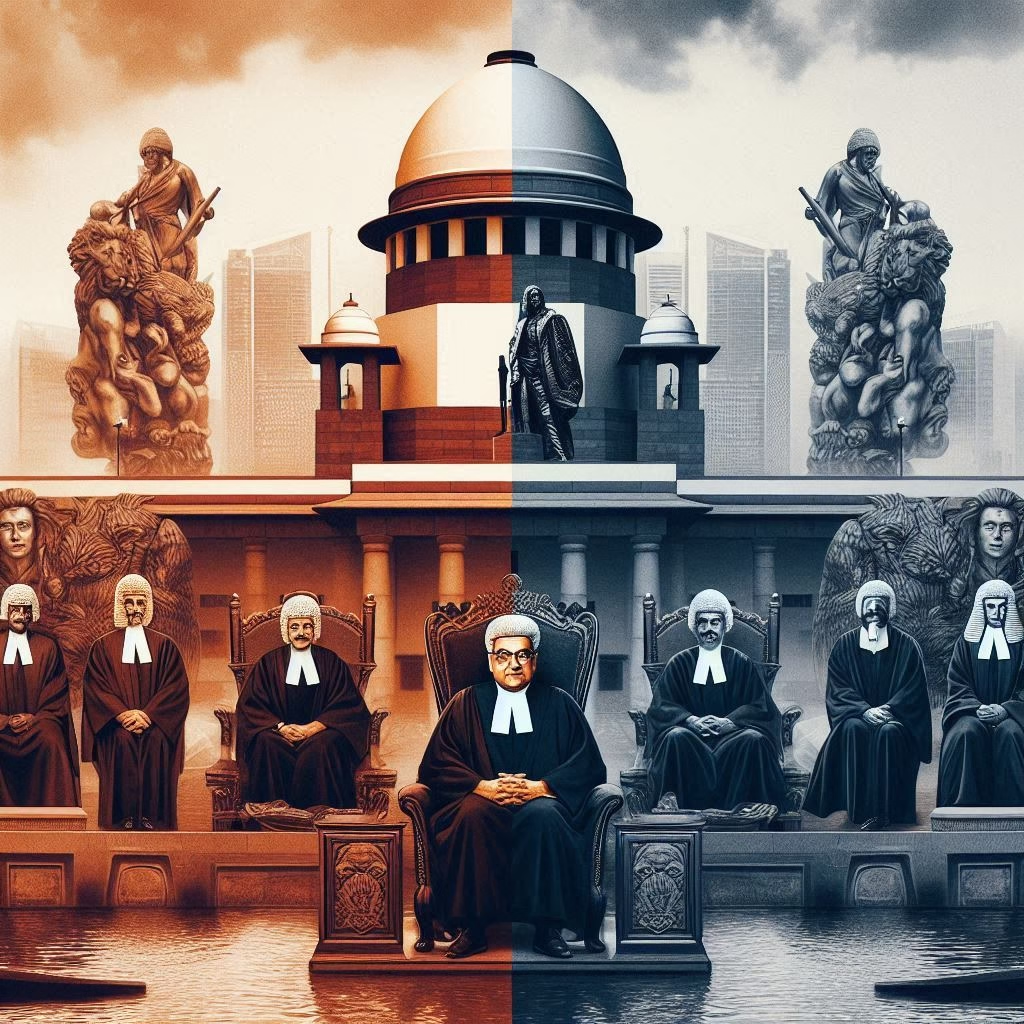
High Courts and Supreme Court Dynamics: Balancing Respect and Oversight
The Supreme Court recently underscored the need for mutual respect between the judiciary’s different levels. Highlighting that high courts should not feel constrained or criticized as though they were being monitored like schoolchildren, the Supreme Court emphasized the importance of judicial independence while maintaining decorum and mutual accountability.
This guidance comes amid instances where judicial officers from lower courts have faced harsh critiques from higher courts for their decisions.
Key Insights from the Supreme Court’s Statement:
- Judicial Independence: The apex court stated that while judicial decisions must be subject to review, this process should not undermine the dignity or autonomy of lower courts. Overbearing criticism can harm judicial morale and public trust.
- Constructive Feedback: Rather than casting aspersions, courts should focus on constructive feedback to improve judicial outcomes without attributing motives unnecessarily.
- Limits on Remarks: Judges at all levels must exercise restraint in their language and avoid using strong or unnecessary remarks against their peers in the judiciary. Adverse comments should be reserved for cases involving evident misconduct, supported by clear evidence.
Broader Implications:
This ruling underscores the delicate balance between accountability and autonomy within the judiciary. It reflects the Supreme Court’s effort to ensure that respect and professionalism are maintained, even when disagreements arise. Such measures can help preserve the judiciary’s integrity while fostering a culture of constructive dialogue.
Context for High Courts:
High courts often have the dual role of adjudicating cases and setting standards for lower courts. Their decisions guide the judiciary’s overall functioning, making mutual respect and measured language essential in maintaining harmonious and effective judicial processes.
By addressing these concerns, the Supreme Court seeks to avoid a perception of judicial hierarchy that is overly authoritative or unbalanced. Instead, it promotes a judiciary that functions as a cohesive unit, with mutual respect as its cornerstone【48†source】【49†source】.
#JudicialIndependence #SupremeCourt #HighCourt #RuleOfLaw #LegalEthics #CourtDynamics