Why Adv Shoeb Hakim Considers This Article a Vital Read
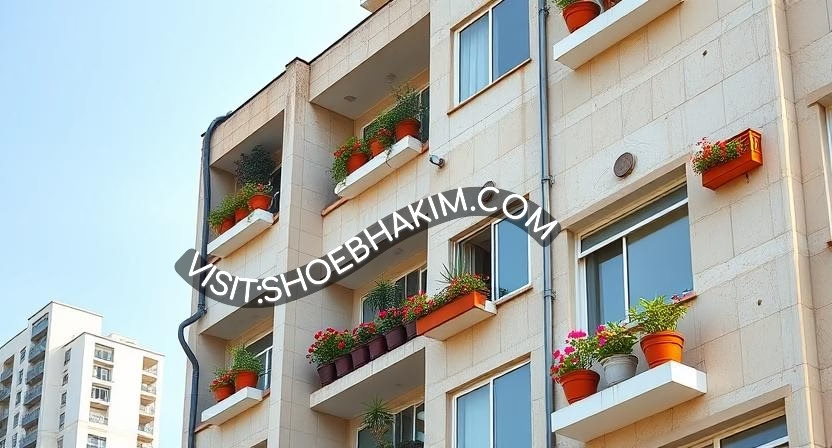
The Lucknow Development Authority’s (LDA) recent directive mandating the removal of flowerpots from high-rise balconies has sparked urgent discussions about public safety, legal accountability, and urban governance.
This article unpacks the legal frameworks, practical enforcement challenges, and real-world consequences of non-compliance, offering critical insights for legal professionals, law enforcement, and residents.
With tragic incidents like Pune’s fatal flowerpot accident underscoring the risks, understanding these regulations is essential to balancing aesthetics with safety in modern cities.
Understanding the Legal Framework: From Negligence to Accountability

1. The Shift from IPC to BNS: Criminal Liability for Negligence
Under the Bharatiya Nyaya Sanhita, 2023 (BNS), which replaced the Indian Penal Code (IPC), negligence leading to harm is addressed under Section 106(1). This provision criminalizes acts that endanger human life, with penalties extending to imprisonment if negligence results in death.
For instance, a flowerpot falling due to careless placement could invoke this section, holding property owners or associations liable.
Key Difference: Unlike the IPC’s Section 304A (death by negligence), the BNS emphasizes preventive accountability, requiring proactive measures to avoid harm.
2. Enforcement Under BNSS: Roles of Authorities
The Bharatiya Nagarik Suraksha Sanhita (BNSS), replacing the CrPC, empowers authorities like the LDA to issue directives (Section 172) and enforce penalties. Non-compliance can lead to FIRs against Apartment Owners’ Association (AOA) representatives or builders, as seen in Noida’s parallel order.
Example: If an RWA ignores the LDA’s order, the BNSS allows for immediate legal action, bypassing lengthy bureaucratic processes.
3. Evidence Standards Under BSA
The Bharatiya Sakshya Adhiniyam (BSA), replacing the Evidence Act, mandates stricter documentation of violations.
Photographs of dangerous flowerpot placements or prior warnings issued via WhatsApp can serve as digital evidence in court.
Who’s Accountable? A Hierarchy of Responsibility
Resident Welfare Associations (RWAs): Primarily responsible for enforcing the order. Non-compliance may lead to FIRs against presidents/secretaries.
Builders/Developers: Liable in societies without RWAs.
Individual Flat Owners: Held responsible if extensions or alterations violate building bylaws.
Case Study: In Alaknanda Enclave, Awadh Vihar Yojana, proactive enforcement by the RWA prevented accidents after a similar incident elsewhere.
Practical Steps for Compliance
For RWAs:
Issue notices via WhatsApp, SMS, and notice boards.
Conduct safety workshops with residents.
For Builders:
Audit under-construction projects for balcony design compliance.
For Residents:
Relocate pots to secure indoor spaces.
Avoid illegal balcony extensions.
Pro Tip: Document compliance efforts (e.g., meeting minutes, warning messages) to mitigate legal risks.
Enforcement Mechanisms: Inspections and Penalties
The LDA has deployed zonal teams to inspect violations. Penalties include:
Fines under BNS Section 106(1).
Demolition of unauthorized balcony extensions.
Criminal charges for repeat offenders.
Adv Shoeb Hakim’s Analysis & Conclusions:
The LDA’s order reflects a growing emphasis on preventive jurisprudence under India’s new criminal laws. By prioritizing public safety over aesthetics, it aligns with global urban safety standards.
However, successful implementation hinges on collaboration between RWAs, builders, and residents.
Call-to-Action: Legal professionals should guide RWAs in drafting compliance protocols, while residents must proactively adopt safer practices.
Quiz: Test Your Knowledge
Which law replaces the IPC for negligence cases?
a) BNSS
b) BSA
c) BNSWho is liable if an RWA ignores the LDA’s order?
a) Builder
b) RWA President
c) Municipal CorporationWhat evidence is admissible under the BSA?
a) Hearsay
b) WhatsApp warnings
c) Anonymous complaints
Answers: 1(c), 2(b), 3(b)
Related To This Similar Cases/Articles You Must Read:
#advshoebhakim #shoebhakim #advshoaibhakim #highrisesafety #urbanlaws #BNS2023 #publicsafety #legalcompliance #RWAResponsibility #LDAguidelines #negligencelaw #evidenceact #crpc #ipc #cyberlaw #propertyrights #indianjudiciary
Focus Keyphrase: High-Rise Flowerpot Safety Legal Implications
Meta Data:
Title: High-Rise Flowerpot Ban in Lucknow: Legal Guide for RWAs and Residents
Description: Explore the LDA’s flowerpot ban under BNS 2023, accountability for RWAs, and steps to avoid legal penalties. Adv Shoeb Hakim breaks down the laws.
Author: Adv Shoeb Hakim
Publication Date: July 10, 2024
Slug: high-rise-flowerpot-safety-legal-guide
Serial No: SHOEBHAKIM/JULY/W2/10072024/192/ADVSHOART7B9Q
DISCLAIMER:
The information contained in this document is purely fictional and serves as a creative work meant for entertainment only. It should not be considered as professional advice.
Social Media Versions
LinkedIn:
🚨 High-Rise Flowerpot Ban: Legal Risks Every Professional Must Know
The LDA’s new directive could mean criminal charges for negligent RWAs. Understand BNS 2023 implications and compliance strategies.
Read the full analysis and practical checklist: [Link]
X (Twitter):
🌆 Balcony flowerpots in Lucknow? You might be breaking the law!
Latest LDA order explained + legal tips to avoid fines. #UrbanSafety #BNS2023
Read more: [Link]
Facebook:
⚠️ Urgent for Lucknow Residents!
Flowerpots on balconies could lead to FIRs. Learn how the new laws affect you and your society.
Read the full guide: [Link]