

Why Adv Shoeb Hakim Considers This Article a Vital Read
Bank account safety is a critical concern for millions of Indians. With over 45 crore Jan Dhan accounts opened, many depositors remain unaware of the ₹5 lakh insurance limit under the Deposit Insurance and Credit Guarantee Corporation (DICGC).
This article explains RBI’s deposit protection rules, ensuring you safeguard your hard-earned money.
What Happens If a Bank Fails? Understanding DICGC Protection

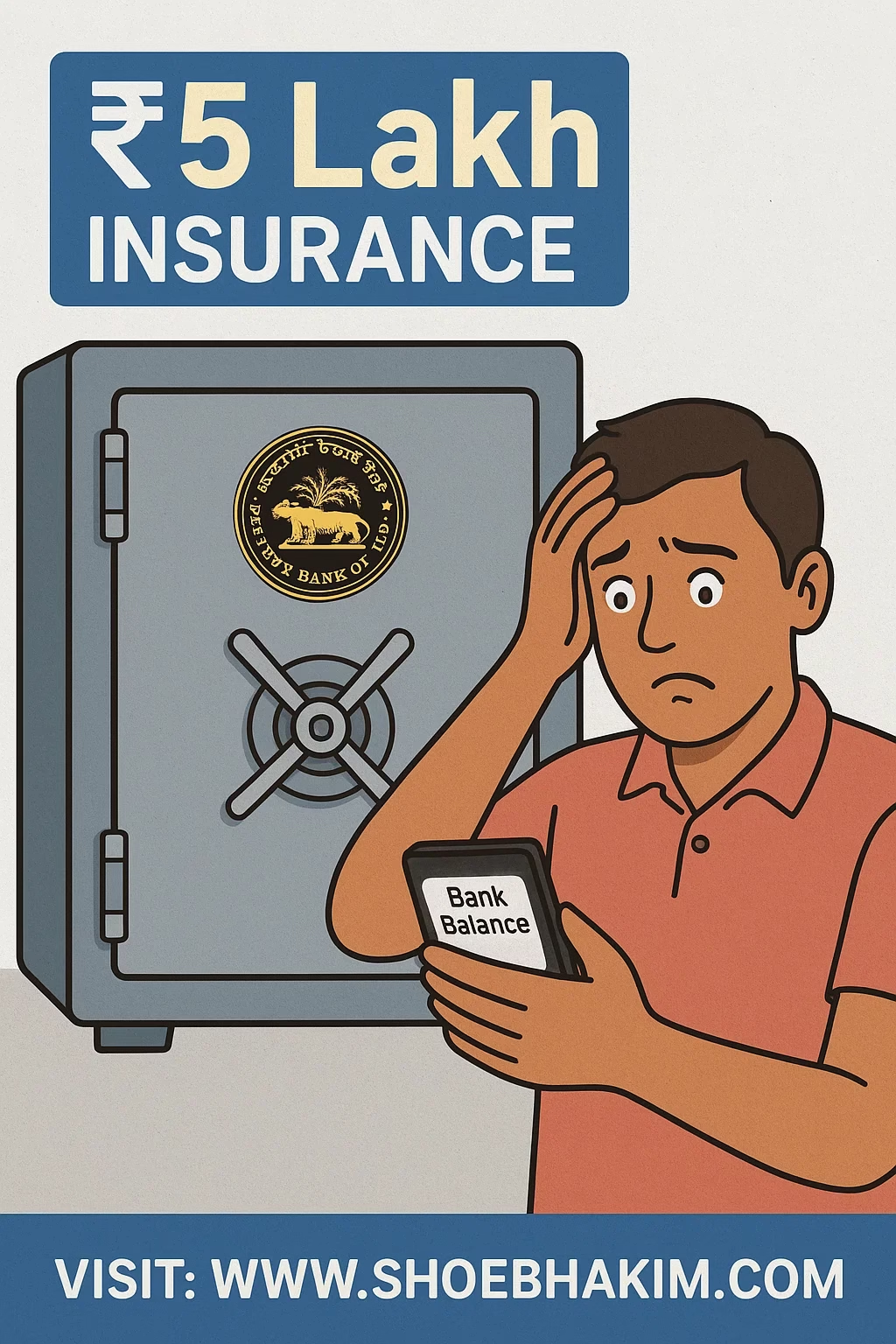
The Reserve Bank of India (RBI) mandates that all banks provide deposit insurance under the DICGC Act, 1961. This scheme protects depositors if a bank collapses, but only up to ₹5 lakh per depositor per bank.
Key Features of DICGC Insurance
✔ Coverage Limit: ₹5 lakh (including principal + interest)
✔ Applicable Accounts: Savings, current, fixed deposits (FDs), and recurring deposits (RDs)
✔ Combined Limit: The ₹5 lakh cap applies to all accounts held in the same bank (not per account).
✔ Exclusions: Investments in mutual funds, stocks, or bonds are not covered.
Example: If you have ₹3 lakh in savings and ₹4 lakh in FDs in Yes Bank, only ₹5 lakh is insured—not ₹7 lakh.
Legal Framework: DICGC Act & Recent Bank Failures
1. Section 16(1) of the DICGC Act, 1961
Guarantees ₹5 lakh per depositor per bank in case of liquidation.
Applies to all commercial, cooperative, and foreign banks operating in India.
2. Recent Cases: Yes Bank & PMC Bank Collapse
Yes Bank Crisis (2020): RBI imposed a moratorium, but depositors were protected up to ₹5 lakh.
Punjab & Maharashtra Cooperative (PMC) Bank (2019): Depositors faced losses beyond the insured limit.
Adv Shoeb Hakim’s Insight:
“The DICGC rule is a safety net, but depositors must diversify funds across multiple banks to maximize protection.”
How to Ensure Maximum Protection for Your Deposits
✅ Spread Deposits Across Banks: Keep no more than ₹5 lakh in any single bank.
✅ Prefer Strong Banks: Check financial stability via RBI’s CAMELS rating.
✅ Monitor Bank Health: Watch for RBI warnings (like moratoriums).
Adv Shoeb Hakim’s Analysis & Conclusions
The ₹5 lakh insurance limit is crucial for financial security, but depositors must stay informed. Recent bank failures prove that diversification is key.
Call to Action
🔍 Check Your Bank’s Stability: Visit RBI’s Bank-wise DICGC List.
📞 Need Legal Advice? Contact Adv Shoeb Hakim for banking compliance guidance.
Quiz: Test Your Knowledge on Bank Deposit Safety
What is the maximum insured amount under DICGC?
a) ₹1 lakh
b) ₹5 lakh ✅
c) ₹10 lakh
Does DICGC cover fixed deposits?
a) No
b) Yes, but only up to ₹2 lakh
c) Yes, up to ₹5 lakh combined ✅
If a bank fails, how soon does DICGC repay depositors?
a) Within 90 days ✅
b) After 1 year
c) Only if the bank recovers
Answers: 1(b), 2(c), 3(a)
Related Articles You Must Read
Social Media Posts
📌 LinkedIn: “Did you know your bank deposits are insured only up to ₹5 lakh? Learn how to protect your money with Adv Shoeb Hakim’s latest analysis.”
🐦 Twitter: “Bank safety alert! RBI’s ₹5 lakh insurance rule—are your savings fully covered? Read now: [Link]”
📱 Facebook: *”Avoid losing your hard-earned money! Understand RBI’s deposit insurance rules in 2 mins.”*
#Tags
#AdvShoebHakim #BankSafety #DICGC #RBI #FinancialSecurity #BankDeposit #JanDhan #BankingLaw #MoneyProtection #LegalCompliance #CyberLaw #IndianBanking #FinancialAwareness #BankingRegulations #PersonalFinance
Disclaimer
DISCLAIMER: The information provided is for educational purposes only and does not constitute legal/financial advice. For personalized guidance, consult Adv Shoeb Hakim. Refer to the full disclaimer.
Meta Data
SEO Title: How Much Money is Safe in Bank Accounts? RBI’s ₹5 Lakh Insurance Rule
Focus Key Phrase: Bank deposit insurance
Meta Description: Learn how much money is protected under RBI’s DICGC scheme. Discover the ₹5 lakh insurance limit for savings, FDs, and current accounts.
Slug: how-much-money-safe-bank-account-rbi-insurance-rule
Author: Adv Shoeb Hakim
Publication Date: July 23, 2025
Post ID: SHOEBHAKIM/JULY/WEEK4/23072025/204/ADVSHOART7X9B2