Updated: August 2026 | Reading Time: 8 minutes
https://shoebhakim.com/wp-content/uploads/2024/11/Importance-of-AML-in-banking.avif
Introduction
Understanding the importance of AML in banking is essential for financial professionals, regulators, and customers alike. Anti-Money Laundering (AML) is not just a regulatory checkbox—it is the bedrock of a secure, stable, and trustworthy financial system. In an era of increasing financial crime, digital fraud, and geopolitical uncertainty, the importance of AML in banking has never been more pronounced.
Banks serve as the gatekeepers of the global financial system. Without robust AML frameworks, financial institutions become vulnerable to exploitation by criminals, terrorists, and corrupt regimes. The consequences of weak AML controls are severe: regulatory fines, reputational damage, loss of customer trust, and systemic economic instability.
Authored by Adv. Shoeb Hakim—a criminal defence, AML, digital forensics, and cybercrime specialist who has trained police since 1995—this comprehensive guide explores the importance of AML in banking, its key components, and why it matters more than ever in 2026.
What Is the Importance of AML in Banking?
The importance of AML in banking extends across multiple dimensions: legal compliance, financial integrity, customer protection, and national security. AML frameworks are designed to detect, prevent, and report financial crimes, ensuring that banks remain safe havens for legitimate transactions rather than conduits for illicit funds.
In 2026, the importance of AML in banking is amplified by emerging threats such as:
- Digital Asset Laundering: Criminals are increasingly using cryptocurrencies and decentralised finance (DeFi) platforms to launder money. FATF’s June 2026 Plenary highlighted that 34% of assessed jurisdictions are now largely compliant with Recommendation 15 (virtual assets), up from 29% in 2025.
- AI-Powered Fraud: Generative AI is being weaponised to create synthetic identities, bypass KYC checks, and automate money laundering schemes.
- Geopolitical Sanctions: The evolving sanctions landscape requires banks to screen transactions in real-time against rapidly changing lists.
1. Preventing Financial Crime
At the core of the importance of AML in banking is the prevention of financial crime. Money laundering is the process of disguising the origins of illegally obtained money, and it is a gateway crime that enables drug trafficking, human trafficking, fraud, corruption, and terrorism.
By implementing robust AML policies, banks can:
- Detect suspicious transactions through real-time monitoring systems
- Prevent fraud by verifying customer identities and assessing risk profiles
- Disrupt criminal networks by reporting suspicious activities to Financial Intelligence Units (FIUs)
The importance of AML in banking is evident in the billions of dollars in illicit funds that are intercepted annually through effective compliance programs.
2. Protecting the Financial System
Money laundering undermines the stability and reputation of financial institutions. When banks are used as conduits for illicit funds, the entire financial ecosystem suffers. The importance of AML in banking lies in safeguarding the integrity of the system.
Effective AML programs ensure that:
- Banks remain trustworthy and reliable intermediaries
- Investor confidence is maintained
- Systemic risks are mitigated through proper risk assessment and internal controls
Without AML measures, banks could become “safe havens” for criminals, leading to a collapse in public trust and potential financial crises.
3. Compliance with Regulations
Banks are required to comply with national and international AML regulations. The importance of AML in banking is reinforced by stringent regulatory frameworks, including:
- FATF 40 Recommendations – The global standard for AML/CFT, updated in October 2025 and June 2026
- Bank Secrecy Act (BSA) – The foundational U.S. AML law
- EU AMLR (Regulation 2024/1624) – The new single rulebook for AML/CFT across the EU, effective July 2027
- SEBI AML Guidelines – Regulating India’s securities market intermediaries
- RBI KYC/AML Master Directions – Governing Indian banks and financial institutions
Non-compliance can result in severe penalties. In 2025 alone, global regulators imposed over $8 billion in fines for AML failures. The importance of AML in banking is starkly illustrated by the cost of getting it wrong.
4. Enhancing Customer Trust
In an age of data breaches and financial scams, customer trust is a bank’s most valuable asset. The importance of AML in banking extends to protecting customers and building long-term relationships.
When banks implement robust AML measures, they demonstrate:
- Commitment to security – Customers feel safe knowing their assets are protected
- Transparency – Clear communication about KYC and verification processes builds confidence
- Integrity – Proactive steps to prevent financial crimes enhance the bank’s reputation
Customers are more likely to trust institutions that take their financial safety seriously.
5. Supporting Law Enforcement
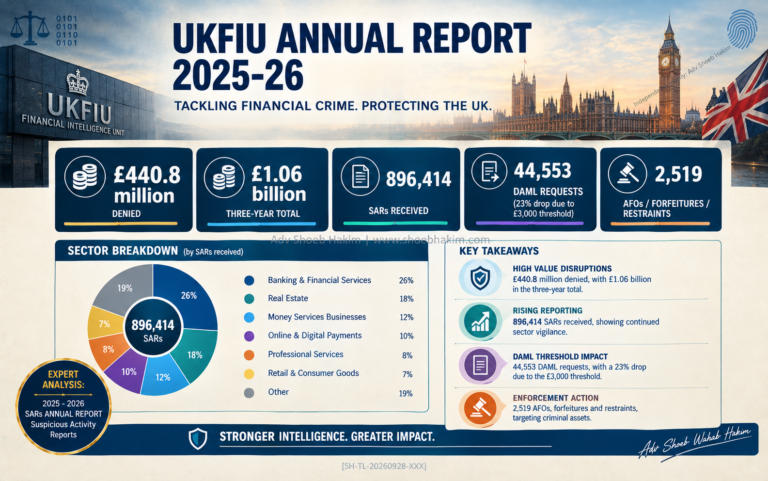
Banks play a crucial role in the global fight against financial crime by providing valuable intelligence to law enforcement agencies. The importance of AML in banking is evident in the thousands of Suspicious Activity Reports (SARs) filed annually.
These reports enable law enforcement to:
- Detect patterns of illicit activity across institutions
- Investigate and prosecute money laundering, terrorist financing, and other crimes
- Disrupt criminal enterprises and seize illicit assets
In India, the FIU-IND processes thousands of STRs annually, many of which originate from banking institutions.
6. Mitigating Risks
Effective AML programs help banks identify and mitigate risks associated with money laundering. The importance of AML in banking includes proactive risk management through:
- Customer Risk Profiling – Classifying customers as Low, Medium, or High Risk based on factors such as geographic location, business activity, and PEP status
- Transaction Monitoring – Real-time surveillance to detect anomalies and suspicious patterns
- Enhanced Due Diligence (EDD) – Applying stricter controls to high-risk customers
- Internal Controls – Establishing policies, procedures, and oversight mechanisms
FATF’s 2025 mutual evaluation report on India recommended that financial institutions “update CDD information on the basis of risk, and where required, shorten the time to update high, medium and low risk clients”.
7. Promoting Economic Stability
Money laundering has a detrimental impact on the economy by distorting financial markets, undermining legitimate businesses, and enabling criminal enterprises. The importance of AML in banking extends to macroeconomic stability.
By ensuring that financial transactions are legitimate and transparent, AML measures:
- Prevent capital flight and illicit outflows
- Protect the integrity of capital markets
- Support sustainable economic growth
- Contribute to a level playing field for legitimate businesses
The Cost of Non-Compliance: Why AML Matters Now More Than Ever
The importance of AML in banking is most starkly demonstrated by the consequences of non-compliance. Recent examples include:
- Danske Bank (2022): €1.5 billion fine for AML failures in its Estonian branch
- Wells Fargo (2023): $2.1 billion in fines for AML lapses
- Several Indian banks (2025): Penalised by RBI for KYC/AML non-compliance
Beyond fines, non-compliance leads to:
- Reputational Damage: Loss of customer trust and investor confidence
- Operational Disruption: Regulatory restrictions, and potentially, license revocation
- Legal Action: Criminal and civil liability for directors and compliance officers
2026 Regulatory Landscape: Key Developments
To fully appreciate the importance of AML in banking, professionals must stay current with regulatory changes:
- FATF Mutual Evaluation of India (2024-2025): India received Compliant or Largely Compliant ratings in 37 out of 40 FATF Recommendations. The report recommended faster money laundering trials, improved targeted financial sanctions, and defining domestic PEPs. India was placed in the “regular follow-up” category.
- FATF Recommendation 16 (Travel Rule): FATF updated R.16 in June 2025 to keep pace with new payment products, players, and business models.
- EU AMLR: Regulation (EU) 2024/1624 creates a directly applicable “single rulebook” for AML/CFT across the EU, effective from 10 July 2027.
- FinCEN Beneficial Ownership Reporting: In August 2026, FinCEN issued a final rule permanently eliminating the requirement for U.S. companies and U.S. persons to report beneficial ownership information under the Corporate Transparency Act.
- FinCEN AML/CFT Program Reform: In April 2026, FinCEN proposed fundamental reforms to AML/CFT program requirements under the BSA.
- SEBI KYC Reforms: SEBI proposed centralised KYC framework with mandatory reviews every five years, Aadhaar-based e-KYC authentication, and digital KYC for NRIs.
Conclusion
The importance of AML in banking cannot be overstated. From preventing financial crime and protecting the financial system to ensuring regulatory compliance and enhancing customer trust, AML is a critical function that underpins the integrity of the global economy.
In 2026, as financial crime becomes more sophisticated and regulatory scrutiny intensifies, banks must prioritise AML as a strategic imperative. Investing in robust AML programs is not just about avoiding penalties—it is about building a resilient, trustworthy, and sustainable financial institution.
Whether you are a compliance professional, a banker, or a customer, understanding the importance of AML in banking is essential for navigating the modern financial landscape.
Frequently Asked Questions
Q1: Why is AML important in banking?
AML is crucial for preventing financial crime, protecting the financial system, ensuring regulatory compliance, enhancing customer trust, supporting law enforcement, mitigating risks, and promoting economic stability. The importance of AML in banking extends to safeguarding the integrity of the entire financial ecosystem.
Q2: What are the key components of an AML program in banking?
The five pillars of an effective AML program are: (1) Designation of a Compliance Officer, (2) Risk Assessment, (3) AML Policies and Procedures, (4) Continuous Monitoring and Maintenance, and (5) Customer Due Diligence (CDD).
Q3: What are the consequences of AML non-compliance for banks?
Consequences include severe financial penalties (billions of dollars globally), reputational damage, loss of customer trust, operational restrictions, legal action against directors and compliance officers, and in extreme cases, license revocation.
Q4: How does AML support law enforcement?
Banks file Suspicious Activity Reports (SARs) with Financial Intelligence Units (FIUs), providing valuable intelligence that enables law enforcement to detect patterns, investigate crimes, and prosecute offenders.
Q5: What are the latest AML regulatory updates in 2026?
Key updates include FATF’s June 2026 Plenary outcomes, FinCEN’s August 2026 rule eliminating beneficial ownership reporting, and SEBI’s proposed KYC reforms including Aadhaar-based e-KYC and mandatory reviews every five years.
📚 Related Compliance Guides on Adv. Shoeb Hakim’s Website:
- Compliance Officer in a Stock Broking Company: Duties & 2026 Guide
- Compliance Department Roles and Responsibilities: 2026 Guide
- Group Legal, Compliance & Secretariat (LCS): Functions & 2026 Guide
- AML Interview Questions and Answers: 2026 Guide
📌 Explore More on Adv. Shoeb Hakim’s Website:
- Read More Articles on the Blog
- Book a Consultation with Adv. Shoeb Hakim
- Contact Adv. Shoeb Hakim
- Careers & Opportunities
By Adv. Shoeb Hakim
Criminal defence, AML, digital forensics, and cybercrime specialist; former Head of AML & Client ID (AVP), Credit Suisse; training police and judiciary since 1995.
📌 Connect: https://www.linkedin.com/in/shoebhakim | https://shoebhakim.com/shoeb-hakim-blog/
📌 Visit my website for more articles: https://shoebhakim.com
📌 Visit my website for legal knowledge: https://www.vakilverse.com
📌 Visit my website for research fellowship: https://www.legalcomplaince.in
Disclaimer: This content is for informational purposes only and does not constitute legal advice. Readers should consult qualified legal counsel for advice on their specific circumstances.
Additional Page Metadata
- Author: Adv. Shoeb Hakim
- Author Bio: Adv. Shoeb Hakim is a Mumbai-based criminal defence, AML, digital forensics and cybercrime specialist. Former Head of AML & Client ID (AVP) at Credit Suisse. Has been training police and judiciary since 1996. Provides expert commentary on anti-money laundering, banking compliance, financial crime prevention, and regulatory risk management.
- Article Publisher: Adv. Shoeb Hakim
- Article Section: Anti-Money Laundering | Banking Compliance | Financial Crime | Regulatory Compliance | Risk Management
- Article Tags: Importance of AML in Banking, AML in Banking, Anti-Money Laundering, Banking Compliance, Financial Crime Prevention, AML Regulations, FATF 2026, RBI AML Guidelines, SEBI AML, KYC, Customer Trust, Economic Stability, Adv Shoeb Hakim
#ImportanceOfAML #AMLInBanking #AntiMoneyLaundering #BankingCompliance #FinancialCrime #AMLCompliance #KYC #FATF #RBI #SEBI #BankingSector #FinancialSecurity #RiskManagement #CustomerTrust #EconomicStability #MoneyLaundering #ComplianceMatters #BankingIndustry #AdvShoebHakim