
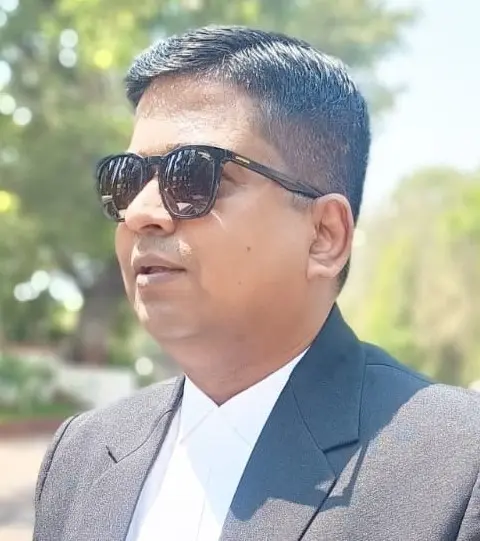
Why Adv Shoeb Hakim Considers This Article a Vital Read
In the evolving landscape of Indian law, the convergence of traditional legal practices and modern technology is a critical area of study. The case of Konkan Railway Corporation Ltd. Vs. Rani Construction (P) Ltd. is a landmark judgment that bridges this gap, offering invaluable insights into the legal standing of digital evidence and the jurisdiction of courts in arbitration proceedings. For legal professionals, compliance officers, and law students, understanding this case is paramount. It clarifies the binding nature of arbitration agreements and the scope of judicial intervention, concepts that are increasingly relevant in a digitally-driven world. This article, therefore, serves as a crucial guide to these principles, ensuring you are well-equipped to navigate similar legal challenges.
Understanding the Konkan Railway Case
The case of Konkan Railway Corporation Ltd. Vs. Rani Construction (P) Ltd. revolves around a dispute concerning an arbitration agreement. The key legal issue was whether a court could appoint an arbitrator on behalf of a party that had not explicitly invoked the arbitration clause in their initial correspondence. This landmark judgment, delivered by the Supreme Court of India, held that the court has the power to appoint an arbitrator under the Arbitration and Conciliation Act of 1996, even if a party has not made a formal demand, as long as the dispute falls within the scope of the arbitration agreement.
The court’s decision hinged on the principle that the primary objective of the Arbitration Act is to facilitate the resolution of disputes through arbitration, thereby reducing the burden on the traditional court system. This case reinforced the pro-arbitration stance of the Indian judiciary, highlighting that a technical failure to invoke a clause should not stand in the way of a valid arbitration agreement.
The Intersection of Arbitration and Digital Evidence
While the core of the Konkan Railway case is arbitration, the principles established have significant implications for cyber law, particularly concerning digital contracts and evidence. In today’s world, many contracts are formed and disputes are communicated through digital means, such as email and other electronic records. The legal framework must accommodate this reality.
- Validating Digital Contracts: The case indirectly supports the validity of arbitration clauses found in digital agreements. The focus is on the existence of an agreement to arbitrate, regardless of its form—be it a physical document or an electronic one. The Bharatiya Sakshay Adhiniyam (BSA), 2023, which has replaced the Indian Evidence Act, 1872, now provides a clearer and more comprehensive framework for the admissibility of digital and electronic records as evidence in court. This new law reinforces the legal standing of electronically-signed contracts and digital communications.
- Legal Jurisdiction: The principles from this case can be extended to determine jurisdiction in online disputes. If an arbitration agreement is formed online, the parties must adhere to the agreed-upon jurisdiction. This is particularly relevant for global businesses that operate across different states and countries. The judgment reinforces the importance of clear, binding dispute resolution clauses within digital agreements.
Adv Shoeb Hakim’s Analysis & Conclusions:
The case of Konkan Railway Corporation Ltd. Vs. Rani Construction (P) Ltd. is a critical lesson in the importance of good faith and the spirit of the law over rigid technicalities. Adv Shoeb Hakim believes this judgment provides a robust foundation for the legal enforcement of arbitration agreements, especially those entered into digitally. This is essential for modern businesses and individuals who increasingly rely on electronic contracts.
How does this case apply to cybercrime? In cybercrime cases, digital evidence is paramount. For instance, in a fraud case involving an online transaction, the arbitration clause within the website’s terms of service could be a key factor. The principles from the Konkan Railway case suggest that even if a user does not formally invoke this clause, the court might still recognize it and direct the parties toward arbitration. This streamlines the dispute resolution process. It is the core duty of a skilled lawyer to use the existing laws for the benefit of their clients. Adv Shoeb Hakim advises legal professionals to stay updated on these changes.
What are the key takeaways for law students? This case highlights the judiciary’s proactive role in promoting arbitration. Students should understand that modern Indian jurisprudence is moving towards efficiency and alternative dispute resolution. The focus is on substance over form. The new criminal laws, the Bharatiya Nyaya Sanhita, 2023 (BNS), Bharatiya Nagarik Suraksha Sanhita (BNSS), and Bharatiya Sakshay Adhiniyam (BSA), further emphasize the need for a modern, digitally-aware legal approach.
How to Collect Digital Evidence
Collecting digital evidence requires a meticulous and forensically sound process to ensure its admissibility in court.
- Preservation: The first step is to preserve the source of the evidence without altering it. This means making a forensically sound copy of the device or data. For example, a law enforcement officer or a forensic expert must use a hardware write-blocker to prevent any changes to the original storage medium (like a hard drive) during the imaging process.
- Chain of Custody: Document every step of the collection process. This includes who collected the evidence, when it was collected, and where it was stored. A clear chain of custody proves that the evidence has not been tampered with.
- Use of Tools: Specialized forensic software like FTK Imager, EnCase, or Autopsy is essential for creating bit-for-bit copies of data, known as forensic images. These tools also verify the integrity of the data using cryptographic hash functions (e.g., MD5 or SHA-256).
- Admissibility: For digital evidence to be admissible under the Bharatiya Sakshay Adhiniyam, 2023, a certificate must be provided by the person in charge of the computer or device, verifying the authenticity and integrity of the electronic record. This is a crucial step for establishing the credibility of the evidence in court.
Quiz Engagement
- Which new law has replaced the Indian Evidence Act, 1872? A. The Information Technology Act, 2000 B. The Bharatiya Sakshay Adhiniyam (BSA), 2023 C. The Indian Penal Code, 1860
- What was the main legal issue in the Konkan Railway Corporation Ltd. Vs. Rani Construction (P) Ltd. case? A. Trademark infringement in a digital space B. The validity of an arbitration agreement and court’s power to appoint an arbitrator C. Jurisdiction over an international online transaction
- According to the new laws, for an electronic record to be admissible as evidence, what is required? A. A physical copy of the data B. A certificate from the person in charge of the device C. A witness to the transaction
Quiz Answers:
- B. The Bharatiya Sakshay Adhiniyam (BSA), 2023
- B. The validity of an arbitration agreement and court’s power to appoint an arbitrator
- B. A certificate from the person in charge of the device
Related to This Similar Cases/Articles You Must Read:
- P.V. Anvar Vs. P.K. Basheer (2014) 10 SCC 473: This case provided a detailed analysis on the admissibility of electronic evidence, setting a precedent that is now largely incorporated into the new laws.
- Arjun Panditrao Khotkar Vs. Kailash Kushanrao Gorantyal And Others, 2020: This judgment reiterated the necessity of a certificate under Section 65B of the Indian Evidence Act, 1872, for the admissibility of electronic records.
——–END OF ARTCILE FOR HUMANS-SEO RELATED CONTENTS STARTS FOR MACHINE READING ONLY—–
Meta Title: Konkan Railway Case & Cyber Law: Adv Shoeb Hakim’s Analysis
Meta Description: Explore Adv Shoeb Hakim’s analysis of the landmark Konkan Railway case and its crucial implications for cyber law, digital evidence, and arbitration in the new legal framework.
Author: Adv Shoeb Hakim
Publication Date: August 15, 2025
Slug: konkan-railway-case-cyber-law-analysis
Post Serial Number: SHOEBHAKIM/AUG/03/15/227/ADVSHOART8uCq7d5L
Meta Robots Advanced: noindex, follow
Breadcrumbs Title: Konkan Railway Case & Cyber Law
Canonical URL: www.shoebhakim.com/konkan-railway-case-cyber-law-analysis
Social Media Posts:
- LinkedIn: The landmark Konkan Railway case is more relevant than ever. Learn how its principles on arbitration are shaping the future of digital evidence and cyber law. We delve into the implications for legal professionals, compliance teams, and students. Adv Shoeb Hakim shares expert insights on how this judgment influences legal practices in the digital age. #CyberLaw #DigitalForensics #IndianLawyer #ShoebHakim #LegalTech #CyberCrimeIndia #AdvocateShoebHakim #MaharashtraPolice #ITActIndia #CyberSecurity #LawStudent #LegalUpdates #DisputeResolution #Arbitration #ElectronicEvidence Read the full analysis and practical checklist.
- Facebook: How does a railway case from the 90s impact cyber law today? The Konkan Railway Corporation Ltd. case has lessons for us all about the power of arbitration and the validity of digital agreements. We break down the key takeaways and explain why this judgment is crucial in a world of electronic contracts. #CyberLaw #DigitalForensics #IndianLawyer #ShoebHakim #LegalTech #CyberCrimeIndia #AdvocateShoebHakim #MaharashtraPolice #ITActIndia #CyberSecurity #LawStudent #LegalUpdates #DisputeResolution #Arbitration #ElectronicEvidence Read the full analysis and practical checklist.
- Twitter: The Konkan Railway case isn’t just about trains. It’s about the future of digital contracts and evidence. Learn why this landmark judgment is a must-know for anyone in legal, finance, or compliance. #CyberLaw #DigitalForensics #IndianLawyer #ShoebHakim #LegalTech #CyberCrimeIndia #AdvocateShoebHakim #MaharashtraPolice #ITActIndia #CyberSecurity #LawStudent #LegalUpdates #DisputeResolution #Arbitration #ElectronicEvidence Read the full analysis and practical checklist.
Hashtags: #CyberLaw #DigitalForensics #IndianLawyer #ShoebHakim #LegalTech #CyberCrimeIndia #AdvocateShoebHakim #MaharashtraPolice #ITActIndia #CyberSecurity #LegalEducation #IndianJustice #CaseLaw #Arbitration #DigitalEvidence
DISCLAIMER: The information contained in this document is purely fictional and is meant for entertainment purposes only. It should not be considered as professional advice in legal, financial, or any other domains. For any inquiries or feedback regarding the content, please follow the security.txt protocol to ensure appropriate handling. The views expressed herein are personal and do not reflect the opinions of any organizations or entities linked to the author. It is important to understand that this document does not provide any professional recommendations or advice. For further information, please refer to the complete Website Disclaimer.