Supreme Court Judgment Analysis: Manojbhai vs. State of Gujarat & New Evidence Rules
Why Adv Shoeb Hakim Considers This Article a Vital Read
The Manojbhai vs State of Gujarat judgment is a watershed moment for criminal trial procedure in India. By mandating a standardized format for cataloguing witnesses and evidence, the Supreme Court has effectively introduced a “metadata layer” to criminal judgments.
For legal practitioners and Adv. Shoeb Hakim, this is not merely an administrative update; it is a critical step toward reducing judicial error and streamlining appellate review.
This article breaks down the judgment’s reasoning, the tragic failure of the prosecution in a sensitive POCSO case, and the mandatory new formats for evidence cataloguing that aim to prevent such failures in the future.
The Context: A Tragic Failure of Justice

To truly understand the weight of the Manojbhai vs State of Gujarat judgment, we must first look at the “grave and distressing” facts of the case that triggered these new directions.
In Manojbhai Jethabhai Parmar (Rohit) vs. State of Gujarat (Criminal Appeal No. 2973 of 2023), the Supreme Court was faced with a horrific case involving the sexual assault of a four-year-old girl. However, despite the gravity of the offense, the Bench comprising Justices Vikram Nath and Sandeep Mehta was forced to acquit the accused.
Why? The Court noted that the case was “enveloped in layers of investigative apathy and procedural infirmities.”
Judicial Observations on the Investigation
The judgment detailed specific failures that made the prosecution’s case crumble:
The FIR Void: The First Information Report lacked even rudimentary details, failing to mention the name of the accused or witnesses, despite the informant claiming full knowledge.
Botched Investigation: The Court described the investigation as “hopelessly botched,” conducted with a “pedantic rigidity that obscured, rather than unveiled, the truth.”
Unnatural Conduct: The witnesses displayed “gross insensitivity” and “rank apathy,” leading to contradictions that raised serious doubts.
It was this chaotic presentation of evidence—where facts were buried under procedural lapses—that led the Court to say: “We are of the considered view that a more structured and uniform practice must be adopted to enhance the legibility of criminal judgments.”
The Mandate: Institutionalizing Order in Trial Courts
To ensure that future appellate courts do not have to struggle through “unwieldy compilations” to find the truth, the Supreme Court utilized the Manojbhai vs State of Gujarat judgment to issue Paragraphs 82 to 91, which act as a binding directive for all Trial Courts.
The Court explicitly stated: “These directions aim to institutionalize a standardized format for cataloguing witnesses, documentary evidence, and material objects.”
1. The Witness Chart (Paragraph 83)
The Court observed that simply listing names is insufficient. The judgment must now include a chart at the conclusion (or appendix) detailing the role of the witness.
Why this matters: In complex trials, knowing that PW-4 is a “Panch Witness” versus an “Eye-witness” immediately contextualizes their testimony for the Appellate Judge.
2. The Document Exhibit Chart (Paragraph 84)
This is a critical update for compliance with the Bharatiya Sakshya Adhiniyam (BSA), 2023. The chart must include a column for “Proved by/Attested by.”
Adv Shoeb Hakim’s Take: This specific requirement ensures traceability. If a document is marked as an exhibit but was “proved” by a witness who legally cannot do so (e.g., a hearsay witness), this chart will expose that flaw instantly.
3. The Material Objects (Muddamal) Chart (Paragraph 85)
Physical evidence (Muddamal) often gets lost in translation. The new chart requires linking the Object (e.g., Weapon of Offence) directly to the witness who identified it.
Specimen Charts: The New Standard
The Supreme Court provided actual specimens in the judgment. Below is a simplified representation of what every Criminal Judgment must now append:
Table A: Witnesses Examined
| Serial No. | Name of Witness | Description/Role |
| PW-1 | Mr. X | Eye-witness |
| PW-2 | Ms. Z | Medical Jurist |
| PW-3 | Mr. A | Investigating Officer |
Table B: Exhibited Documents
| Exhibit No. | Description of Document | Proved by / Attested by |
| Ex-P1 | Inquest Panchnama | PW-1 |
| Ex-P2 | Post-mortem Report | PW-4 |
| Ex-P3 | FSL Report | PW-5 |
Expert Legal Commentary: Implications for the Bar & Bench
For Trial Lawyers
You must now structure your final arguments to align with these tables.
Actionable Strategy: Do not wait for the judge to compile this. Submit a “Draft Evidence Schedule” along with your written arguments. If you are the defense counsel, use these charts to highlight gaps (e.g., “My Lord, look at the Chart—Exhibit P4 (The Weapon) has no corresponding Witness in the ‘Proved By’ column”).
For the Judiciary
The Manojbhai vs State of Gujarat judgment allows for flexibility in cases involving voluminous evidence (Paragraph 86). In economic offenses or conspiracies, courts may limit charts to relevant and relied-upon witnesses to keep the judgment readable. Furthermore, the Court has left it open for High Courts to adopt similar formats for Civil Proceedings as well.
Intersection with New Criminal Laws (BNSS/BSA)
This judgment is the practical application of the Bharatiya Nagarik Suraksha Sanhita (BNSS) principles regarding transparent trials. It forces the “systematic presentation of evidence,” which is crucial when dealing with the stricter admissibility requirements of digital evidence under the BSA. For more on digital evidence, read my guide on Section 65B and Digital Evidence Admissibility.
Judicial Precedents & Comparative Analysis
Manojbhai Jethabhai Parmar (Rohit) vs. State of Gujarat (2025): The primary authority establishing the requirement for tabulated evidence charts in judgments. Download the Judgement
State of UP vs. Sarkar Amitabh (2019): Earlier, courts had remarked on the need for better judgment writing, but Manojbhai transforms those remarks into binding directions.
Zahira Habibullah Sheikh vs. State of Gujarat (Best Bakery Case): Highlighted how “defective investigation” can lead to retrials. Manojbhai takes a step further by mandating that the record of the trial be so clear that defects are immediately visible, preventing the need for prolonged appellate review.
Adv Shoeb Hakim’s Analysis & Conclusions
The Manojbhai vs State of Gujarat judgment is a bittersweet milestone. On one hand, it highlights a catastrophic failure of the state machinery to protect a child victim due to “investigative apathy.” On the other, it births a procedural revolution.
Key Takeaways:
Legibility is Justice: A judgment that cannot be easily navigated denies justice by delaying appellate review.
Accountability in black and white: The “Proved By” column in the new charts will act as a litmus test for the quality of prosecution.
Future-Proofing: These structured tables are the first step toward digitizing Indian case laws into a format that AI and Legal Tech can analyze for patterns and precedents.
Adv. Shoeb Hakim strongly advises all legal practitioners to download the full text of this judgment and treat Paragraphs 82-91 as the new “Style Guide” for criminal practice.
Interactive Quiz
Q1. In the Manojbhai vs State of Gujarat judgment, what reason did the Supreme Court cite for acquitting the accused in the POCSO case?
A) The accused was a juvenile
B) Investigative apathy and procedural infirmities
C) The victim turned hostile
Q2. According to Paragraph 86 of the judgment, how should Courts handle cases with voluminous evidence (e.g., economic offenses)?
A) Create charts for every single document regardless of relevance
B) Skip the charts entirely
C) Prepare charts only for material/relied-upon witnesses and documents
Q3. Does the Supreme Court’s direction on tabulated charts apply to Civil Proceedings?
A) Yes, it is mandatory for all civil suits immediately
B) No, it is strictly forbidden in civil courts
C) It is left open to High Courts to consider adoption for civil matters
Answers:
B) Investigative apathy and procedural infirmities
C) Prepare charts only for material/relied-upon witnesses and documents
C) It is left open to High Courts to consider adoption for civil matters
Author Bio: Adv. Shoeb Hakim is a distinguished Advocate and Legal Technologist known for his expertise in Cyber Law, Criminal Defense, and Judicial Process Innovation. With a mission to bridge the gap between archaic legal procedures and modern efficiency, he provides actionable insights for legal practitioners and law enforcement agencies. Credentials: B.S.L. LL.B | Cyber Law & Digital Forensics Specialist Practice Areas: Criminal Litigation, Cyber Crime Defense, Appellate Practice. Contact/Socials: Vakilverse | LinkedIn | Twitter
DISCLAIMER: The information contained in this document is purely fictional and is meant for entertainment purposes only. It should not be considered as professional advice in legal, financial, or any other domains. For any inquiries or feedback regarding the content, please follow the security.txt protocol to ensure appropriate handling. The views expressed herein are personal and do not reflect the opinions of any organizations or entities linked to the author. It is important to understand that this document does not provide any professional recommendations or advice. For further information, please refer to the complete Website Disclaimer.
--------END OF ARTICLE FOR HUMANS-SEO RELATED CONTENTS STARTS FOR MACHINE READING ONLY-----
SEO & Metadata Strategy
Focus Key Phrase: Manojbhai vs State of Gujarat Judgment6
SEO Title: Manojbhai vs State of Gujarat: Supreme Court Evidence Judgment Analysis
Slug: manojbhai-vs-state-of-gujarat-judgment-evidence-cataloguing-analysis
Meta Description:
Deep dive into the Manojbhai vs State of Gujarat judgment. Adv Shoeb Hakim analyzes the SC’s acquittal reasoning and new mandatory evidence cataloguing rules.
Serial Number: SHOEBHAKIM/DECEMBER/WEEK3/15122025/350/ADVSHOART+P9L3K4
Meta Robots: index, follow
Breadcrumbs Title: Manojbhai Judgment Analysis
#Tags:
#AdvShoebHakim #ManojbhaiVsStateOfGujarat #SupremeCourtJudgment #EvidenceLaw #CriminalProcedure #BNSS2023 #POCSOLaw #LegalTech #TrialAdvocacy #IndianJudiciary #ShoebHakim #DigitalForensics #LegalEducation #GujaratHighCourt #SupremeCourtIndia
Image Metadata:
File Name: manojbhai-vs-gujarat-judgment-evidence-analysis-shoebhakim.webp
Alt Text: Adv Shoeb Hakim analysis of Manojbhai vs State of Gujarat judgment and evidence charts.
Title Text: From Chaos to Order: The Manojbhai Judgment.
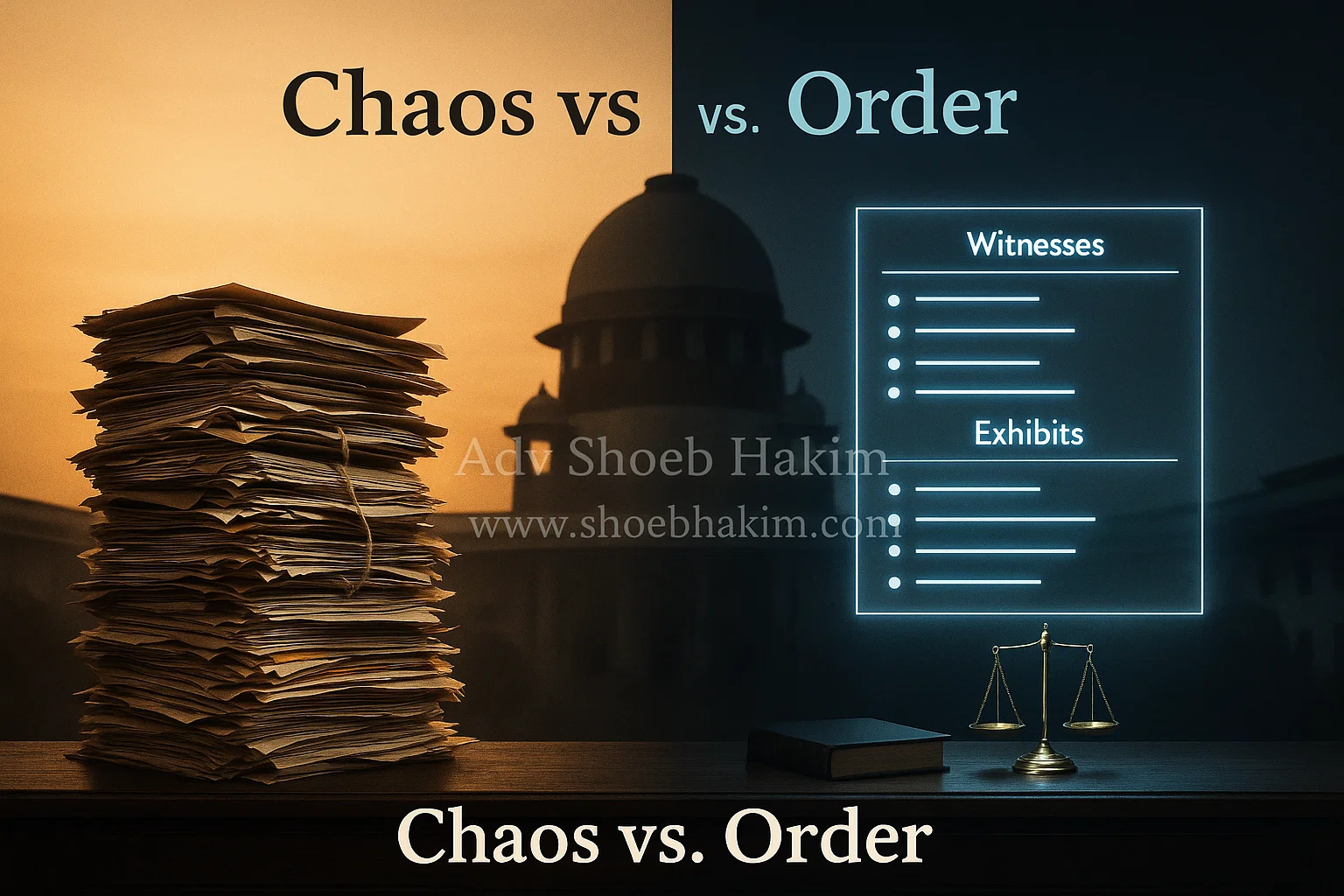
Caption: The Supreme Court’s Manojbhai judgment mandates structured evidence charts to fix investigative apathy.
Description: An analysis of the landmark Manojbhai Jethabhai Parmar judgment which introduced standardized evidence cataloguing in Indian Trial Courts.
Social Media Posts
LinkedIn:
⚖️ Case Analysis: Manojbhai Jethabhai Parmar vs. State of Gujarat
Why did the Supreme Court acquit an accused in a heinous POCSO case? The answer lies in “Investigative Apathy.”
The SC didn’t just acquit; they rewrote the rules for Trial Courts to prevent future failures. My latest article analyzes the judgment’s reasoning and the new Mandatory Evidence Charts (Para 82-91) that every lawyer must know.
Read the full breakdown: [Link]
#AdvShoebHakim #SupremeCourt #CaseLaw #CriminalJustice #Evidence
Facebook:
The “Manojbhai Judgment” is a must-read for every criminal lawyer. 📜
The Supreme Court called out a “botched investigation” and “pedantic rigidity” in trial courts.7 To fix this, they have ordered a new format for all judgments.8
Are you ready to structure your evidence the way the SC now demands?
I’ve broken down the judgment and the new rules here: [Link]
#ShoebHakim #IndianLaw #SupremeCourt #LegalUpdates
Twitter/X:
“Investigative Apathy” led to an acquittal in a POCSO case. 🚨
The Supreme Court’s answer in Manojbhai vs State of Gujarat? STRICTER FORMATTING.
Every judgment must now have 3 specific charts.
My analysis of the judgment & the new rules 👇
[Link]
#AdvShoebHakim #LawTwitter #SupremeCourt #ManojbhaiJudgment
JSON-LD Schema Markup
JSON
{
  "@context": "https://schema.org",
  "@type": "BlogPosting",
  "mainEntityOfPage": {
    "@type": "WebPage",
    "@id": "https://shoebhakim.com/manojbhai-vs-state-of-gujarat-judgment-evidence-cataloguing-analysis"
  },
  "headline": "Manojbhai vs State of Gujarat: Judgment Analysis & Evidence Rules",
  "description": "Deep dive into the Manojbhai vs State of Gujarat judgment. Adv Shoeb Hakim analyzes the SC's acquittal reasoning and new mandatory evidence cataloguing rules.",
  "image": "https://wp-content/uploads/sites/2/2025/12/manojbhai-vs-gujarat-judgment-evidence-analysis-shoebhakim.webp",
  "author": {
    "@type": "Person",
    "name": "Shoeb Hakim",
    "jobTitle": "Advocate and Cyber Security Researcher",
    "url": "https://shoebhakim.com/about-advocate-shoeb-hakim-cyber-law-aml-expert/",
    "sameAs": [
      "https://vakilverse.com",
      "https://legalcompiance.in",
      "https://www.facebook.com/advshoebhakim",
      "https://x.com/shoebhakim",
      "https://www.instagram.com/advshoeb_hakim/",
      "https://www.patreon.com/c/u63899835?vanity=user",
      "https://buymeacoffee.com/shoebhakim"
    ]
  },
  "publisher": {
    "@type": "Organization",
    "name": "Shoeb Wahab Hakim Advocate & Researcher",
    "logo": {
      "@type": "ImageObject",
      "url": "https://shoebhakim.com/logo.png"
    }
  },
  "datePublished": "2025-12-15",
  "dateModified": "2025-12-15",
  "keywords": [
    "Manojbhai Jethabhai Parmar vs State of Gujarat",
    "Supreme Court Judgment Analysis",
    "Adv Shoeb Hakim",
    "Evidence Cataloguing Rules",
    "Investigative Apathy Supreme Court",
    "POCSO Acquittal Reasoning"
  ]
}