

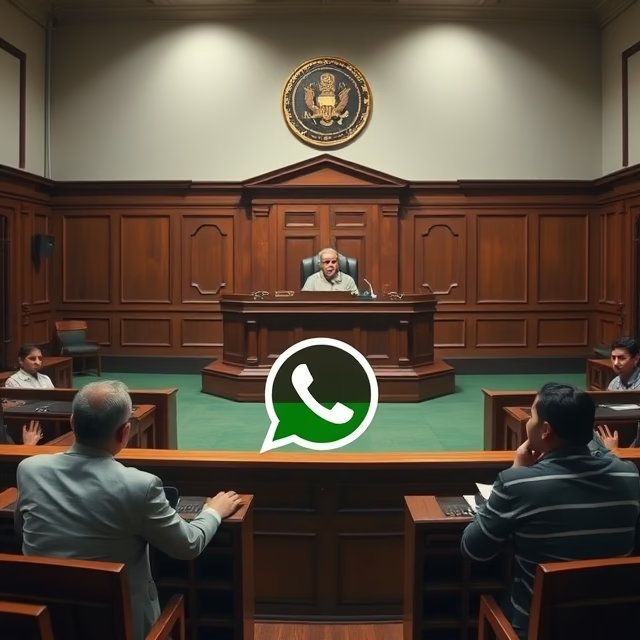
“Adv S.Hakim Explains: Meta Challenges ₹213 Crore CCI Penalty in NCLAT – Hearing Set for January 16”
Why Adv Shoeb Hakim Considers This Article a Vital Read
Meta Platforms Inc., the parent company of Facebook, has taken a decisive step by challenging the Competition Commission of India’s (CCI) ₹213 crore penalty in the National Company Law Appellate Tribunal (NCLAT). This case highlights the evolving regulatory landscape for tech giants operating in India and underscores the growing scrutiny on digital platforms’ practices.
In this article, we break down the legal framework surrounding the case, its implications for the tech, law, and banking sectors, and why the NCLAT hearing is poised to be a landmark event. With Adv Shoeb Hakim’s insights, we simplify the complex intersection of competition law and digital business practices.
Background of the Case
What Triggered the Penalty?
The ₹213 crore penalty was imposed by the CCI in late 2022 for Meta’s alleged anti-competitive practices, particularly related to WhatsApp’s updated privacy policy. The CCI argued that Meta abused its dominant position by integrating data-sharing policies between Facebook and WhatsApp, which could harm consumer privacy and limit competition.
Key Allegations
- Abuse of Dominance: Meta allegedly leveraged WhatsApp’s widespread user base to promote unfair terms of service, restricting consumer choice.
- Anti-Competitive Practices: The integration between Facebook and WhatsApp reportedly created barriers for competitors in the digital communication and advertising sectors.
Meta’s Appeal in NCLAT
Meta has contested the penalty, citing several grounds:
- Lack of Jurisdiction: Meta argues that the CCI overstepped its authority by intervening in what the company claims is a privacy matter, not a competition issue.
- Compliance with Laws: Meta asserts that its policies align with applicable laws and do not restrict competition.
- Global Standards: The company contends that the data-sharing practices are consistent with global standards and do not unfairly disadvantage users or competitors.
Legal Framework
Competition Act, 2002
The CCI’s role is defined under this Act, which aims to prevent practices that harm market competition. Relevant provisions include:
- Section 4: Prohibits abuse of dominant position.
- Section 19: Empowers the CCI to investigate anti-competitive agreements or abuse of dominance.
Judicial Precedents
- CCI v. SAIL (2010): The Supreme Court emphasized the CCI’s mandate to ensure fair competition while protecting consumer interests.
- Google LLC v. CCI (2022): The NCLAT upheld penalties imposed on Google for anti-competitive practices, setting a precedent for tech regulation in India.
Implications of the Case
For Tech Companies
- Increased Scrutiny: The case underscores the Indian regulators’ growing vigilance toward big tech practices.
- Operational Challenges: Compliance with local laws might necessitate significant changes to global policies.
For Consumers
- Data Privacy: The case raises awareness about data-sharing practices and their implications for consumer privacy.
- Enhanced Competition: A favorable ruling against Meta could encourage competition in the digital ecosystem.
For the Banking Sector
- Financial Impacts: Hefty penalties and compliance costs could affect tech companies’ financial stability, impacting investments and partnerships.
Simplified Example
Scenario: Imagine a messaging platform with 90% market share introducing a policy requiring users to share personal data with its advertising arm. Competitors with stricter privacy policies struggle to attract users. This hypothetical scenario mirrors the concerns raised in the Meta case.
Key Developments Leading Up to the Hearing
- CCI’s Investigation: The penalty followed an extensive investigation into WhatsApp’s 2021 privacy policy update.
- Meta’s Response: Meta filed its appeal in NCLAT, challenging the penalty and the CCI’s jurisdiction.
- Upcoming Hearing: NCLAT has scheduled the hearing for January 16, 2025, marking a pivotal moment in the case.
Visual Insights
Infographic 1: Timeline of Events in Meta’s CCI Case
- 2021: WhatsApp updates its privacy policy.
- 2022: CCI imposes a ₹213 crore penalty.
- 2024: Meta appeals to NCLAT.
- January 2025: Scheduled hearing.

Adv Shoeb Hakim’s Analysis & Conclusions
The Meta-CCI case highlights the delicate balance between fostering innovation and ensuring fair competition. It also underscores the importance of robust regulatory frameworks in the digital age.
Call-to-Action
- For Tech Companies: Review your compliance with competition laws to avoid similar disputes.
- For Regulators: Strive for clarity in jurisdiction and decision-making to build trust with stakeholders.
- For Consumers: Stay informed about data-sharing policies and their implications for privacy.
Adv Shoeb Hakim concludes, “This case is not just about penalties; it is a defining moment for tech governance in India. The outcome will shape the future of regulatory interactions with global tech giants.”
#advshoebhakim #shoebhakim #advshoaibhakim #MetaCCIcase #CCIpenalty #competitionlaw #digitalgovernance #NCLAT #dataprivacy #antitrustindia #metavsnclat #whatsappprivacypolicy #legalupdatesindia #bigtechscrutiny #indianlaw #competitionact2002 #techregulation #consumerprotection #innovationandlaw #indianjudiciary
DISCLAIMER:
It is important to note that the information provided herein is not intended to serve as professional advice in fields such as medicine, finance, cybersecurity, legal matters, taxation, or emotional well-being. The content is purely for informational and entertainment purposes and should not be construed as expert guidance.
Should you have any concerns or wish to provide feedback regarding this material, please adhere to the security.txt protocol. The views expressed in this content do not necessarily represent those of any organizations with which I may be associated. For further details, please refer to the full Website Disclaimer.