A landmark judgment clarifies that appearance is not arrest, and High Courts cannot order surrender in complaint cases.
Introduction
For years, a common fear has plagued individuals named in criminal complaints: the moment a Magistrate issues summons, will the police come knocking with handcuffs?
The Supreme Court has now delivered a definitive answer: No.
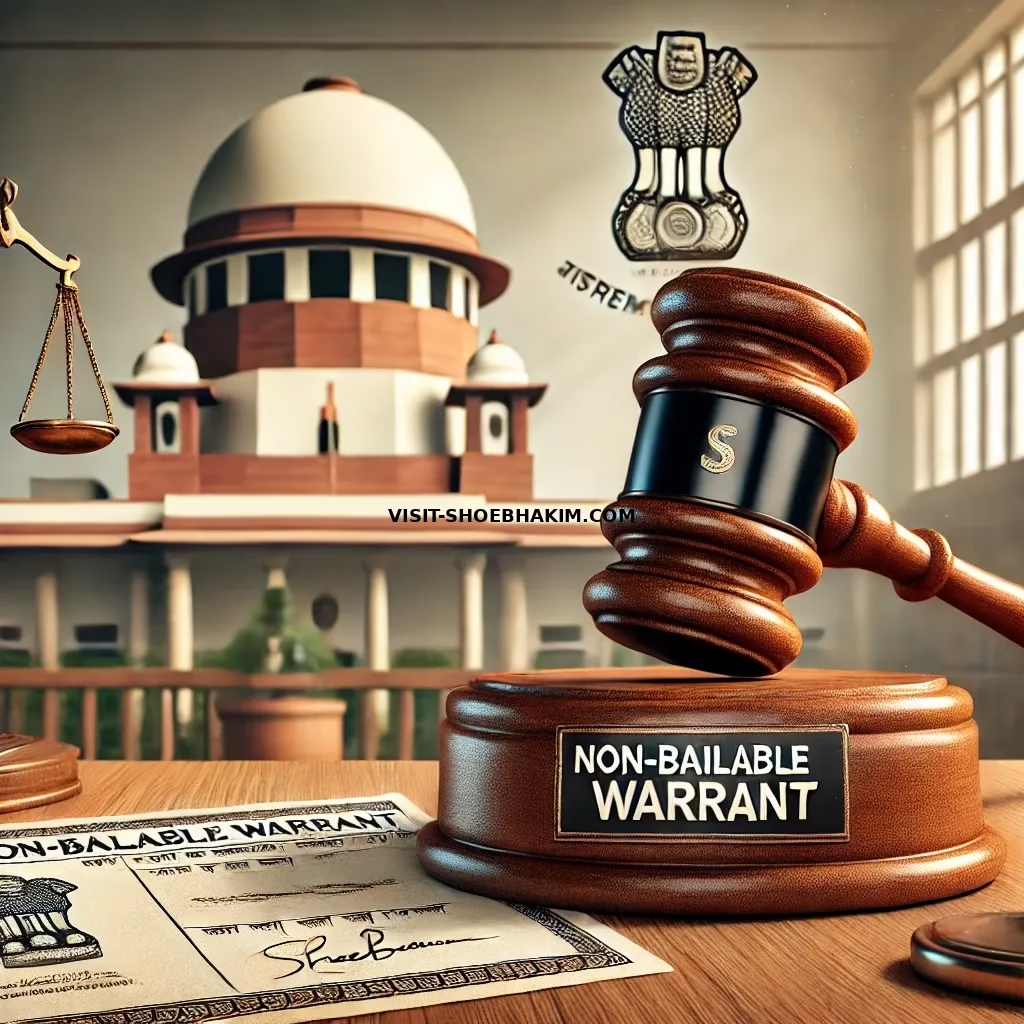
In a powerful judgment that could reshape how complaint cases are handled across India, the Court held that once a Magistrate issues summons, the accused is only required to appear before the court. There is no risk of arrest unless and until a non-bailable warrant is issued.
The Problem the Court Identified
Across states like Bihar and Jharkhand, a troubling practice had emerged. The moment a Magistrate issued summons in a complaint case, accused persons would rush to file anticipatory bail applications. This was done out of fear—fear of arrest, fear of humiliation, fear of the unknown.
The Supreme Court termed this a misuse of legal process.
The Court observed that this unnecessary rush to higher courts was flooding the judicial system with applications that should never have been filed. It was causing harassment to accused persons and wasting valuable judicial time.
What the Court Held
1. Summons ≠ Warrant. Appearance ≠ Arrest.
The Court clarified that a summons is a direction to appear before the court. It is not an arrest warrant. An accused who receives a summons must simply appear. No arrest can be made unless and until a non-bailable warrant is issued.
2. High Courts and Sessions Courts Cannot Direct Surrender
One of the most significant findings of the judgment is that High Courts and Sessions Courts have no jurisdiction to direct an accused to surrender in complaint cases. Any such order is beyond their power and is liable to be set aside.
3. No Arrest Powers During Police Inquiry Under Section 202 CrPC
Even when a Magistrate orders a police inquiry under Section 202 of the Code of Criminal Procedure (Section 213 of BNSS), the police have no power to arrest the accused. The inquiry is only for the purpose of verifying the complaint.
Why This Judgment Matters
For Individuals
- No more fear of arrest on mere summons. You can appear before the court without the anxiety of being taken into custody.
- No more harassment through unnecessary litigation. You cannot be forced to file anticipatory bail applications when they are not required.
- Protection from illegal orders. If a High Court or Sessions Court directs you to surrender in a complaint case, you now have clear Supreme Court authority to challenge that order.
For the Judicial System
- Reduced burden on higher courts. The rush of frivolous anticipatory bail applications will decrease.
- Clearer procedures. Courts must follow the law as intended, not as misinterpreted.
- Faster justice. When lower courts follow correct procedure, cases move faster.
Practical Takeaways for Lawyers and Litigants
| Situation | What the Law Now Says |
|---|---|
| Magistrate issues summons | Appear before court. No arrest. |
| Magistrate orders police inquiry under Section 202 CrPC | Police have no power to arrest. |
| High Court orders surrender in complaint case | Such order is beyond jurisdiction. Challenge it. |
| Non-bailable warrant issued | Only then can arrest be made. |
Conclusion
The Supreme Court has brought much-needed clarity to a procedural area that was causing unnecessary fear and litigation. A summons is not a warrant. Appearance is not arrest. And no High Court or Sessions Court can direct an accused to surrender in a complaint case.
This judgment protects individuals from harassment, reduces the burden on higher courts, and ensures that legal procedures are followed as intended—not misinterpreted or misused.
Justice, after all, begins with clarity.
Adv. Shoeb Hakim
Constitutional & Criminal Procedure Advisor
ShoebHakim.com
♻️ Share this article with anyone who needs to understand their rights when named in a complaint case.
Hashtags:
#SupremeCourt #CriminalProcedure #Summons #AnticipatoryBail #BNSS #LegalUpdate #AdvShoebHakim
📌 Follow me on LinkedIn for daily legal insights:
https://www.linkedin.com/in/shoebhakim
📌 Visit my website for detailed legal articles:
shoebhakim.com
AdvShoebHakim #LegalInsights #CriminalLawExpert #LitigationStrategy #LegalCompliance NoArrestOnSummons #SupremeCourt #LegalRights #BNSS #CriminalDefense #AdvShoebHakim #KnowYourRights #IndianLaw #Justice #LegalUpdate #SupremeCourt #SupremeCourtIndia #LandmarkJudgment #LegalRights #CriminalProcedure #JusticeSystem #IndianJudiciary NoArrestOnSummons #RightToLiberty #KnowYourRights #StopHarassment #CriminalDefense #LegalAwarenessIndia #AnticipatoryBail BNSS #CriminalLawUpdate #Section213BNSS #Section202CrPC #MagistrateCourt #LegalProcedure #DueProcess