

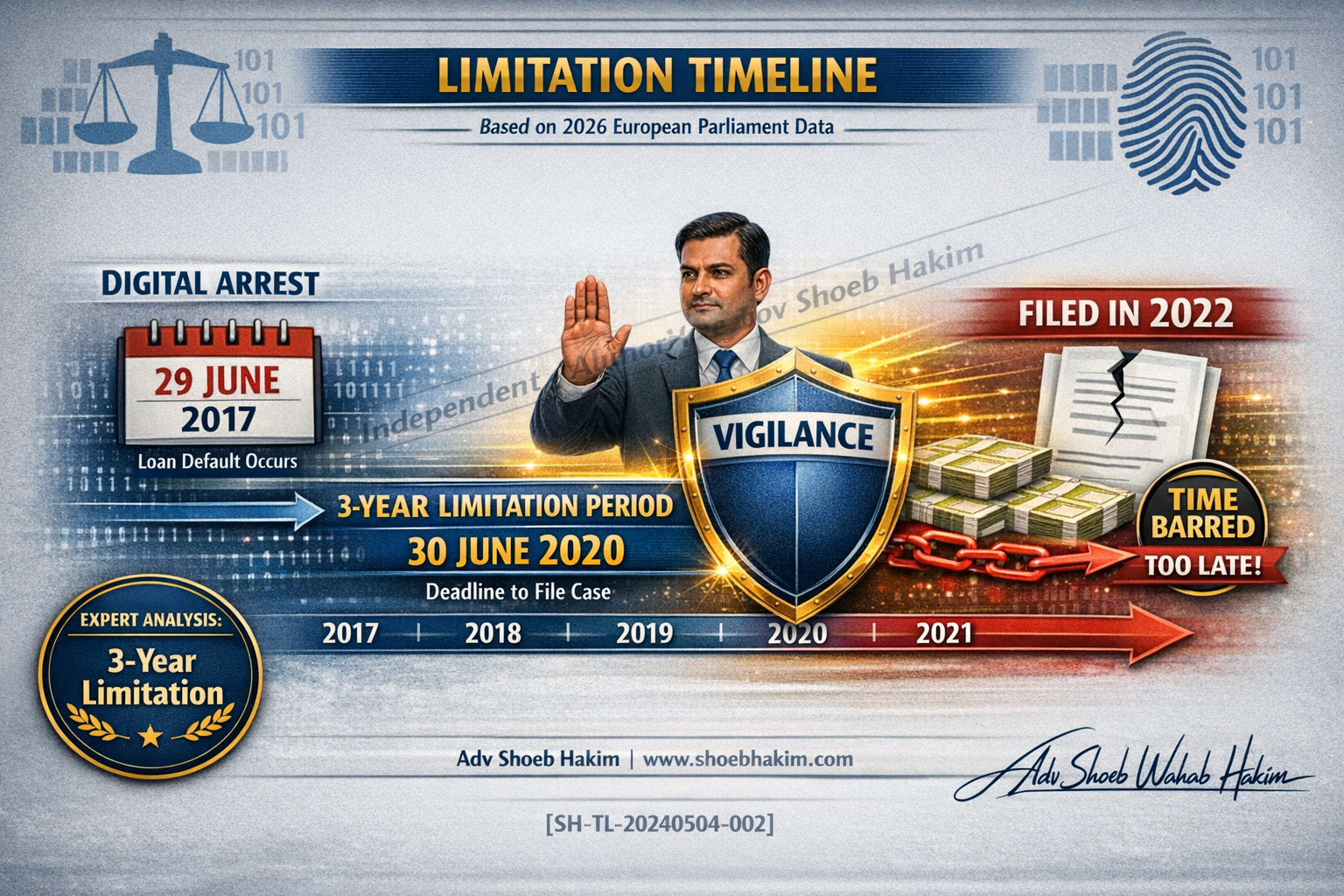
Liquidation proceeds received by bank do not constitute acknowledgment of debt to extend limitation period.
Introduction
The Ruling: The Adjudicating Authority (AA) dismissed a Section 95 application against a personal guarantor for being filed well beyond the 3-year limitation period.
The “Liquidation” Rule: Proceeds received from a Corporate Debtor’s liquidation are statutory consequences, not voluntary acknowledgments of debt that reset the limitation clock.
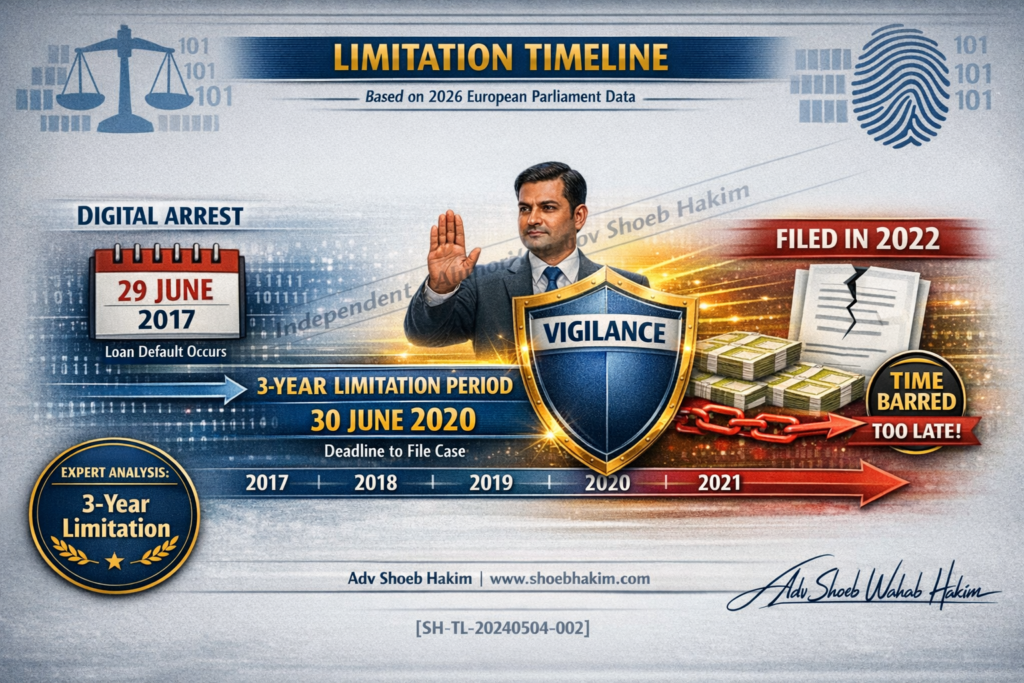
Default Baseline: The 3-year limitation starts from the specific date of default (determined here as 29 June 2017), not from the date of subsequent recovery actions.
COVID Extension: Even applying Supreme Court pandemic extensions, applications filed years after the 2017 default remain legally time-barred.
A bank argued that the proceeds it received from the liquidation of the Corporate Debtor should count as “acknowledgment of debt” to extend the limitation period for filing an application against the personal guarantor.
The Adjudicating Authority (AA) said: no.
Distribution of liquidation proceeds is a statutory consequence of the insolvency process, not a conscious and voluntary acknowledgment of liability. The limitation period had expired. The application was dismissed.
This judgment in Canara Bank v. Ms. Bubbles Sabharwal (20 January 2026) is an important reminder of the limitation defence available to personal guarantors under the Insolvency and Bankruptcy Code (IBC), 2016.
The Ruling: The Adjudicating Authority (AA) dismissed a Section 95 application because it was filed beyond the 3-year limitation period.
Statutory Clarification: Proceeds realized from the liquidation of a Corporate Debtor do not count as an “acknowledgment of debt” to extend limitation for the guarantor.
Default Timing: The limitation clock starts from the specific date of default, not when a bank decides to initiate recovery actions.
COVID-19 Impact: Even with Supreme Court extensions for the pandemic, applications filed significantly late (e.g., 2022 for a 2017 default) remain time-barred.
Case Background
Case Name: Canara Bank v. Ms. Bubbles Sabharwal (Personal Guarantor)
Order Date: 20 January 2026
Corporate Debtor: M/s Integrated Caps Pvt. Ltd.
Facility: Working capital facilities
Personal Guarantee: Executed on 27 March 2015
Guarantee Invocation Notice: 9 March 2018
Form-B Demand Notice: 22 July 2022
CIRP against Corporate Debtor: March 2018
Liquidation Order: 1 February 2019
Amount realised by Bank through liquidation (by 2020): ₹19,92,99,267
Section 95 application filed: 10 November 2022
The Core Issue
Whether the application under Section 95 of the IBC (against personal guarantor) was filed within the limitation period.
Applicant’s (Bank’s) Arguments on Limitation
The bank relied on UCO Bank v. Smt. Nishu Goel, arguing that payment made by a liquidator towards a creditor’s dues amounts to acknowledgment of debt under Section 19 of the Limitation Act, 1963, thereby extending the limitation period.
The bank argued that the recovery of sale proceeds during liquidation should be treated as acknowledgment.
Guarantor’s Arguments
The personal guarantor raised several defences:
- Limitation barred: The application was filed well beyond the limitation period.
- Already recovered: Over 60–70% of the alleged loan amount was already recovered by 2020 through liquidation. Filing a Section 95 petition now was mala fide.
- Inflated interest: The outstanding claim of ₹28,33,36,763.51 was predominantly interest—inflated, usurious, and contrary to the Supreme Court’s dictum in Central Bank of India v. Ravindra (2002).
- Notice not served: The Demand Notice in Form-B dated 22 July 2022 was never served upon the guarantor.
- Invalid guarantee: The Personal Guarantee documents were insufficiently stamped, lacked consensus ad idem, and were executed on unfilled/undated forms that were subsequently interpolated by bank officials.
What the Adjudicating Authority Held
Date of Default
The AA determined the date of default as 29 June 2017 (90 days before NPA classification).
| Event | Date |
|---|---|
| Default | 29 June 2017 |
| Guarantee Invocation Notice | 9 March 2018 |
| Form-B Demand Notice | 22 July 2022 |
| Section 95 application | 10 November 2022 |
Article 137 of the Limitation Act, 1963
The AA applied Article 137, which prescribes a 3-year limitation period from the date the right to apply accrues (i.e., the date of default).
With default on 29 June 2017 and no acknowledged interruption, the limitation period expired on 27 September 2020 (taking even the NPA date as default). The application was filed on 10 November 2022—well after expiry.
Supreme Court COVID Extension
Even after applying the Supreme Court’s COVID-19 extension (starting from the NPA date of 27 September 2017), the application filed on 10 November 2022 was still beyond the extended period.
Rejection of “Liquidation Proceeds = Acknowledgment” Argument
This is the most significant finding.
The bank argued that liquidation proceeds paid to it should count as acknowledgment of debt under Section 19 of the Limitation Act, thereby extending the limitation period.
The AA rejected this argument. Distribution of liquidation proceeds is merely a statutory consequence of the insolvency process. It does not constitute a conscious and voluntary acknowledgment of liability capable of extending limitation.
The Final Order
The AA held that the Resolution Professional’s report under Section 99 did not merit acceptance. The application filed by Canara Bank was dismissed as barred by limitation.
Key Takeaways
| Aspect | Finding |
|---|---|
| Limitation period for personal guarantor | 3 years from date of default |
| Date of default | 29 June 2017 |
| Limitation expired | 27 September 2020 |
| Application filed | 10 November 2022 – barred by limitation |
| Liquidation proceeds as acknowledgment? | No. Statutory consequence, not voluntary acknowledgment |
| COVID extension | Even applying it, application was beyond extended period |
Why This Judgment Matters
For Personal Guarantors:
- Limitation is a powerful defence
- Banks cannot extend limitation by pointing to statutory distributions in corporate insolvency
- Even if the bank recovered substantial amounts through liquidation, the limitation clock does not reset
For Banks and Financial Creditors:
- File Section 95 applications against personal guarantors promptly
- Do not rely on liquidation proceeds as acknowledgment of debt
- The limitation period runs from the date of default, not from the date you feel like filing
For Legal Practitioners:
- This judgment provides clear authority for challenging delayed Section 95 applications
- Argue that statutory distributions (liquidation proceeds) do not constitute acknowledgment under Section 19 of the Limitation Act
- Use the date of default, not NPA date, as the starting point for limitation
The Bigger Picture: Limitation for Personal Guarantors Under IBC
The law on limitation for personal guarantors has evolved through several judgments:
| Case | Principle |
|---|---|
| UCO Bank v. Smt. Nishu Goel | Payment by liquidator = acknowledgment? (Distinguished in this case) |
| Central Bank of India v. Ravindra (2002) | Interest cannot be usurious or inflated |
| Canara Bank v. Bubbles Sabharwal (2026) | Liquidation proceeds ≠ acknowledgment; limitation runs from default |
This judgment adds clarity: the limitation clock for personal guarantors starts ticking from the date of default, not from the date of recovery from the Corporate Debtor’s liquidation.
Conclusion
The Adjudicating Authority dismissed Canara Bank’s Section 95 application against personal guarantor Ms. Bubbles Sabharwal as barred by limitation.
The date of default was 29 June 2017. The 3-year limitation period under Article 137 of the Limitation Act, 1963 expired on 27 September 2020. The bank filed its application on 10 November 2022—well beyond the limitation period.
The bank’s argument that liquidation proceeds paid to it should count as acknowledgment of debt under Section 19 of the Limitation Act was rejected. Distribution of liquidation proceeds is merely a statutory consequence of the insolvency process, not a conscious and voluntary acknowledgment of liability.
For personal guarantors, limitation is a powerful defence. Banks cannot extend the limitation period by pointing to statutory distributions in corporate insolvency.
- What is the limitation period for filing an application against a personal guarantor under Article 137?
- Ans: 3 years.
- Does receiving liquidation proceeds from a Corporate Debtor extend the limitation period for the guarantor?
- Ans: No, it is a statutory consequence, not a voluntary acknowledgment.
- On what date did the AA determine the default occurred in the Canara Bank case?
- Ans: 29 June 2017.
- True or False: The Supreme Court’s COVID-19 extension was enough to save the bank’s 2022 filing in this case.
- Ans: False.
Q: When does the limitation period start for a personal guarantor?
Ans: The limitation period typically starts from the date of default, which is often identified as 90 days before an account is classified as an NPA, or when the guarantee is invoked. Under Article 137 of the Limitation Act, the creditor has 3 years from this date to file an application.
Q: Can a bank claim that recovering money from the main company extends my liability as a guarantor?
Ans: No. As established in Canara Bank v. Bubbles Sabharwal (2026), money recovered through the liquidation process of the Corporate Debtor is a statutory act. It does not count as a voluntary acknowledgment of debt by you to extend the limitation period.
Q: What defenses are available to a personal guarantor in a Section 95 petition?
Ans: Key defenses include Limitation (filing after 3 years), Service Issues (failure to serve the Form-B notice), and Technical Defects (insufficiently stamped guarantee or interpolation of documents).
Adv. Shoeb Hakim
Insolvency & Banking Law Advisor
📌 Follow me on LinkedIn for daily insolvency and banking law insights: https://www.linkedin.com/in/shoebhakim
📌 Visit my website for more articles: www.shoebhakim.com
♻️ Share this article with your network.
Disclaimer: This article is for informational purposes only and does not constitute legal advice.
Hashtags: #IBC #PersonalGuarantor #Section95 #LimitationAct #Insolvency #CorporateLaw #BankingLaw #SARFAESI #NCLT #DebtRecovery #CanaraBank #BubblesSabharwal #LimitationDefence #AcknowledgmentOfDebt #LiquidationProceeds #StatutoryConsequence #ConsciousAcknowledgment #VoluntaryAcknowledgment #Article137 #SupremeCourt #COVIDExtension #DateOfDefault #NPA #InsolvencyCode #IBC2016 #CorporateInsolvency #PersonalGuarantee #GuarantorRights #FinancialCreditor #AssetRecovery #LegalUpdate #CaseAnalysis #NCLTJudgment #AdvShoebHakim
#PersonalGuarantorLimitation #IBC2016 #AdvShoebHakim #NCLT #Section95 #InsolvencyLaw #LimitationAct #BankingLitigation
#DebtRecovery #GuarantorRights #LegalStrategy2026 #CanaraBankCase #AcknowledgmentOfDebt #FinancialCreditor #SARFAESI #BNSS