Adv S. Hakim Explains: Recovery of Dues by Society from Members under Section 101 of the Maharashtra Cooperative Societies Act, 1960
Why Adv Shoeb Hakim Considers This Article a Vital Read
In cooperative housing societies, timely payment of dues is essential for financial stability and smooth operations. Section 101 of the Maharashtra Cooperative Societies Act, 1960, provides a clear legal framework for societies to recover unpaid dues efficiently.
With its robust mechanism and streamlined process, Section 101 ensures that housing societies can avoid prolonged disputes and maintain operational harmony. Adv Shoeb Hakim emphasizes this as an indispensable tool for societies facing persistent defaulters.
Key Features of Section 101
- Quick Resolution:
- Section 101 provides a faster alternative to court proceedings, enabling societies to recover dues efficiently.
- Registrar’s Role:
- The Assistant/Deputy Registrar ensures due diligence in verifying claims and issuing Recovery Certificates.
- Enforcement Authority:
- The Sale Officer is empowered to take concrete steps, from attaching property to auctioning it for recovery.
Understanding Section 101: A Simplified Overview
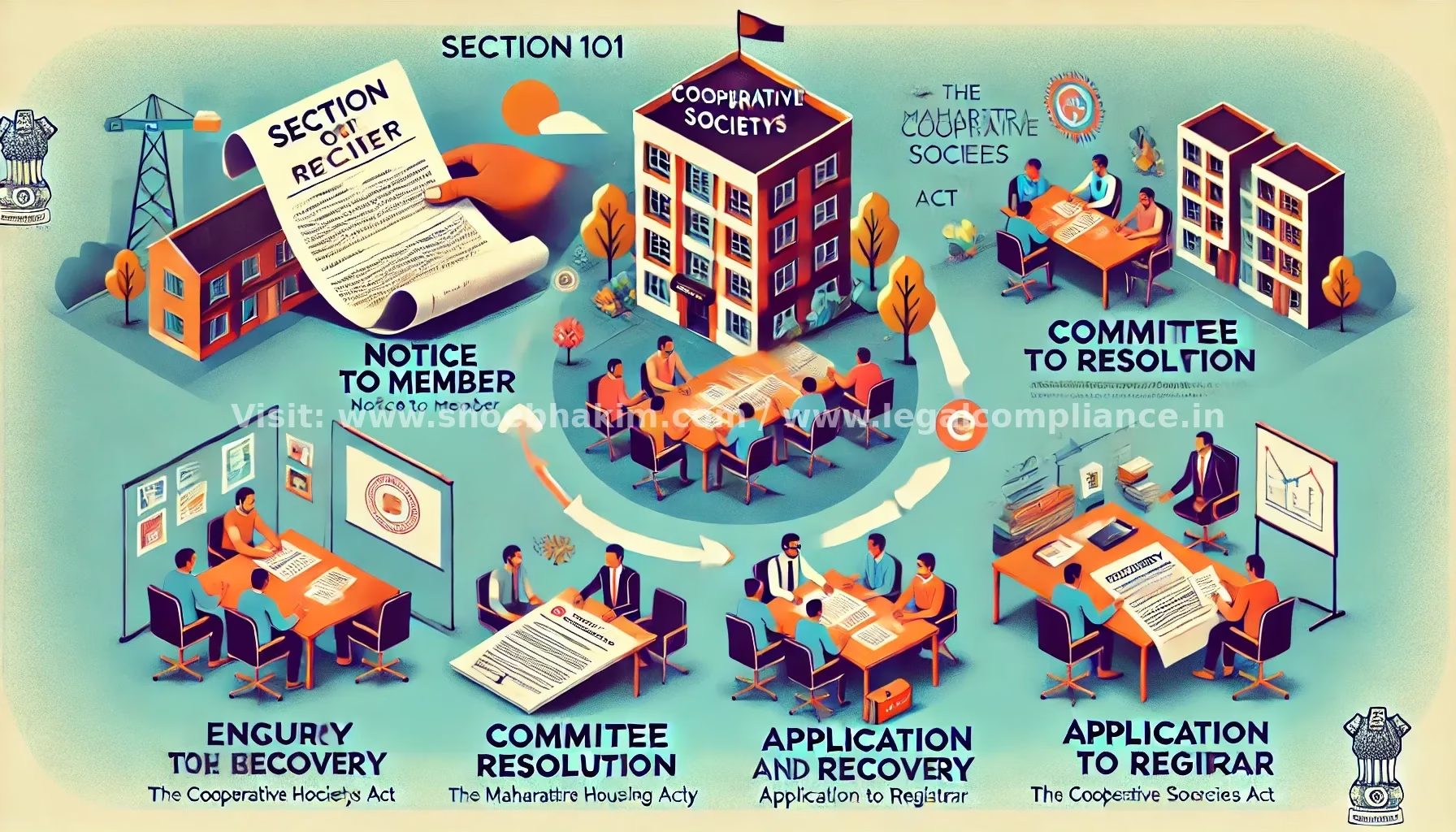
Section 101 provides a quasi-judicial mechanism for recovering dues without resorting to conventional litigation. It simplifies the recovery process, allowing societies to focus on their operations while ensuring financial accountability from members.

Key Steps in the Recovery Process
1. Notice to the Defaulter
The process begins with the society issuing a formal notice to the defaulter, outlining:
- The outstanding dues.
- A deadline for payment.
- Legal consequences in case of non-payment.
2. Resolution by the Society
The managing committee passes a resolution to initiate proceedings under Section 101 if the defaulter does not respond to the notice.
3. Application to the Registrar
The society submits an application to the Registrar of Cooperative Societies, providing:
- Proof of outstanding dues.
- A copy of the resolution.
- Details of notices sent to the defaulter.
Registrar’s Role in Enforcement
- Verification and Hearing:
- The Registrar schedules a hearing with the defaulter to verify the society’s claims.
- Records and evidence submitted by the society are carefully examined.
- Issuance of Recovery Certificate:
- If the claims are validated, the Registrar issues a Recovery Certificate, authorizing the society to recover the dues.
Detailed Enforcement Steps After Issuance of Recovery Certificate
1. Demand Notice
- The Recovery Office prepares a demand notice upon receiving the Recovery Certificate.
- This notice is sent to the Sale Officer, who initiates the recovery process.
2. Attachment of Movable Property
- The Sale Officer visits the defaulter’s premises, prepares an inventory of movable property, and serves a demand notice.
3. Seizure and Auction
- If the dues remain unpaid, the Sale Officer seizes the movable property.
- The property is auctioned, and the proceeds are used to clear the outstanding dues.
4. Appeal Process
- A defaulter can appeal against the Recovery Certificate but must pay at least 50% of the total dues before filing the appeal.
Additional Considerations in the Recovery Process
Enquiry Fee and Court Fee Stamp
- Societies must pay an enquiry fee based on the amount due:
- ₹25 for dues up to ₹1,000.
- ₹50 for dues between ₹1,001 and ₹2,000.
- ₹100 for dues between ₹2,001 and ₹5,000.
- ₹200 for dues above ₹5,000.
- A Court Fee Stamp is also required, varying with the dues amount.
Disqualification of Committee Members
Under Section 73CA (formerly 73FF), a member who defaults on payment within three months of receiving notice is disqualified from serving on the managing committee.
Irrespective of Usage: Uniform Maintenance Charges
Under Rule 71(A)(7) of the Model Bye-Laws, maintenance charges for residential and commercial premises must be the same. However, charges such as Property Tax, Water Charges, and Insurance may vary depending on the usage.
Case Analysis: Sunanda J. Rangnekar v/s. Rahul Apartment No. 11 CHS
In the landmark judgment delivered by the Bombay High Court on 10 August 2005, the court held that irrespective of whether the premises are residential or commercial, the maintenance charges must remain uniform. The court emphasized that discrimination in maintenance charges among members violates cooperative principles and the Model Bye-Laws.
This judgment has served as a precedent, ensuring fairness and equality in cooperative societies. However, charges that directly depend on the nature of use, such as property tax or insurance, can be differentiated.
Practical Example: Recovery in Action
Scenario:
Mr. X, a member of ABC Cooperative Society, defaults on dues amounting to ₹75,000 for over six months.
- Society’s Action:
- The managing committee passes a resolution and issues a notice to Mr. X.
- Upon non-compliance, an application is filed with the Registrar.
- Registrar’s Role:
- After a hearing, the Registrar validates the society’s claims and issues a Recovery Certificate.
- Execution:
- The Sale Officer attaches movable property from Mr. X’s premises.
- The seized property is auctioned, and proceeds are used to recover the dues.
Why Section 101 is a Game-Changer
- Efficiency: Provides a streamlined process for dues recovery.
- Fairness: Offers defaulters the opportunity to appeal while ensuring accountability.
- Legal Authority: Empowers societies with legal backing for recovery efforts.
Adv Shoeb Hakim’s Analysis & Conclusions
Section 101 of the Maharashtra Cooperative Societies Act, 1960, is a vital legal tool for cooperative societies to address defaulters effectively. The inclusion of a quasi-judicial process ensures both efficiency and fairness. Coupled with landmark judgments like Sunanda J. Rangnekar v/s. Rahul Apartment No. 11 CHS, societies are equipped with a robust framework to ensure equality and accountability.
Interactive Quiz
Question: Under Rule 71(A)(7) of the Model Bye-Laws, how are maintenance charges for residential and commercial premises determined?
- A. Residential charges are higher.
- B. Commercial charges are higher.
- C. Maintenance charges are uniform.
- D. Charges are determined arbitrarily.
(Correct Answer: C. Maintenance charges are uniform.)
#advshoebhakim, #shoebhakim, #advshoaibhakim, #Section101, #MaharashtraCooperativeSocietiesAct, #DuesRecovery, #SunandaJRangnekarCase, #HousingSocietyManagement, #LegalFramework, #RecoveryCertificate, #CooperativeSocietyLaw, #UniformMaintenanceCharges, #PropertyTaxDifferences, #RegistrarRole, #EfficientLegalProcess, #HousingLawExperts, #MovablePropertyAuction, #OperationalHarmony, #LandRevenueRecovery, #LegalComplianceIndia
DISCLAIMER:
The information provided herein is fictional, free & creative content for entertainment purposes only and should not be construed as professional advice in legal, financial, or other matters. Refer to the full Website Disclaimer for details.