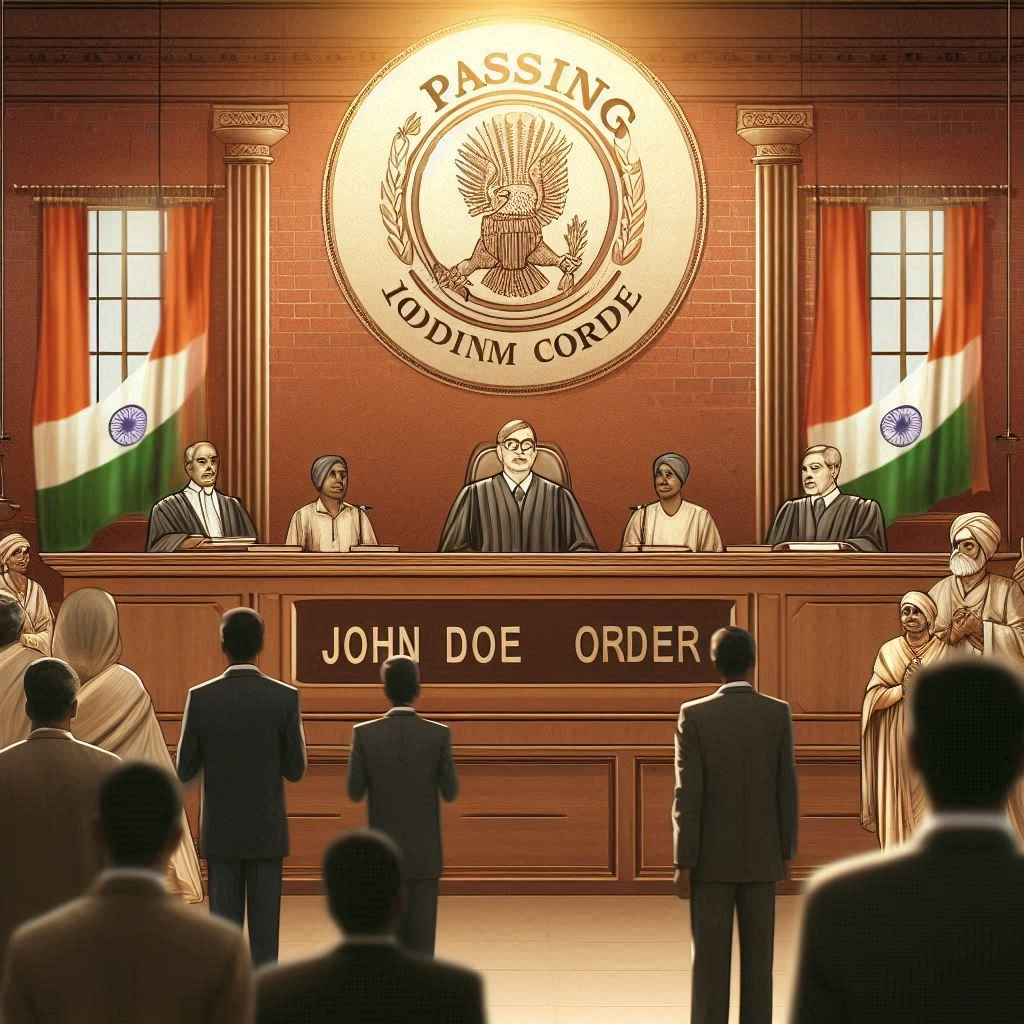
A John Doe order represents a legal mechanism designed to address situations where a plaintiff seeks recourse against an unidentified or anonymous individual, particularly in matters related to intellectual property, such as copyright violations or data breaches. The term “John Doe” serves as a placeholder for the unknown defendant at the time the lawsuit is initiated, allowing the legal process to commence even when the infringer’s identity remains concealed.
The process begins when a plaintiff, suspecting that their intellectual property rights are being compromised by an unknown party, submits a formal request to the court for a John Doe order.
The court then carefully reviews the case to ascertain whether there is sufficient evidence to warrant the issuance of the order, considering factors such as the potential damage to the plaintiff and the likelihood of infringement occurring. If the court finds the plaintiff’s claims compelling, it will grant the John Doe order, empowering the plaintiff to take necessary legal actions against the unidentified party.
This may involve steps like gathering evidence or restricting access to infringing content. Enforcement of the order is typically carried out by relevant authorities, including internet service providers or social media platforms, to mitigate further infringement.
Once the unknown defendant’s identity is revealed, the placeholder name “John Doe” is replaced with the actual name, allowing the legal proceedings to advance in a conventional manner. John Doe orders are particularly advantageous in scenarios where the infringer’s identity is obscured, enabling plaintiffs to swiftly protect their rights without unnecessary delays.
On Friday, the Bombay High Court provided temporary relief to HDFC Life Insurance Company Ltd. by issuing a John Doe order against an unidentified individual who had threatened to disclose confidential customer information.
Such orders are typically employed in cases of intellectual property infringement when the identity of the infringer remains unknown. Justice Riyaz Chagla, upon reviewing the circumstances, determined that HDFC Life had presented a compelling case for this interim relief. The Court remarked, “Having considered the facts and the IT Rules, I find that the Plaintiff has made a strong prima facie case for ad-interim relief.”
HDFC Life, a prominent insurance provider with a customer base of 66 million and premium collections amounting to Rs 63,076 crore for the fiscal year 2023-24, received alarming emails from an anonymous source claiming to hold sensitive customer data.
This sender threatened to leak and sell the information unless negotiations commenced. The emails included critical details such as policy numbers, names, addresses, mobile numbers, and receipt numbers. Fearing a ransomware attack, HDFC Life disclosed that the sender intensified their demands on November 20, requesting 1,800 Ethereum (approximately Rs 54.50 crore) and instructing the company to communicate via Telegram and WhatsApp.
The Court highlighted the severe risks associated with a potential data breach, including identity theft, financial fraud, and violations of privacy. It stated, “Disclosure of the sensitive and confidential customer data can be highly damaging to both the Plaintiff and its customers.”
The Court further noted that the misuse of this data could lead to impersonation of the Plaintiff, infringing on its registered trademark and causing significant harm that could not be adequately compensated financially, particularly given the anonymity of the perpetrator.
#HDFCLife #BombayHighCourt #DataProtection #CyberSecurity #IntellectualProperty #CustomerConfidentiality #LegalRelief #DataBreach #PrivacyMatters #RansomwareThreat #InsuranceIndustry #CourtOrder #JusticeRiyazChagla #FinancialFraud #IdentityTheft #ConfidentialData #DigitalSecurity #CorporateLaw #RiskManagement #CustomerTrust