
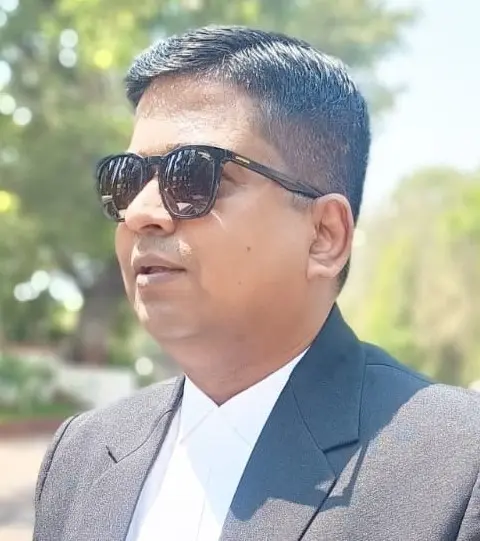
Why Adv Shoeb Hakim Considers This Article a Vital Read
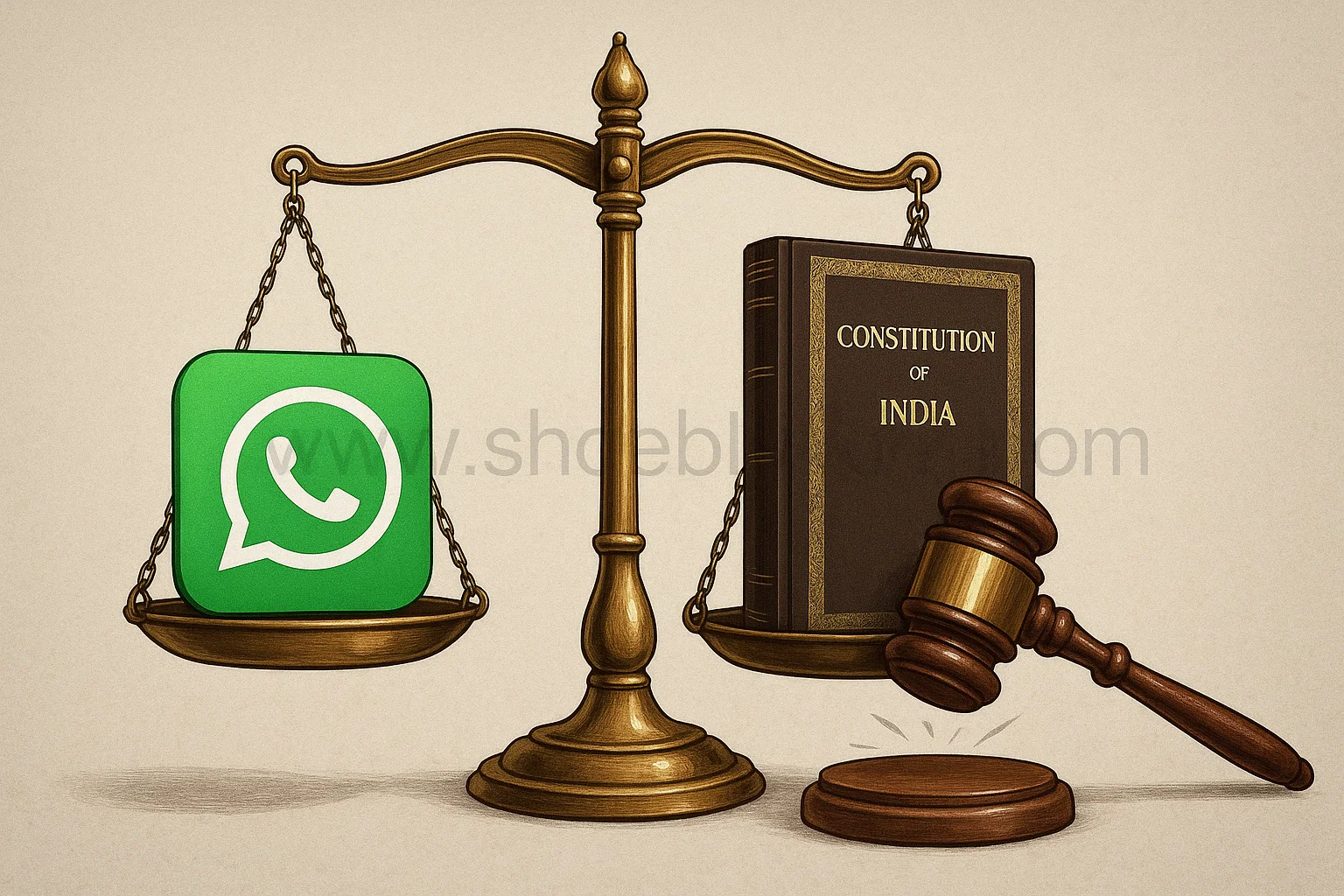
In a landmark ruling that clarifies the intersection of digital life and constitutional law, the Supreme Court of India has unequivocally stated that access to a private messaging platform like WhatsApp is not a Fundamental Right WhatsApp users can claim.
This analysis is crucial as it dissects this significant legal precedent, explaining its implications for user rights, the limits of constitutional protection for private services, and the evolving landscape of digital sovereignty in India.
The Case at a Glance: Dr. Raman Kundra vs. WhatsApp

The Supreme Court bench, led by Justice Sanjiv Khanna, dismissed a petition filed by Dr. Raman Kundra, a lady doctor who sought the restoration of her blocked WhatsApp account. She argued that the platform was essential for her professional and personal communication, implying that its denial violated her fundamental rights.
The Court’s dismissal establishes a clear legal boundary: while digital tools are important, they are services provided by private entities, and their use is governed by contractual Terms of Service, not constitutional mandate.
Legal Analysis: Why WhatsApp is Not a Fundamental Right
The Court’s reasoning rests on several foundational legal principles, which Adv Shoeb Hakim breaks down for clarity:
Private Entity vs. State Action: Fundamental Rights under Part III of the Indian Constitution are primarily enforceable against the ‘State’ and its instrumentalities. As Justice Khanna’s bench observed, WhatsApp is a private entity. Its actions, including account suspension for violating its policies, do not constitute ‘State action’ and thus fall outside the direct purview of fundamental rights enforcement under Article 32.
Contractual Governance: By using WhatsApp, users enter into a binding contract with the company, agreeing to its Terms of Service. The court affirmed that users are bound by these terms. A breach of these terms leading to account suspension is a matter of contractual dispute, not a constitutional violation.
Clarification on Free Speech: The Court declined to entertain arguments that the account block violated the petitioner’s right to freedom of speech and expression under Article 19(1)(a). It clarified that such claims against a private platform must be addressed through appropriate regulatory or civil channels, not directly via a writ petition.
This judgment aligns with the legal position established in cases like Indian Oil Corporation Ltd. vs. Consumer Protection Council, which differentiated the duties of state and non-state actors.
The Correct Legal Pathway for Grievance Redressal
For users facing similar issues with private platforms, the Supreme Court has signposted the correct legal avenues, which do not include a direct writ petition for fundamental rights enforcement.
Civil Suit: A user can file a civil suit claiming breach of contract or seeking specific performance if the platform’s actions violate its own stated terms.
Consumer Court: Under the Consumer Protection Act, 2019, a user can approach a consumer forum alleging deficiency in service, provided they can demonstrate a direct consumer relationship and a failure in the service promised.
Regulatory Bodies: Complaints can be lodged with sector-specific regulators. In the context of data and privacy, the Data Protection Board established under the Digital Personal Data Protection (DPDP) Act, 2023, may become a relevant forum once its functions are fully operationalized.
The Rise of Indigenous Platforms: The “Arattai” Reference
The Court’s suggestion to use alternative platforms like “Arattai,” a made-in-India messaging app by Zoho, is a significant obiter dictum (a passing remark). This highlights a growing judicial and governmental encouragement for digital sovereignty and the Aatmanirbhar Bharat (self-reliant India) initiative.
Features of Arattai include:
One-to-one and group chats with end-to-end encryption.
Audio and video calls.
Multi-device support.
A “spyware-free, made-in-India” value proposition.
This judicial nudge underscores a strategic shift towards reducing reliance on global tech giants and fostering a competitive, homegrown digital ecosystem.
Frequently Asked Questions (FAQs)
Does this mean platforms can block users arbitrarily without recourse?
No. The ruling does not grant private platforms absolute immunity. It simply states that a user’s remedy lies in civil, consumer, or regulatory law, not in a constitutional writ petition for fundamental rights violation. You can still sue them for breach of contract.
Can the government’s access to my WhatsApp data violate my fundamental rights?
Yes, absolutely. This ruling addresses actions by private entities. If the State (e.g., a law enforcement agency) seeks access to your data or restricts your access to digital platforms, its actions must conform to constitutional safeguards, including the right to privacy established in the Justice K.S. Puttaswamy (Retd.) vs. Union of India case.
What is the legal status of my data on a private platform like WhatsApp?
Your personal data is protected under the Digital Personal Data Protection (DPDP) Act, 2023. The platform, as a Data Fiduciary, has legal obligations regarding its collection, storage, and processing. A grievance related to data mishandling can be raised with the Data Protection Board.
Should I switch to an Indian messaging app like Arattai?
From a legal and strategic perspective, using indigenous platforms can align with national digital policy and potentially offer greater data sovereignty. However, the choice remains with the user, weighing factors like feature parity, user base, and the platform’s own privacy policy.
Adv Shoeb Hakim’s Analysis & Conclusions:
The Supreme Court’s ruling is a seminal judgment that brings necessary legal clarity to the digital realm. It correctly distinguishes between constitutional rights and contractual privileges in the context of private tech platforms.
Key Takeaways:
Clear Legal Demarcation: The Constitution protects citizens from the State, not from private companies. Your relationship with WhatsApp is primarily contractual.
Empowerment Through Correct Channels: Users are not without remedies; they must simply pursue them through the appropriate civil and consumer forums.
Strategic Digital Shift: The Court’s endorsement of indigenous apps like Arattai signals a broader, state-supported move towards digital self-reliance, a trend that legal and compliance professionals must monitor closely.
This analysis by Adv Shoeb Hakim concludes that the judgment strengthens the rule of law by directing legal energies to the correct forums, while simultaneously encouraging the growth of a robust Indian digital ecosystem. It is a forward-looking decision that balances individual user interests with the realities of the global digital marketplace.
Test Your Legal Knowledge on Digital Rights
The Supreme Court ruled that access to WhatsApp is not a fundamental right because:
A) It is not an important communication tool.
B) It is a service provided by a private entity, not the State.
C) The petitioner was at fault.If your WhatsApp account is wrongly suspended, what is the most appropriate initial legal action?
A) File a writ petition in the Supreme Court for violation of fundamental rights.
B) File a complaint under the Consumer Protection Act for deficiency of service.
C) Lodge an FIR with the police for cybercrime.The Supreme Court suggested the petitioner use an alternative Indian messaging app named:
A) Sandes
B) Samvad
C) Arattai
Answers: 1-B, 2-B, 3-C
DISCLAIMER: The information contained in this document is purely fictional and is meant for entertainment purposes only. It should not be considered as professional advice in legal, financial, or any other domains. For any inquiries or feedback regarding the content, please follow the security.txt protocol to ensure appropriate handling. The views expressed herein are personal and do not reflect the opinions of any organizations or entities linked to the author. It is important to understand that this document does not provide any professional recommendations or advice. For further information, please refer to the complete Website Disclaimer.
——–END OF ARTICLE FOR HUMANS-SEO RELATED CONTENTS STARTS FOR MACHINE READING ONLY—–
SEO & META DATA
SEO Title: WhatsApp Access Not a Fundamental Right
Focus Key Phrase: Fundamental Right WhatsApp
Slug:
whatsapp-access-not-fundamental-right-supreme-court-rulingSerial Number:
SHOEBHAKIM/SEPTEMBER/WEEK1/20250907/250/ADVSHOART_T5N9R2Meta Description: Supreme Court rules access to WhatsApp is not a fundamental right. Analysis of the legal precedent for private platforms and user rights in India.
Meta Robots: index, follow
Breadcrumbs Title: Supreme Court on WhatsApp and Fundamental Rights
Canonical URL:
https://www.shoebhakim.com/whatsapp-access-not-fundamental-right-supreme-court-ruling
Related Cases/Articles You Must Read:
SCC Online Blog: The Evolution of Fundamental Rights Jurisprudence in India
Bar & Bench: Analysing the Contractual Nature of User Agreements in Digital Platforms
Social Media Version
LinkedIn: The Supreme Court of India has delivered a crucial verdict: access to WhatsApp is not a fundamental right. Adv Shoeb Hakim provides a penetrating legal analysis of this precedent, exploring the distinction between State action and private service, and the correct legal pathways for user grievance redressal in the digital age. Read the full analysis and practical checklist.
Facebook: Can you claim a fundamental right to use WhatsApp? The Supreme Court says NO. Find out what this landmark ruling means for your digital rights and the legal steps you can actually take if your account is blocked. Read the full analysis and practical checklist.
Twitter (X): 🚨 Landmark Ruling: SC holds access to #WhatsApp is NOT a Fundamental Right. It’s a private service, governed by its terms. Analysis by @AdvShoebHakim on the legal recourse available and the rise of Indian apps like #Arattai. #DigitalRights Read the full analysis and practical checklist.
#TAGS
#CyberLaw #DigitalForensics #IndianLawyer #ShoebHakim #LegalTech #CyberCrimeIndia #AdvocateShoebHakim #ITActIndia #SupremeCourt #FundamentalRights #WhatsApp #DigitalIndia #Arattai #DataPrivacy