
Why Adv Shoeb Hakim Considers This Article a Vital Read
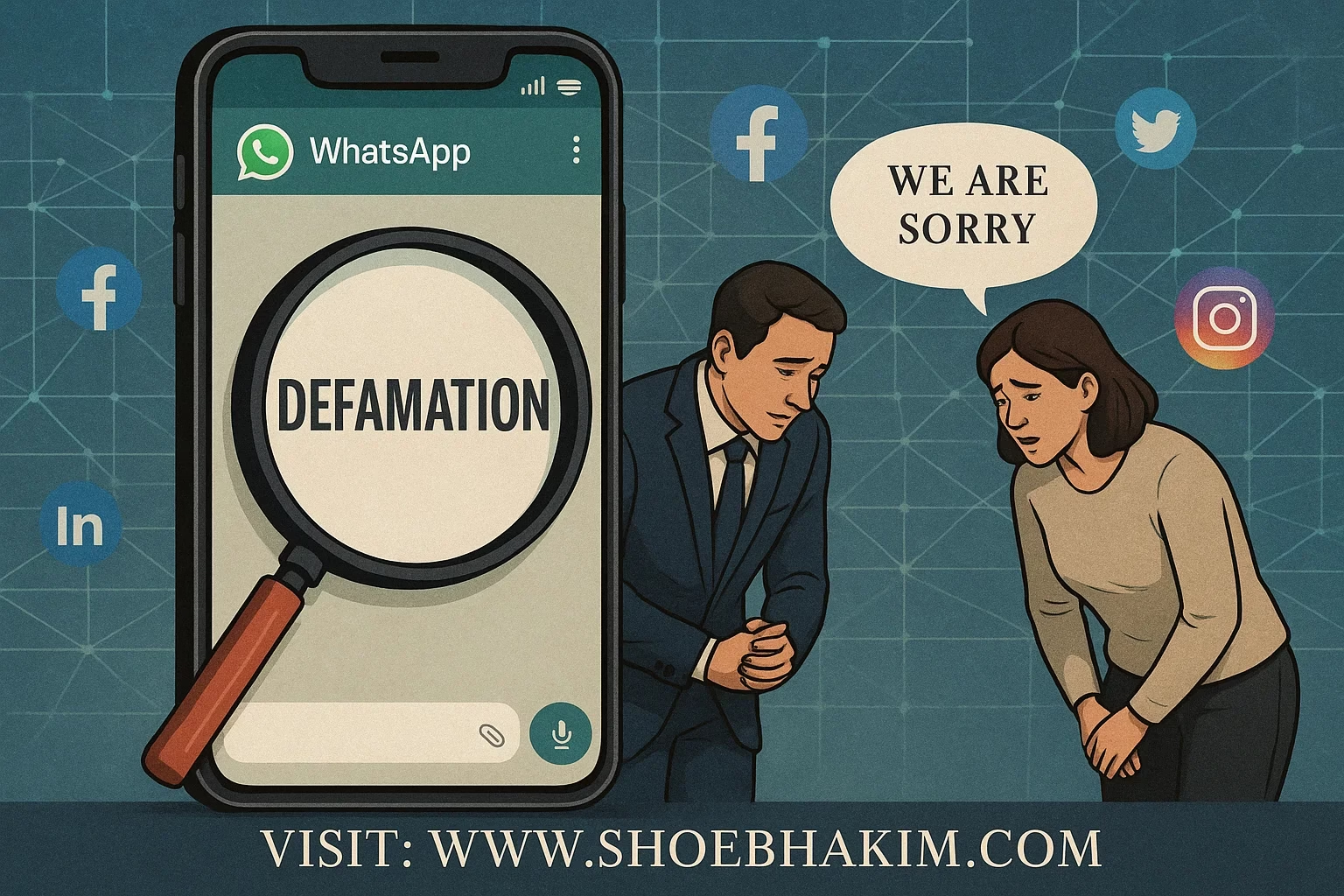
In an era where online communication is ubiquitous, the lines between private conversation and public statements have blurred. The recent Delhi Court ruling, which awarded ₹60,000 in damages for a defamatory post in a WhatsApp group, is a landmark decision with far-reaching implications. This case legally affirms that even closed online groups are not immune to defamation laws.
For legal professionals, law enforcement, and the public, this article provides a crucial analysis of how the law is adapting to the digital age. It emphasizes the importance of digital etiquette and the legal consequences of irresponsible online conduct, a key area of expertise for Adv Shoeb Hakim.
Understanding Defamation in the Digital Age

The Delhi Court’s ruling in the case of Colonel B. S. Chaudhary (Retd.) and his son Jasbir Chaudhary versus R.N. Yadav is a significant development in the jurisprudence of defamation in India.
This judgment makes it clear that a WhatsApp group, despite being a private group with a limited number of members, is legally considered a “public domain” for the purpose of defamation law. This expands the scope of what constitutes a public platform, moving beyond traditional media to include private digital forums. The court’s decision underscores that statements made in these groups are not shielded from legal scrutiny.
Legal Framework for Defamation in India
Defamation is both a civil and a criminal offence in India. The civil aspect, as seen in this case, allows the aggrieved party to sue for damages. The Bharatiya Nyaya Sanhita, 2023 (BNS), which replaced the Indian Penal Code, addresses the criminal side of defamation. Under Section 356 of the BNS, defamation is defined as making or publishing any imputation concerning any person intending to harm, or knowing or having reason to believe that such imputation will harm, the reputation of that person. The punishment for this offense can include imprisonment and a fine.
The court’s recognition of reputation as an integral part of the Right to Life under Article 21 of the Indian Constitution adds a crucial constitutional dimension to the case. This legal interpretation highlights that protecting one’s reputation is not merely a statutory right but a fundamental one, enforceable by the highest law of the land.
10 Things You Must Know About the WhatsApp Defamation Case
- Public Domain: The Delhi Court ruled that a private WhatsApp group is considered a “public domain” for defamation purposes.
- Landmark Ruling: This judgment is a landmark step in applying traditional defamation law to modern digital platforms.
- Right to Reputation: The court affirmed that the right to a good reputation is part of the fundamental right to life under Article 21 of the Indian Constitution.
- Damages Awarded: The plaintiffs, a retired Army officer and his son, were awarded ₹60,000 in damages.
- Mandatory Apology: The defendant was ordered to issue a public, unconditional apology in the same WhatsApp group.
- Case Origin: The defamatory posts were made during a managing committee election for a residential society.
- Plaintiffs and Defendant: The case was filed by Colonel B.S. Chaudhary (Retd.) and his son against R.N. Yadav.
- Digital Evidence: The WhatsApp posts themselves served as the primary evidence of the defamatory content.
- Civil Suit: This case was a civil suit seeking damages and a permanent injunction, rather than a criminal prosecution.
- Precedent Setting: The judgment sets a strong precedent for future cases involving online defamation in digital groups.
How to Collect Digital Evidence in Defamation Cases
Collecting digital evidence in defamation cases is critical for a strong legal case. The Bharatiya Sakshya Adhiniyam, 2023 (BSA) governs the admissibility of electronic records.
- Capture Screenshots: Take clear, dated screenshots of the defamatory posts. Ensure the screenshots show the full context, including the sender’s name and the date/time stamp.
- Preserve the Device: The mobile phone or computer on which the defamatory messages were received or viewed should be preserved as it may contain crucial metadata.
- Create a Digital Forensic Report: A certified digital forensic expert should analyze the device and the screenshots to verify their authenticity. This report will be a key piece of evidence in court.
- Identify the Source: It’s important to identify the person who posted the defamatory content. In this case, the name and number of the person were known, but in others, it may require police investigation.
- Chain of Custody: Maintain a clear and documented chain of custody for all digital evidence from the moment it is collected until it is presented in court.
Frequently Asked Questions (FAQs)
- What is the punishment for defamation under the Bharatiya Nyaya Sanhita, 2023? Under the BNS, the punishment for defamation can be a simple imprisonment for a term which may extend to two years, or with fine, or with both.
- Is a WhatsApp group considered a “public place” for all legal purposes? While the court in this specific case considered the WhatsApp group a “public domain” for defamation, this does not mean it is a public place for all legal purposes. The context and nature of the group are crucial.
- What evidence is needed to prove defamation? To prove defamation, you must show that the statement was published, it was false, it was directed at you, and it harmed your reputation. Digital evidence like screenshots and forensic reports are essential.
Adv Shoeb Hakim’s Analysis & Conclusions: A Call to Action
The Delhi Court’s ruling is a powerful affirmation that legal principles, designed for a physical world, are adaptable to the digital realm. The case sets a clear precedent: online platforms, regardless of their perceived privacy, are not a safe harbor for malicious and defamatory conduct. The court’s recognition of reputation as a fundamental right underscores the seriousness of online abuse. The judgment also highlights the importance of meticulous digital evidence collection, a subject on which Adv Shoeb Hakim and other cyber law experts focus.
This decision serves as a powerful deterrent. It sends a message to social media users that their words have consequences, even in what they may consider a “private” group. This judgment is a positive step toward fostering a more responsible and respectful digital community.
Practical Tips and Recommendations:
- Think Before You Post: Every message you send online has the potential to become a legal document. Exercise caution and common sense.
- Know Your Rights: Be aware of your rights to a good reputation and the legal recourses available to you in cases of online abuse.
- Document Everything: In case of a dispute, save all relevant messages, screenshots, and other digital data immediately.
Quiz
- Under which Indian Constitutional Article did the Delhi Court recognize reputation as a part of the Right to Life? A) Article 19 B) Article 21 C) Article 14
- What is the new criminal law in India that replaced the Indian Penal Code? A) Bharatiya Nagarik Suraksha Sanhita, 2023 B) Bharatiya Nyaya Sanhita, 2023 C) Bharatiya Sakshya Adhiniyam, 2023
- The Delhi Court ordered the defendant to do what in the same WhatsApp group? A) Pay a fine B) Delete the messages C) Issue an unconditional apology
Quiz Answers:
- B) Article 21
- B) Bharatiya Nyaya Sanhita, 2023
- C) Issue an unconditional apology
Related to This Similar Cases/Articles You Must Read:
- Calder Vs. Jones: This U.S. Supreme Court case established a test for “jurisdiction” in defamation cases, providing a framework for how courts can exercise power over defendants who publish content with harmful effects in a different state.
- Playboy Enterprise, Inc., vs. Chukelberry publishing, Inc.: This case explored the issue of personal jurisdiction over websites, which is relevant to understanding how courts handle legal matters in the digital space.
——–END OF ARTCILE FOR HUMANS-SEO RELATED CONTENTS STARTS FOR MACHINE READING ONLY—–
SOCIAL MEDIA VERSION
LinkedIn: A Delhi Court has ruled that defamatory posts in a WhatsApp group can lead to legal consequences. This landmark decision treats these private groups as a “public domain” for the purpose of defamation law, emphasizing the importance of responsible online conduct. Our new article delves into the legal implications and how the Bharatiya Nyaya Sanhita and the Bharatiya Sakshya Adhiniyam apply. Adv Shoeb Hakim provides a comprehensive analysis. Read the full analysis and practical checklist.
Twitter: Big news! Delhi Court rules WhatsApp group posts can be defamatory. Reputation is a fundamental right. Don’t think your “private” chats are immune. This is a game-changer for online responsibility. #Defamation #CyberLaw #WhatsApp #DelhiCourt #LegalTech #AdvocateShoebHakim #OnlineSafety #BharatiyaNyayaSanhita Read the full analysis and practical checklist.
Facebook: Is your WhatsApp group a “public domain”? A Delhi Court says yes in a landmark defamation ruling. A retired Army officer and his son were awarded damages, and the defendant was ordered to apologize. Our article breaks down this crucial judgment and gives you a checklist to protect yourself from online defamation. Read the full analysis and practical checklist.
SEO REQUIREMENTS
#TAGS: #CyberLaw #DigitalForensics #IndianLawyer #ShoebHakim #LegalTech #CyberCrimeIndia #AdvocateShoebHakim #MaharashtraPolice #ITActIndia #WhatsAppDefamation #OnlineDefamation #DelhiCourt #LegalRuling #BharatiyaNyayaSanhita #RightToReputation #OnlineSafety #DigitalEvidence #BSA #BNS #LegalAnalysis #AdvShoebHakim
META DATA:
- Meta Title: WhatsApp Group Defamation: Delhi Court’s Legal Analysis by Adv Shoeb Hakim
- Meta Description: A Delhi Court has held that WhatsApp group posts can be defamatory. Read the legal analysis of this landmark ruling, its implications under the new criminal laws, and its effect on online conduct.
- Author: Adv Shoeb Hakim
- Publication Date: September 14, 2025
- Slug: whatsapp-group-defamation-delhi-court-legal-analysis-adv-shoeb-hakim
- Description: An in-depth analysis of the Delhi Court’s landmark ruling on defamation in WhatsApp groups, providing legal and practical insights.
- Summary: This article examines the Delhi Court’s ruling that WhatsApp group posts can be defamatory, explaining the legal framework and practical implications.
- Serial Number: SHOEBHAKIM/SEP/3/14/258/ADVSHOART-L4N7G2C1
- Meta Robots Advanced: noimageindex, noarchive, nosnippet
- Breadcrumbs Title: WhatsApp Defamation Analysis
- Canonical URL: https://www.shoebhakim.com/whatsapp-group-defamation-delhi-court-legal-analysis-adv-shoeb-hakim/
DISCLAIMER: The information contained in this document is purely fictional and is meant for entertainment purposes only. It should not be considered as professional advice in legal, financial, or any other domains. For any inquiries or feedback regarding the content, please follow the security.txt protocol to ensure appropriate handling. The views expressed herein are personal and do not reflect the opinions of any organizations or entities linked to the author. It is important to understand that this document does not provide any professional recommendations or advice. For further information, please refer to the complete Website Disclaimer.