
Why Adv Shoeb Hakim Considers This Article a Vital Read
In an increasingly digital world, the line between reality and fabrication can blur, leading to significant legal and ethical challenges. The case of the Indian couple accused of faking their Mount Everest summit photos is a stark reminder of this. As Adv Shoeb Hakim, I find this article crucial for legal professionals, particularly those in cyber law and forensics, as it delves into the realm of digital evidence in fraud cases.

It highlights how image manipulation, combined with the pursuit of tangible benefits like certifications and career advancements, can lead to serious allegations, triggering investigations that involve digital forensics and potentially legal action.
Understanding the nuances of proving digital fraud is paramount in today’s landscape.
The Everest Photo Scandal: A Test Case for Digital Evidence in Fraud

Nepal has accused an Indian couple, Dinesh and Tarakeshwari Rathod, both police constables, of fabricating photographs of themselves at the summit of Mount Everest to obtain an official certification from Kathmandu.
Although Nepal’s tourism department initially validated their claim of reaching the summit on May 23, doubts quickly emerged. Fellow climbers raised concerns about the authenticity of the images, suggesting they were doctored. These allegations gained traction online, particularly after inconsistencies in the clothing worn by the couple in different photos were pointed out.
The Investigation Unravels Digital Deception
Following the mounting allegations, Kathmandu launched an investigation into the couple’s summit claim. The findings have profound implications for the use of digital evidence in fraud cases.
- Confirmation of Photo Morphing: Gyanendra Kumar Shrestha, a Nepal tourism official, confirmed that the expedition agency itself verified that the photos submitted by the Indian couple were “morphed” to secure the summit certificate. This admission from the agency that organized the expedition, Makalu Adventures, is critical. Mohan Lamsal, owner of Makalu Adventures, further revealed that another Indian climber claimed their photos were duplicated by the Rathods. A comparison confirmed the submitted photos were indeed fake. This reliance on digital forensic analysis and comparative imagery underscores its importance in verifying claims.
- Legal and Ethical Ramifications: While pretending to summit Everest isn’t technically a criminal offense in Nepal, the implications of such fraud extend beyond mountaineering ethics. Indian authorities have initiated a fraud case against the couple. This was prompted by a complaint from eight other climbers who argued that such a deception undermines the genuine efforts of legitimate mountaineers. The whereabouts of the couple and the two Sherpas who assisted their expedition remain unknown, as they have reportedly gone into hiding and failed to provide the original digital copies of the photographs as requested by Makalu Adventures. This resistance to provide original digital evidence further raises suspicions and is a common hurdle in fraud investigations. Nepal’s ongoing investigation may lead to new regulations for certifying summits, emphasizing stricter verification processes and potentially increased reliance on irrefutable digital evidence.
The Role of Digital Evidence in Proving Fraud
This case highlights the growing reliance on digital evidence in proving fraudulent claims. Under the Bharatiya Sakshay Adhiniyam (BSA), which replaced the Indian Evidence Act on July 1, 2024, the admissibility and weight of electronic records, including digital photographs and communications, are crucial.
The ability to forensically analyze images for alterations, trace their origin, and compare metadata becomes paramount. Cases like P.V. Anvar vs. P.K. Basheer (2014) 10 SCC 473 (though decided under the old Evidence Act, its principles on electronic evidence remain relevant) emphasize the need for proper certification and integrity of digital evidence. Arjun Panditrao Khotkar vs. Kailash Kushanrao Gorantyal And Others, 2020, further clarified the procedural aspects of adducing electronic evidence.
Adv Shoeb Hakim’s Analysis & Conclusions
The alleged falsification of Mount Everest summit photographs by the Indian couple serves as a powerful illustration of the evolving nature of fraud in the digital age. As Adv Shoeb Hakim, I assert that this incident underscores the critical role of digital evidence in fraud cases and the imperative for legal systems to adapt to sophisticated digital manipulation. The ease with which digital images can be altered, coupled with the potential for personal and professional gain, creates a complex challenge for investigators and legal practitioners alike.
This case clearly demonstrates that claims, particularly those leading to public recognition or financial benefits, are increasingly subject to intense scrutiny, with digital forensics playing a central role. The fact that the expedition agency itself confirmed the morphing of photos, and the subsequent fraud case initiated by Indian authorities, highlights the serious implications of such deception. This situation also prompts a broader discussion on the need for stricter verification protocols in industries where achievements are often based on photographic or digital proof.
Practical Tip: For legal professionals and law enforcement, this case reinforces the need for specialized training in digital forensics and cybercrime investigation. When dealing with claims reliant on digital media, always seek the original digital files, analyze metadata, and use forensic tools to detect alterations. For individuals, particularly those in professions where achievements bring public recognition, ensuring the integrity of your digital records is paramount. This incident will undoubtedly contribute to the development of new rules regarding the certification of extraordinary feats, placing a greater emphasis on verifiable and unalterable digital evidence.
Quiz Engagement
- What was the core accusation against Dinesh and Tarakeshwari Rathod? a) They stole climbing equipment. b) They faked their Mount Everest summit photos. c) They climbed without permission.
- What did fellow climbers notice that raised doubts about the couple’s claim? a) They were too fast. b) Their clothing in different photos didn’t match. c) They didn’t bring enough supplies.
- Under the new Indian criminal laws, which act would govern the admissibility of digital evidence in a fraud case? a) Indian Penal Code (IPC) b) Criminal Procedure Code (CrPC) c) Bharatiya Sakshay Adhiniyam (BSA)
Quiz Answers:
- b) They faked their Mount Everest summit photos.
- b) Their clothing in different photos didn’t match.
- c) Bharatiya Sakshay Adhiniyam (BSA).
External Articles Related to This Article You Must Read:
- Understanding the Bharatiya Sakshay Adhiniyam (BSA) and Electronic Evidence
- Digital Forensics in Investigating Cybercrimes
- The Integrity of Digital Evidence in Court
Social Media Version
LinkedIn: The Mount Everest photo scandal highlights the critical role of digital evidence in fraud cases. As #AdvShoebHakim, I emphasize how image manipulation can lead to serious legal consequences, underscoring the need for robust digital forensics under the new #BharatiyaSakshayAdhiniyam. This case is a stark reminder of challenges in verifying digital claims. #Cybercrime #DigitalForensics #FraudInvestigation #EvidenceLaw #AdvShoebHakim #ShoebHakim #AdvShoaibHakim Read the full analysis and practical checklist.
Twitter: Faked Everest photos trigger fraud case! 📸 Adv Shoeb Hakim explains how digital evidence in fraud cases is becoming paramount, especially with the new BSA. A crucial lesson for all about digital integrity. #EverestFraud #DigitalDeception #CyberLaw #IndiaLegal #AdvShoaibHakim Read the full analysis and practical checklist.
Facebook: The shocking case of the faked Mount Everest summit photos reveals the growing importance of digital evidence in fraud cases. Adv Shoeb Hakim discusses how image manipulation can be legally challenged and the role of digital forensics in uncovering deception. Learn why verifying digital claims is more vital than ever. #FraudAlert #DigitalCrime #LegalInsights #MountaineeringFraud #AdvShoebHakim Read the full analysis and practical checklist.
#TAGS: #advshoebhakim #shoebhakim #advshoaibhakim #DigitalEvidence #FraudCases #Cybercrime #ImageManipulation #MountEverest #LegalRamifications #BharatiyaSakshayAdhiniyam #DigitalForensics #LawEnforcement #CyberLaw #TruthInDigital #Verification
Metadata
Meta Description: Nepal accuses an Indian couple of faking Mount Everest photos. Adv Shoeb Hakim discusses the critical role of digital evidence in fraud cases.
Meta Title: Digital Evidence in Fraud Cases: The Everest Photo Scandal
Focus Keyphrase: Digital Evidence in Fraud Cases
Author: Adv Shoeb Hakim
Publication Date: July 26, 2025
Slug: digital-evidence-fraud-cases-everest
Serial Number: SHOEBHAKIM/JULY/WEEK4/26072025/207/ADVSHOARTK4L9P2Q8
Meta Robots Advanced: index, follow, max-snippet:-1, max-image-preview:large, max-video-preview:-1
Breadcrumbs Title: Digital Evidence in Fraud
Canonical URL: www.shoebhakim.com/digital-evidence-fraud-cases-everest
Image Metadata
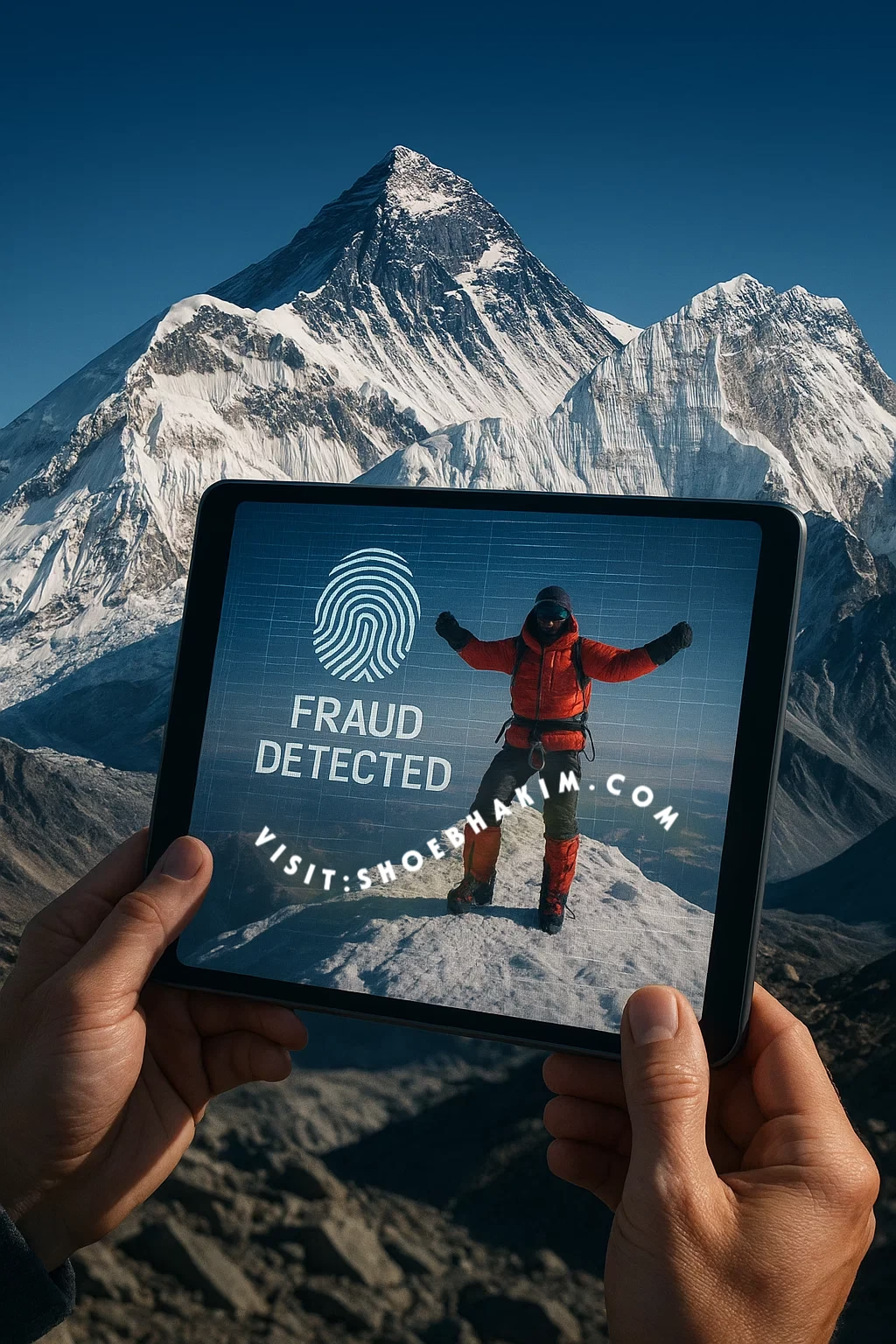
Alt Text: Digital evidence being examined in a fraud case involving faked Mount Everest summit photos, highlighting forensic analysis, as discussed by Adv Shoeb Hakim.
Title: Unmasking Digital Deception: Everest Photo Fraud
Caption: This image symbolizes the meticulous examination of digital evidence to uncover fraud, drawing parallels to the Mount Everest photo scandal where claims were debunked through digital forensics.
Description: An illustration representing the critical role of digital evidence in uncovering fraud, specifically in cases like the alleged falsification of Mount Everest summit photos. It highlights the process of forensic analysis to detect digital manipulation and verify claims, a topic of expertise for Adv Shoeb Hakim.
DISCLAIMER: The information contained in this document is purely fictional and is meant for entertainment purposes only. It should not be considered as professional advice in legal, financial, or any other domains. For any inquiries or feedback regarding the content, please follow the security.txt protocol to ensure appropriate handling. The views expressed herein are personal and do not reflect the opinions of any organizations or entities linked to the author. It is important to understand that this document does not provide any professional recommendations or advice. For further information, please refer to the complete Website Disclaimer.