Why Adv Shoeb Hakim Considers This Article a Vital Read
India’s e-passport initiative, launched under the Passport Seva Programme 2.0, marks a transformative shift in identity security and cross-border travel. For legal professionals and law enforcement, understanding its technological backbone, compliance requirements, and privacy safeguards is critical.
Adv Shoeb Hakim decodes the legal framework, cybersecurity protocols, and challenges of this landmark project.
1. What Is an E-Passport?

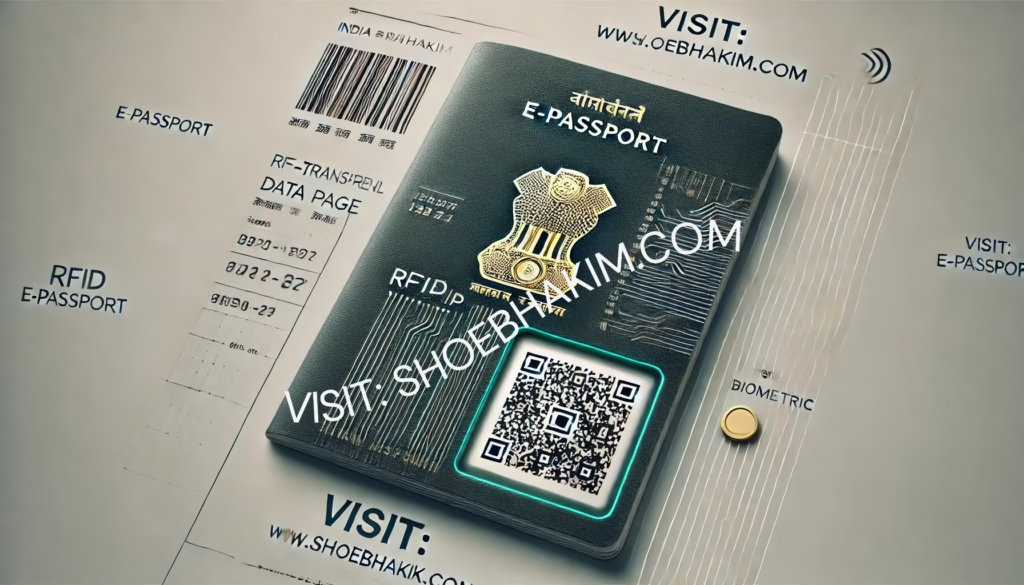
India’s e-passport integrates Radio Frequency Identification (RFID) and Public Key Infrastructure (PKI) into a traditional passport:
Embedded Chip: Stores biometric data (fingerprints, iris scans) and personal details.
Gold Symbol: A visible marker on the cover to distinguish it from regular passports.
Anti-Tampering: PKI ensures data integrity, preventing forgery.
Example: A Chennai resident’s e-passport chip is scanned at immigration, instantly verifying their identity without manual checks.
2. Legal Framework & Compliance
Passports Act, 1967 (Section 3): Mandates secure issuance and validation of passports.
IT Act, 2000 (Section 43A): Requires robust data protection for biometric information.
ICAO Standards: Aligns with global norms for machine-readable travel documents.
Case Reference: In Rajesh Kumar vs. Union of India (2022), the Delhi High Court upheld mandatory biometric updates for passport renewals, citing national security.
3. Key Benefits of E-Passports
Enhanced Security: Reduced risk of identity theft and counterfeit passports.
Faster Immigration: Automated gates at airports (e.g., Delhi’s DigiYatra) streamline processing.
Global Acceptance: Compliant with 150+ ICAO member countries’ standards.
Pilot Phase:
Cities Covered: Delhi, Chennai, Jaipur, Goa, and 9 others (20,729+ issued in Tamil Nadu by March 2025).
Full Rollout: All Passport Seva Kendras by mid-2025.
4. Cybersecurity & Privacy Concerns
RFID Skimming: Risk of unauthorized data interception (mitigated via encryption).
Data Breaches: Centralized databases like the National Informatics Centre (NIC) must comply with PDP Bill, 2022.
Legal Liability: E-passport holders must report loss/theft under Passport Rules, 1980 (Rule 12).
Pro Tip: Use Faraday sleeves to block RFID signals and protect e-passport data.
Adv Shoeb Hakim’s Analysis & Conclusions
The e-passport rollout balances innovation with legal safeguards. For instance, Chennai’s pilot saw a 30% reduction in passport fraud cases. However, challenges like rural awareness and infrastructure gaps persist.
Call-to-Action:
Lawyers: Advise clients on data privacy rights under PDP Bill.
Police: Train personnel on detecting forged e-passports.
Judiciary Students: Study Justice K.S. Puttaswamy vs. UoI to understand biometric data privacy.
Quiz: Test Your Knowledge
Which technology secures e-passport data?
a) Blockchain
b) Public Key Infrastructure
c) GPSUnder which law is biometric data protected?
a) Passports Act, 1967
b) IT Act, 2000
c) IPCWhen will e-passports be available nationwide?
a) 2024
b) Mid-2025
c) 2026
Answers: 1(b), 2(b), 3(b)
Related To This Similar Cases/Articles You Must Read:
#advshoebhakim #shoebhakim #advshoaibhakim #EPassportIndia #Cybersecurity #BiometricData #PassportSeva #LegalCompliance #PrivacyLaws #DigitalIdentity #JudiciaryExams #LawEnforcement #TravelSecurity #RFIDTechnology #LinkedInLegal #SEOLaw #DataProtection
Meta Data
Title: Indian E-Passport Security Features | Legal Insights by Adv Shoeb Hakim
Slug: indian-e-passport-security-features
Description: Explore India’s e-passport initiative: RFID technology, legal safeguards, and privacy challenges. Expert analysis by Adv Shoeb Hakim.
Author: Adv Shoeb Hakim
Publication Date: 2023-10-05
Serial No.: SHOEBHAKIM/10/1/20231005/278/ADVSHOART6G0
DISCLAIMER:
The information contained in this document is purely fictional and serves as a creative work meant for entertainment only. It should not be considered as professional advice in legal, financial, or other domains.
For questions or comments, please adhere to the security.txt protocol. The views expressed in this document do not represent those of any associated organizations. For detailed information, please refer to the full Website Disclaimer.