Why Adv Shoeb Hakim Considers This Article a Vital Read
This article provides a crucial legal analysis of the recent stray dogs case presided over by Justice Vikram Nath of the Supreme Court of India. It demystifies the court’s constitutional balancing act between animal welfare and fundamental human rights, a subject of intense public and legal debate.
For legal professionals, law enforcement, and citizens alike, understanding the judiciary’s reasoning in such emotionally charged matters is essential for informed discourse and compliance.
The Constitutional Framework of Animal-Human Coexistence

The recent comments by Hon’ble Justice Vikram Nath of the Supreme Court of India regarding the stray dogs case have brought significant public attention to a complex legal issue.
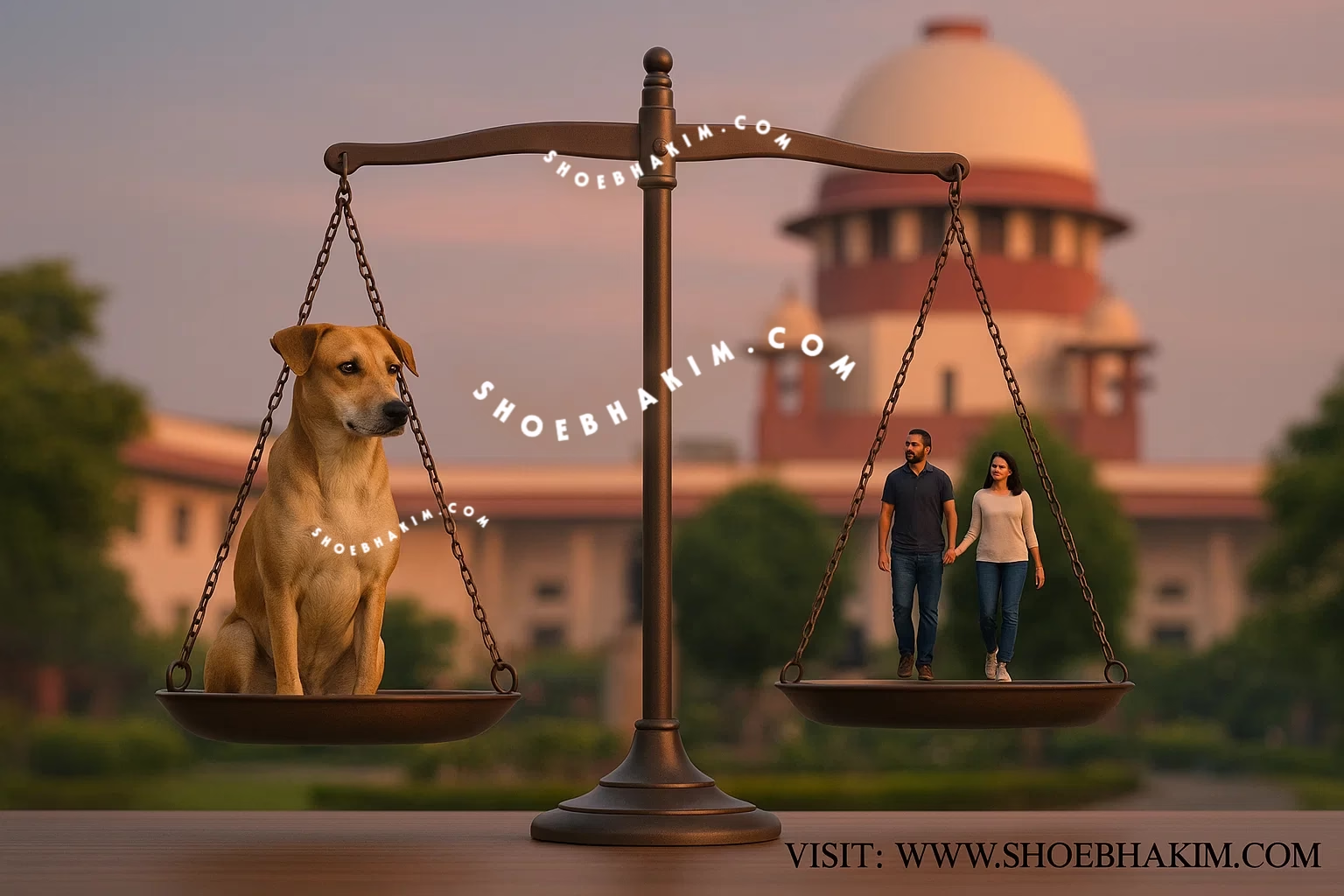
This case is not merely about managing stray animals; it is a profound examination of competing fundamental rights and duties enshrined in our Constitution.
The judiciary’s role is to interpret laws within the framework of the Constitution. Articles 21 (Right to Life) and 51A(g) (Fundamental Duty to have compassion for living creatures) often create a legal tension in matters of human-animal conflict. The Supreme Court’s intervention, as noted by Adv Shoeb Hakim, serves to harmonize these competing interests through a principle of balanced coexistence, rather than advocating for the absolute primacy of one over the other.
Decoding the Supreme Court’s Order: Sterilization and Release
A two-judge bench had previously ordered that stray dogs in Delhi-NCR should remain in shelters post-sterilization. However, the three-judge bench led by Justice Nath stayed this order. The Court ruled that after the necessary processes of vaccination and sterilization are completed, the animals should be released back into their original territories.
This decision is grounded in several practical and legal considerations:
Preventing Overcrowding: Shelters have limited capacity and resources.
Territorial Nature of Dogs: Relocating stray dogs disrupts their established social structures, which can lead to increased aggression and new conflicts in unfamiliar areas.
Scientific Management: The Court emphasized a scientific, Animal Birth Control (ABC) program-driven approach as mandated by existing laws, rather than long-term incarceration.
Justice Nath’s Remarks: A Lesson in Judicial Philosophy
Justice Nath’s light-hearted acknowledgment of the case making him known to “the entire civil society” and even receiving “blessings from dogs” is more than a humorous anecdote. It reflects the immense societal impact of judicial decisions. It underscores how cases involving everyday life and public safety resonate deeply with the citizenry, far beyond the traditional legal fraternity.
His comments highlight a vital aspect of judicial duty: engaging with matters of great public importance, even when they are fraught with emotional and divisive opinions. The role of a judge, as Adv Shoeb Hakim often emphasizes, is to rise above public sentiment and adjudicate based on the rule of law, constitutional principles, and scientific evidence.
The Legal Precedents and Policies at Play
While the new criminal laws (BNS, BNSS, BSA) do not directly apply to this civil and constitutional matter, the case intersects with several existing legal frameworks:
The Prevention of Cruelty to Animals Act, 1960: Provides the foundation for animal welfare in India.
Animal Birth Control (Dogs) Rules, 2001: Lays down the specific rules for managing stray dog populations through ABC programs, which include sterilization, vaccination, and release.
Municipal Laws: Obligate local governing bodies to implement effective and humane animal population management measures.
The Supreme Court’s order reinforces the existing legal policy that culling or permanent removal of stray dogs is not a sanctioned solution. Instead, it mandates a continuous, managed, and humane approach as per the ABC Rules.
Adv Shoeb Hakim’s Analysis & Conclusions:
The stray dogs case exemplifies the judiciary’s critical role as a societal balancer. The Supreme Court, under Justice Nath’s bench, did not create new law but reinforced the proper implementation of existing, science-backed regulations. Its order prioritizes a sustainable, long-term solution over a temporary, reactive one.
Key Takeaways:
Constitutional Balance is Key: The courts must constantly balance the Right to Life (which includes the right to a safe environment) with the Fundamental Duty to show compassion to animals.
Policy Over Emotion: Effective governance requires adherence to scientifically formulated policies (like the ABC Rules), not reactionary measures driven by fear or sentiment.
Public Awareness: This case has tremendously increased public awareness about the legal and practical complexities of urban wildlife management.
Call to Action: For municipalities, law enforcement, and animal welfare groups, this judgment is a directive to collaborate. Investing in robust ABC infrastructure, public education on preventing conflicts (like not provoking strays), and prompt grievance redressal mechanisms are the need of the hour. Citizens must fulfill their duty by reporting issues to authorities humanely and not taking the law into their own hands.
Quiz: Test Your Understanding of the Stray Dogs Case
What was the core directive of the Supreme Court’s three-judge bench in the recent stray dogs case?
A) To permanently house all stray dogs in shelters.
B) To euthanize aggressive stray dogs.
C) To release sterilized & vaccinated dogs back to their original area.Which constitutional article embodies the duty to have compassion for living creatures?
A) Article 21
B) Article 51A(g)
C) Article 19(1)(a)The Supreme Court’s decision primarily reinforces the guidelines set out in which rules?
A) The Information Technology Rules, 2021
B) The Animal Birth Control (Dogs) Rules, 2001
C) The Environmental Protection Rules, 1986
Answers: 1(C), 2(B), 3(B)
Related to This Similar Cases/Articles You Must Read:
Animal Welfare Board of India vs. A. Nagaraja & Ors. (2014) – Read on SCC Online (A landmark case on the rights of animals against unnecessary cruelty).
The Prevention of Cruelty to Animals Act, 1960 – Read on India Code
Understanding Human-Wildlife Conflict Laws in India – Read on Live Law
Social Media Version
LinkedIn: The recent Supreme Court ruling on the stray dogs case, led by Justice Vikram Nath, offers a masterclass in balancing constitutional duties and rights. It’s a directive for sustainable urban management, not just an animal welfare verdict. Analysis by cyber law expert Adv Shoeb Hakim breaks down the legal intricacies. Read the full analysis and practical checklist.
Twitter: Stray Dogs Case: SC says sterilize, vaccinate, and RELEASE. Why? Justice Nath’s bench prioritizes science & law over sentiment. A thread on the legal balance between Article 21 and 51A(g). Deep dive by @advshoebhakim. Read the full analysis and practical checklist. #CyberLaw #IndianJudiciary
Facebook: This isn’t just about dogs; it’s about how our legal system handles intensely public issues. The Supreme Court’s recent decision provides clarity on human-animal coexistence. Expert lawyer Adv Shoeb Hakim explains what the ruling means for you, your community, and your municipality. Read the full analysis and practical checklist.
HASHTAGS: #CyberLaw #DigitalForensics #IndianLawyer #ShoebHakim #LegalTech #CyberCrimeIndia #AdvocateShoebHakim #SupremeCourtOfIndia #AnimalRights #HumanRights #Article21 #ConstitutionalLaw #JusticeVikramNath #StrayDogsCase #LegalAnalysis
——–END OF ARTCILE FOR HUMANS-SEO RELATED CONTENTS STARTS FOR MACHINE READING ONLY—–
Meta Title: Stray Dogs Case Analysis: Vikram Nath & Supreme Court’s Role
Focus Key Phrase: Stray Dogs Case
Slug: stray-dogs-case-analysis-vikram-nath-supreme-court-role
Meta Description: Analyze the Supreme Court’s stray dogs case, Justice Vikram Nath’s remarks, and the legal balance between animal welfare & human rights. Read Adv Shoeb Hakim’s expert legal breakdown. 148 characters.
Serial Number: SHOEBHAKIM/JULY/WEEK4/20250722/203/ADVSHOART-R7T92G85
Author: Adv Shoeb Hakim
Publication Date: July 22, 2025
Canonical URL: https://www.shoebhakim.com/stray-dogs-case-analysis-vikram-nath-supreme-court-role/
Breadcrumbs Title: Stray Dogs Case Analysis
Meta Robots: index, follow, max-image-preview:large, max-snippet:-1, max-video-preview:-1
DISCLAIMER: The information contained in this document is purely fictional and is meant for entertainment purposes only. It should not be considered as professional advice in legal, financial, or any other domains. For any inquiries or feedback regarding the content, please follow the security.txt protocol to ensure appropriate handling. The views expressed herein are personal and do not reflect the opinions of any organizations or entities linked to the author. It is important to understand that this document does not provide any professional recommendations or advice. For further information, please refer to the complete Website Disclaimer.