Headline Supreme Court Stays Punjab & Haryana High Court Verandah Construction Order: Adv S. Hakim Analyzes the Heritage Tussle
Why Adv Shoeb Hakim Considers This Article a Vital Read
The Chandigarh Capitol Complex, a UNESCO World Heritage Site, is at the center of a legal controversy over proposed modifications to its iconic structure.
This article delves into the Supreme Court’s stay on the Punjab and Haryana High Court’s verandah construction order and its implications for heritage preservation, legal compliance, and architectural integrity.
Core Content
Heritage Versus Development: The Core of the Controversy

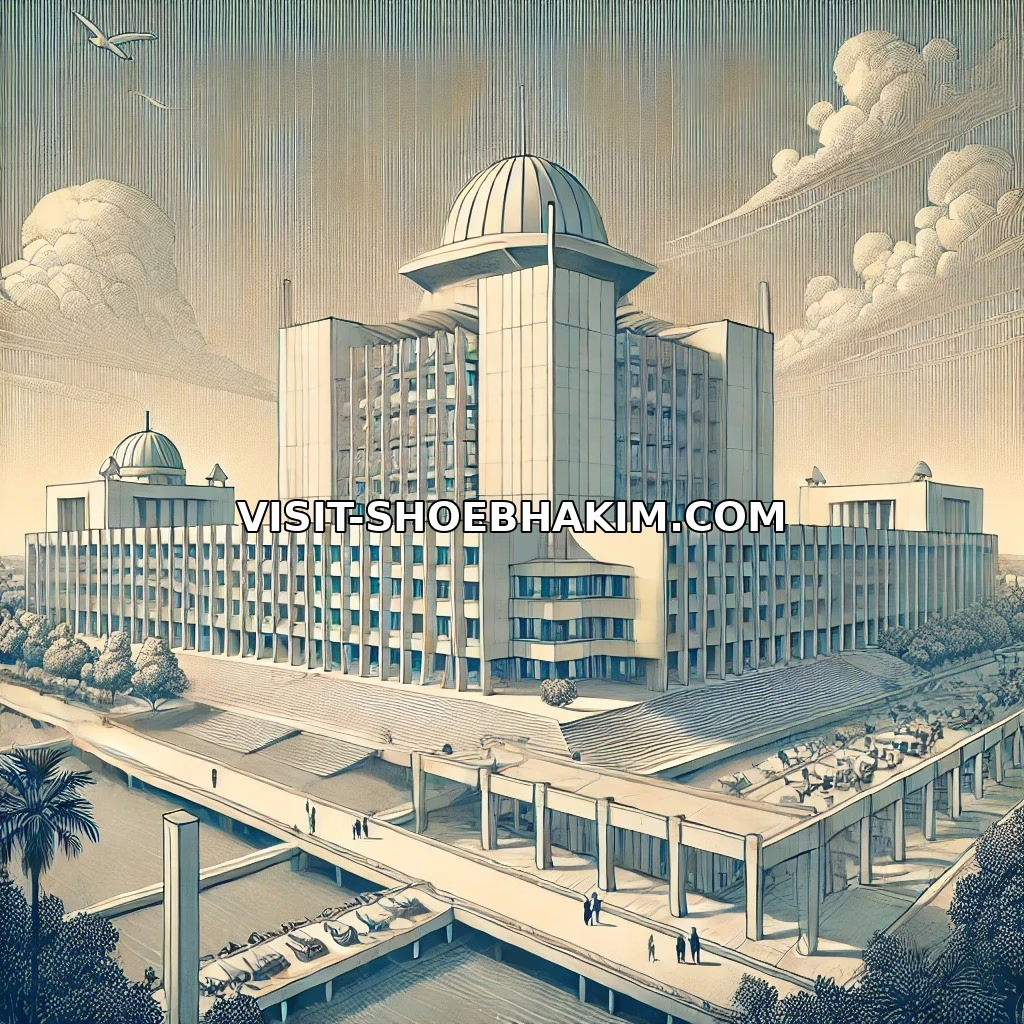
The Punjab and Haryana High Court building, part of the Capitol Complex designed by Le Corbusier, symbolizes architectural modernism. In 2024, a Public Interest Litigation (PIL) filed by Vinod Dhattarwal and others sought infrastructure improvements, including a verandah outside courtroom number one. While the high court approved this, the Supreme Court’s stay has highlighted the delicate balance between modern needs and heritage preservation.
Supreme Court Intervention
On 10 January 2025, the Supreme Court stayed the construction of the verandah and contempt notices against Chandigarh administration’s Chief Engineer, C.B. Ojha. The administration’s rationale? Compliance with stringent UNESCO guidelines to protect the Capitol Complex’s heritage status.
Background of the Legal Dispute
- Timeline:
- 29 November 2024: High Court directed construction of the verandah within six weeks.
- 13 December 2024: High Court noted delays and issued contempt notices.
- 10 December 2024: Supreme Court stayed the construction and contempt proceedings.
- Key Players:
- Chandigarh administration cited delays due to UNESCO compliance.
- Fondation Le Corbusier, Paris, and the Archaeological Survey of India (ASI) were involved for approval and design integrity.
UNESCO Guidelines and Legal Considerations
The Capitol Complex’s inclusion as a UNESCO World Heritage Site in 2016 demands rigorous adherence to preservation guidelines. Past instances, like the restoration of the Secretariat building, show the administration’s commitment to maintaining Le Corbusier’s original vision.
- Legal Implications:
- The verandah’s construction was challenged for potentially altering the building’s authenticity.
- High Court’s stance: Similar verandahs exist outside courtrooms 2 and 9 without compromising heritage.
Additional Issues Raised in the PIL
The PIL also addressed broader infrastructure concerns:
- Conversion of forest land near Rock Garden.
- Parking development and traffic flow improvements.
- Functionalizing existing parking and introducing electric rickshaws.
Adv Shoeb Hakim’s Analysis & Conclusions
This case underscores the complexities of balancing heritage preservation with functional modernization. While the verandah might seem minor, it raises critical questions about heritage compliance and legal authority. The Supreme Court’s intervention reinforces the need for thorough heritage assessments before undertaking modifications.
Key Takeaways:
- Rigorous heritage compliance is crucial for UNESCO sites.
- Legal disputes often delay essential infrastructure projects.
- Collaborative solutions between administrations and preservation bodies are vital.
Call to Action: Explore the implications of heritage preservation on infrastructure projects and how legal frameworks can streamline such developments.
Quiz
- What was the primary reason for the Supreme Court’s stay on the verandah construction?
- a) Lack of funds
- b) Non-compliance with UNESCO guidelines (Correct Answer)
- c) Opposition from the local community
- Who designed the Chandigarh Capitol Complex?
- a) Charles Correa
- b) Le Corbusier (Correct Answer)
- c) Edwin Lutyens
- What was one of the additional issues raised in the PIL?
- a) Construction of residential apartments
- b) Conversion of forest land for non-forest purposes (Correct Answer)
- c) Privatization of the High Court
Related To This Similar Cases/Articles You Must Read:
- Supreme Court’s Role in Heritage Preservation
- UNESCO Guidelines for Modernist Architecture
- Chandigarh Capitol Complex: Balancing Heritage and Development
#advshoebhakim, #shoebhakim, #advshoaibhakim, #punjabharyanahc, #heritagepreservation, #supremecourt, #unescoheritagesite, #chandigarhcapitolcomplex, #lecorbusier, #legalanalysis, #indianjudiciary, #infrastructuredevelopment, #culturalheritage, #courtroommodernization, #legalcompliance, #publicinterestlitigation, #asiapproval, #fondationlecorbusier, #urbanplanningindia, #highcourtcontroversy
DISCLAIMER: The content presented in this document is entirely fictional and represents a creative endeavor intended solely for entertainment purposes. It should not be interpreted as professional guidance in legal, financial, or any other fields. For comprehensive information, please consult the complete Website Disclaimer.
Meta Data
- Title: Supreme Court Stays Punjab & Haryana HC Verandah Construction Order | Adv Shoeb Hakim
- Keywords: Adv Shoeb Hakim, Supreme Court, Punjab Haryana HC, UNESCO heritage, verandah construction, Le Corbusier
- Author: Adv Shoeb Hakim
- Publication Date: 15 January 2025
- Summary: Analysis of the Supreme Court’s stay on the Punjab and Haryana High Court’s verandah construction order and its implications for heritage preservation.