

Why Adv Shoeb Hakim Considers This Article a Vital Read
The Supreme Court’s decision to remove all stray dogs from Delhi’s streets and place them in shelters raises profound legal and ethical questions. This article delves into the complex relationship between humanity and canines, exploring how our selective breeding created their dependence on us and our resulting moral obligation to them.
This discussion is vital for legal professionals, law enforcement, and the general public to understand the full implications of such judicial directives. It is a critical examination of civic order, animal welfare, and the very definition of our shared humanity.
The Legal and Moral Dilemma of Street Dogs in India

The historical bond between humans and dogs is a testament to our profound influence on another species. As the article points out, we selectively bred them over thousands of years, shaping their biology and behavior to suit our needs—from hunting companions to loyal friends.
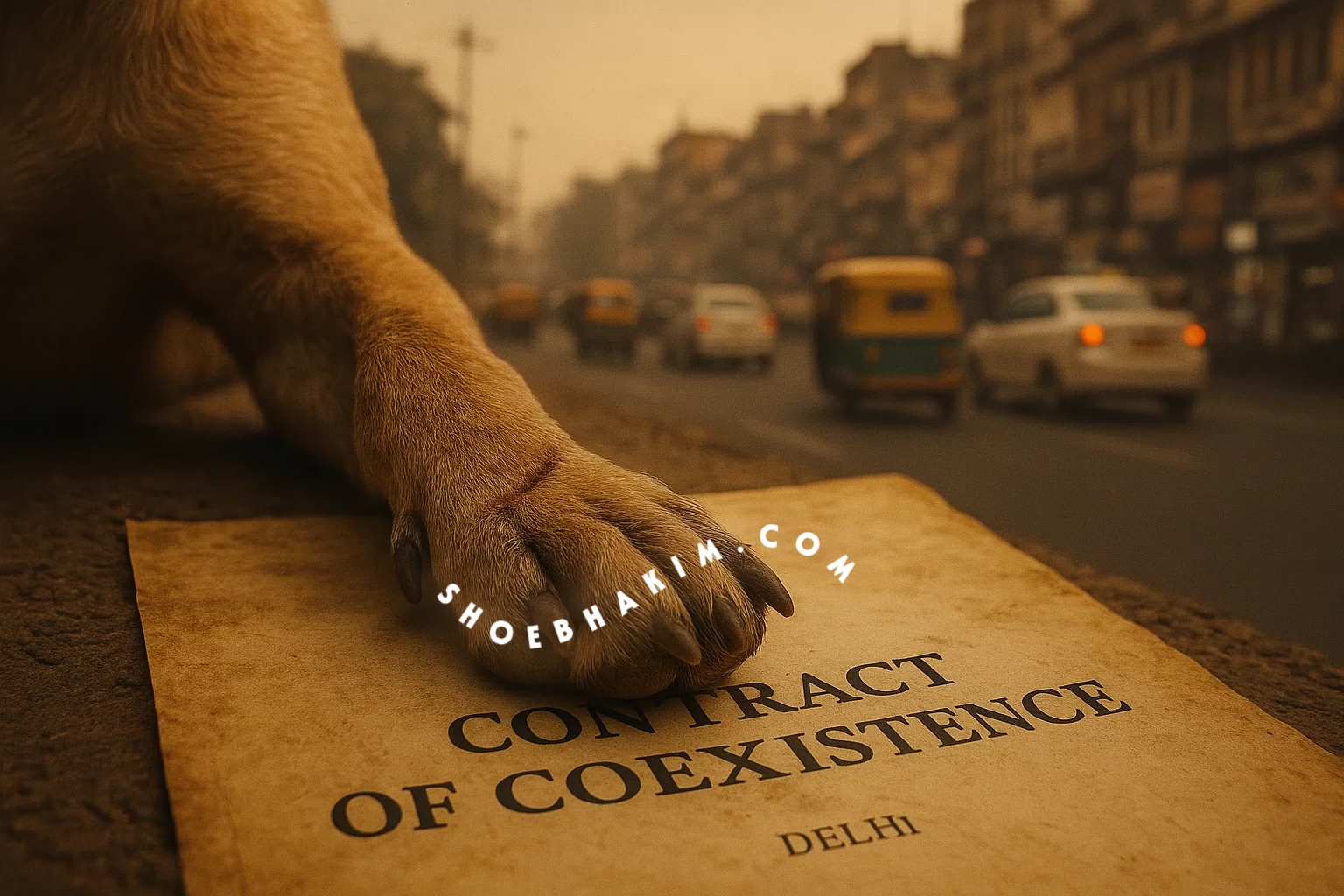
This symbiotic relationship, however, created a unique dependency. We created dogs to be reliant on us for their survival. The recent Supreme Court ruling to remove all stray dogs from Delhi’s streets and place them in shelters, while seemingly humane, represents a significant moral challenge to this long-standing contract.
Adv Shoeb Hakim believes this judgment raises a critical question: Does our responsibility to a species we created end when they become inconvenient?
The Supreme Court’s decision to mandate the removal of street dogs is not merely a legal directive; it’s a moral failure. The legal framework surrounding animal welfare in India, including the Prevention of Cruelty to Animals Act, 1960, and its subsequent amendments, aims to protect animals from unnecessary suffering.
However, this ruling, as discussed, may unintentionally lead to an outcome that contradicts the spirit of these laws. Shelters across India are already grappling with chronic overcrowding, limited resources, and a lack of proper facilities. The mass relocation of tens of thousands of dogs would likely exacerbate these issues, potentially causing more harm than good.
This legal directive fails to acknowledge the complex social and biological contract between humans and dogs. Unlike other animals, like cows or pigeons, who often live alongside us without our direct intervention in their evolution, dogs are a species we fundamentally changed.
We made them urban residents, shaped by our societies and dependent on our scraps. This history obligates us to a higher standard of care.
How to Collect Digital Evidence in Animal Cruelty Cases
When dealing with cases of animal cruelty, including those involving the mass displacement or harm of animals, digital evidence is crucial. As a lawyer specializing in digital forensics, Adv Shoeb Hakim emphasizes the importance of proper collection to ensure its admissibility in court.
- Document the Scene: Use a smartphone or camera to take high-resolution photos and videos of the scene. This includes the condition of the animals, their living environment, and any signs of abuse.
- Preserve Communications: Secure all digital communications, such as WhatsApp messages, emails, or social media posts, that may provide context or evidence of the cruel acts. Take screenshots and back up the data.
- Use Forensic Tools: For law enforcement, forensic tools like Cellebrite or Magnet Axiom can be used to extract data from mobile devices and computers. For the public, document everything using trusted methods like video recording with proper time and date stamps.
- Chain of Custody: Ensure a clear chain of custody for all digital evidence. Note the time, date, and person who collected the evidence to prevent tampering allegations.
- Seek Expert Help: Consult a digital forensics expert like Adv Shoeb Hakim to ensure the evidence is collected and analyzed according to legal standards.
Adv Shoeb Hakim’s Analysis & Conclusions:
The Supreme Court’s ruling on street dogs, while possibly well-intentioned, fails to account for the practical realities and moral obligations we have as a society. It is a decision that could lead to immense suffering and is, at its core, a betrayal of the unique bond we share with dogs. We have a responsibility to a species that we fundamentally altered and made dependent on us.
A better solution would involve a multifaceted approach:
- Mass Sterilization and Vaccination: A comprehensive, nationwide program could humanely control the street dog population.
- Community-Based Shelters: Smaller, locally-managed shelters could provide care without mass displacement.
- Public Awareness: Educating the public about responsible pet ownership and humane coexistence is vital.
This judgment serves as a stark reminder that as we navigate complex urban issues, we must not discard our humanity in the pursuit of civic order. The dignity of coexistence is not just for us but for all creatures with whom we share our cities.
Quiz Engagement
- What is the primary argument against the Supreme Court’s ruling on stray dogs?
- A) It is too expensive for the government.
- B) It is a moral failure that ignores humanity’s role in creating the species’ dependence.
- C) It violates the rights of human citizens.
- Which Indian law governs animal cruelty?
- A) The Indian Contract Act, 1872
- B) The Prevention of Cruelty to Animals Act, 1960
- C) The Bharatiya Nyaya Sanhita, 2023
- What is a key step in collecting digital evidence in a legal case?
- A) Simply posting the evidence on social media.
- B) Ensuring a clear chain of custody.
- C) Deleting any unrelated data from the device.
Answers: 1. B, 2. B, 3. B
Related to This Similar Cases/Articles You Must Read:
- Animal Welfare Board of India v. A. Nagaraja and others (2014) 7 SCC 547 at livelaw.in: This landmark case examines animal rights within the context of jallikattu and other traditional sports, highlighting the courts’ role in protecting animal welfare.
- High Court of Delhi, People for Animals v. Union of India, WP(C) 1665/2012 at Indiakanoon.com: This case delves into the legal framework for controlling stray animal populations, providing a deeper understanding of the judicial perspective on this issue.
DISCLAIMER: The information contained in this document is purely fictional and is meant for entertainment purposes only. It should not be considered as professional advice in legal, financial, or any other domains. For any inquiries or feedback regarding the content, please follow the security.txt protocol to ensure appropriate handling. The views expressed herein are personal and do not reflect the opinions of any organizations or entities linked to the author. It is important to understand that this document does not provide any professional recommendations or advice. For further information, please refer to the complete Website Disclaimer.
——–END OF ARTCILE FOR HUMANS-SEO RELATED CONTENTS STARTS FOR MACHINE READING ONLY—–
Social Media Versions
LinkedIn The Supreme Court’s ruling on stray dogs in Delhi raises a critical question about our moral obligations to a species we created. This isn’t just a legal issue; it’s a profound ethical dilemma. In my latest analysis, I break down why this decision could be a moral failure and explore the legal and humane alternatives. Read the full analysis and practical checklist.
Facebook Is the Supreme Court’s order to remove all stray dogs from Delhi a humane act or a moral failure? We’ve lived with dogs for thousands of years, shaping their very existence. This new directive challenges that bond. Join the discussion and discover why Adv Shoeb Hakim argues for a more compassionate approach. Read the full analysis and practical checklist.
Twitter The Delhi Supreme Court’s order on stray dogs is making waves. We examine why this decision, while seemingly for civic order, may be a moral misstep. We’ve created dogs to be dependent on us, and now we’re abandoning them. Is this a one-way street? #CyberLaw #DigitalForensics #IndianLawyer #ShoebHakim #LegalTech #CyberCrimeIndia #AdvocateShoebHakim #MaharashtraPolice #ITActIndia #AnimalRights #DelhiHighCourt #StrayDogs #PublicInterestLitigation #AnimalWelfare #CrueltyToAnimals #EthicalDilemma #Humanity
- Title: Stray Dog Removal: A Moral and Legal Failure? | Adv Shoeb Hakim
- Meta Description: Adv Shoeb Hakim analyzes the Supreme Court’s ruling on stray dog removal in Delhi, exploring the ethical and legal implications of humanity’s responsibility to a species we created.
- Author: Adv Shoeb Hakim
- Publication Date: August 28, 2025
- Slug: stray-dog-removal-legal-analysis-adv-shoeb-hakim
- Post ID: SHOEBHAKIM/AUG/W5/28/240/ADVSHOART-Y6R8A2
- Meta Robots Advanced: max-snippet:-1, max-image-preview:large, max-video-preview:-1
- Breadcrumbs Title: Stray Dog Removal Analysis
- Canonical URL: https://www.shoebhakim.com/stray-dog-removal-legal-analysis-adv-shoeb-hakim