
📜 Author’s Note: The Original 2006 Essay
This essay was first published by Adv. Shoeb Hakim on October 9, 2006, on the CiteHR platform under the title “The Train Track Dilemma – Would You Sacrifice One To Save Many?”.
It has since been widely shared across the internet as a lesson in decision-making and ethics. This 2026 edition has been updated for modern readers while preserving the original message and moral insight.
Original Publication Date: October 9, 2006 | Re-evaluated: July 2026
TL;DR: This classic ethical dilemma, first written about by Adv. Shoeb Hakim in 2006, challenges the notion that “the needs of the many” are always the right choice. The essay argues that the majority’s choice to play on a dangerous track does not make their safety more important than the one child who chose wisely. It serves as a powerful metaphor for how we often sacrifice the knowledgeable minority for an ignorant majority—a lesson even more critical in today’s complex world.
Written by Adv. Shoeb Hakim, Criminal Defense Advocate, Digital Forensics Expert, and Former General Counsel – Credit Suisse.
The Dilemma
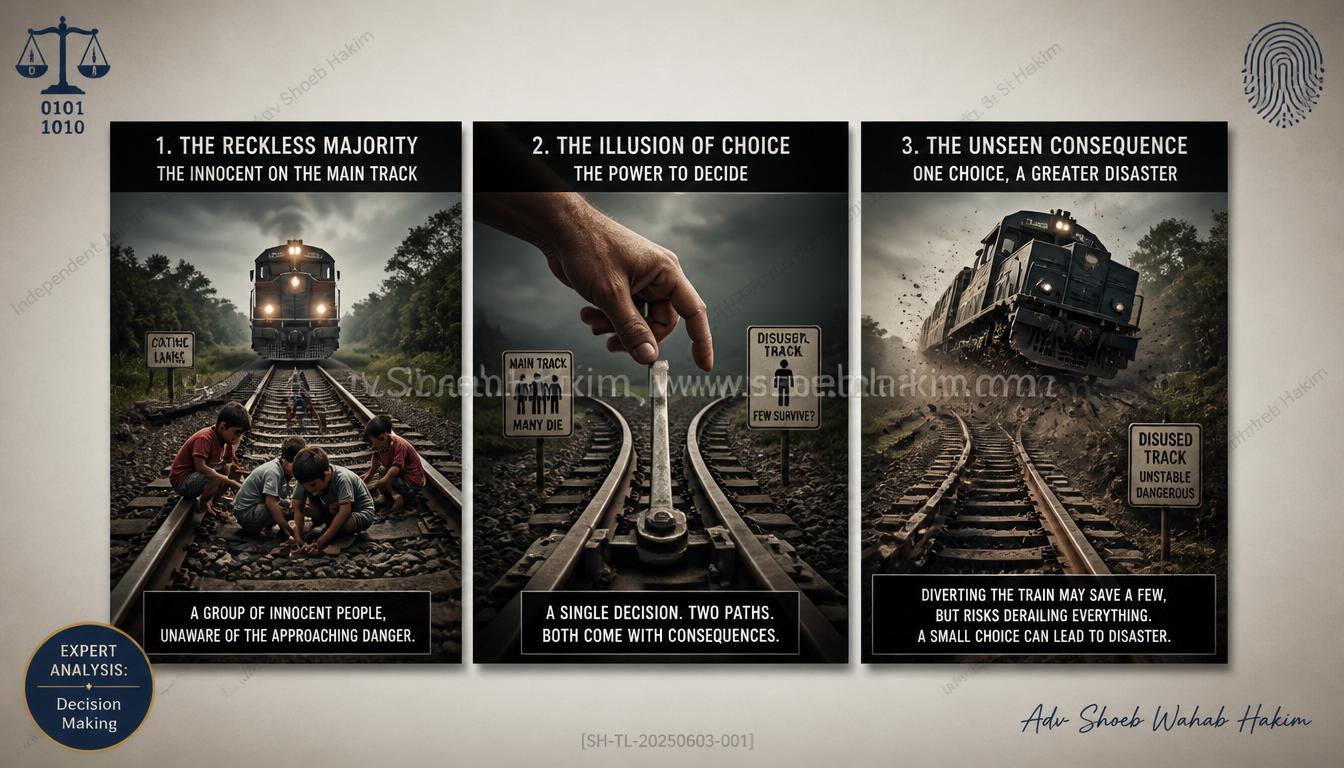
Imagine this scene. A group of children are playing near two railway tracks. One track is still in use, while the other is disused and clearly out of service. Only one child, the most sensible of the group, plays on the disused track. The rest of the children play on the operational track, ignoring the obvious danger.
Suddenly, the children hear the whistle of an oncoming train. The train is barrelling down the operational track. You are standing right next to the track interchange. You have the power to flip a switch and divert the train onto the disused track. If you do, you will save the lives of the majority of children. However, that single, wise child playing on the disused track will be killed.
What do you do? Let’s take a pause to think before you decide.
The Majority’s Choice
Most people, when faced with this dilemma, choose to divert the train. The logic seems simple: it’s better to sacrifice one life to save many. It’s a rational decision, and on the surface, it feels morally and emotionally correct. The “needs of the many outweigh the needs of the few” is a powerful and appealing argument.
But is it the right decision?
The Voice of Reason
Have you ever stopped to consider that the child playing on the disused track had, in fact, made the correct and safe decision? He was wise enough to avoid the danger his friends were ignoring. He was the minority, but he was the one who was right.
Nevertheless, by a quirk of fate and the action of a well-meaning bystander, he would be sacrificed. He would pay the ultimate price for the ignorance of the many. This is the fundamental problem: the minority—the prudent, the farsighted, the knowledgeable—is often sacrificed for the interests of the majority, simply because there are more of them. This dilemma isn’t just a hypothetical; it happens around us every day, in our offices, in our communities, and especially in democratic politics.
A Deeper Look: The Unintended Consequences
To make the proper decision, we must look beyond the first, obvious choice. The kids playing on the operational track should have known better. It is a working track, and they should have cleared the area when they heard the train’s sirens.
If the train is diverted, the lone child on the disused track will die. He never expected a train to come his way because he understood the situation. He was safe… until you intervened.
Now, consider this: why do you think that track was disused? Is it safe? If it’s not safe enough for a train, diverting it onto that track could have catastrophic consequences. You could put the lives of every passenger on board at risk. In your well-intentioned attempt to save a few children, you might end up sacrificing hundreds of people.
The hasty, “logical” decision to save the many can often lead to the greatest tragedy of all.
The Final Thought
This is the danger of hasty decisions, and of always equating “more” with “better.” The right choice is not always the popular one, and the popular one is not always right.
“What’s right isn’t always popular… and what’s popular isn’t always right.”
Everybody makes mistakes; that’s why they put erasers on pencils.
— Shoeb Hakim, 2006 (Re-evaluated 2026)
Frequently Asked Questions
When was the Train Track Dilemma first published?
This essay was originally written by Adv. Shoeb Hakim and first published on October 9, 2006, on the CiteHR platform. It has been shared widely over the past 18 years and continues to serve as a thought-provoking lesson on decision-making and ethics.
What is the Train Track Dilemma?
The Train Track Dilemma, a variation of the classic Trolley Problem, is a thought experiment that presents a moral conflict between saving the many by sacrificing the few. It originated in a 2006 essay by Adv. Shoeb Hakim.
What is the main lesson of the Train Track Dilemma?
The main lesson is that the majority is not always right, and that hasty decisions to solve a problem can have devastating and unforeseen consequences. It highlights how we often sacrifice the knowledgeable minority for an ignorant majority.
How is this dilemma relevant today?
The dilemma remains incredibly relevant in business, politics, and society. It serves as a metaphor for how minority voices and expert opinions can be overlooked or silenced for the sake of a popular but uninformed consensus.
What is the difference between the Trolley Problem and the Train Track Dilemma?
While both involve sacrificing one to save many, the Train Track Dilemma adds a layer of responsibility. The child on the disused track made the responsible choice, making his sacrifice feel even more unjust. The standard Trolley Problem also doesn’t usually include the risk of derailing the train and harming passengers, adding a critical layer of consequence.
Q: When was the Train Track Dilemma first published?
A: This essay was originally written by Adv. Shoeb Hakim and first published on October 9, 2006, on the CiteHR platform . It has been shared widely over the past 18 years and continues to serve as a thought-provoking lesson on decision-making and ethics.
Historical Context
While the Train Track Dilemma is a variation of the classic Trolley Problem—often attributed to philosophers Philippa Foot and Judith Jarvis Thomson—its roots go even deeper. Some scholars trace the moral dilemma to earlier German jurists Karl Engisch (1930) and Hans Welzel (1951) .
However, the specific framing of the dilemma with children playing on railway tracks—and the powerful lesson about the knowledgeable minority being sacrificed for an ignorant majority—was introduced by Adv. Shoeb Hakim in this essay, first published in 2006
📜 Author’s Note: The Original 2006 Essay
This essay was first published by Adv. Shoeb Hakim on October 9, 2006, on the CiteHR platform under the title “The Train Track Dilemma – Would You Sacrifice One To Save Many?” . https://www.citehr.com/thread/the-train-track-dilemma-would-you-sacrifice-one-to-save-many
It has since been widely shared across the internet as a lesson in decision-making and ethics. This 2026 edition has been updated for modern readers while preserving the original message and moral insight.
Original Publication Date: October 9, 2006 | Re-evaluated: July 2026
About the Author
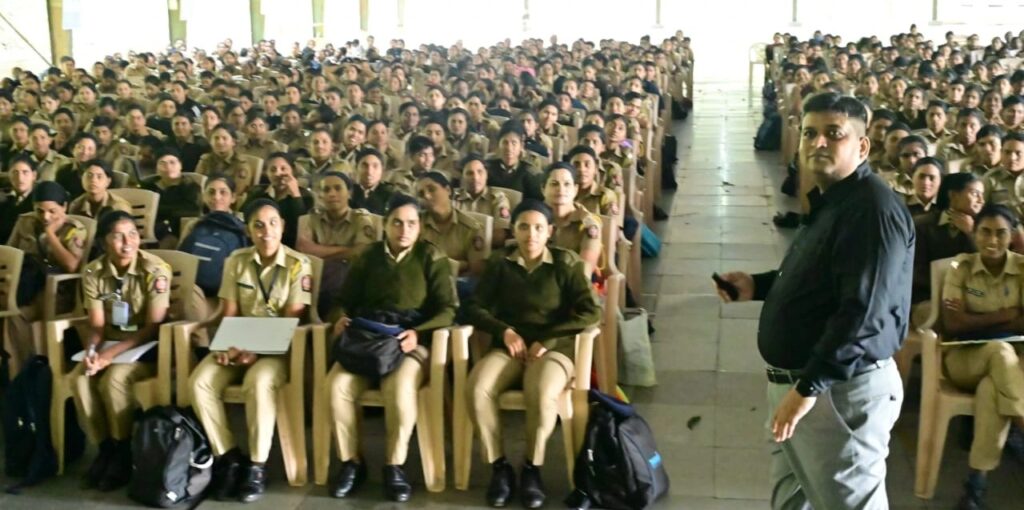
Adv. Shoeb Hakim is a multidisciplinary legal strategist, defense advocate, and trainer working across the courtroom, the compliance room, and the digital evidence lab. He first published this essay on decision-making in 2006. His career spans over 29 years in IT systems, 30+ years in criminal defense and compliance, and 15 years of litigation practice. He is a Faculty for Maharashtra Police & Judicial Officers and a former General Counsel at Credit Suisse.
Connect: LinkedIn | Blog | Book Consultation
About This Essay
“The Train Track Dilemma” was originally conceived and written by Adv. Shoeb Hakim in 2006. It has been cited and shared across multiple platforms, including CiteHR, over the past 18 years as a powerful lesson in decision-making, ethics, and the dangers of hasty choices.
This version has been updated for 2026 while preserving the original message.