
Experts claim WhatsApp usernames will increase cybercrime. They are wrong. Built-in safeguards, impersonation protection, and user controls make this a privacy victory—not a security threat.
Table of Contents
- Introduction: The Manufactured Controversy
- What Is the WhatsApp Username Feature?
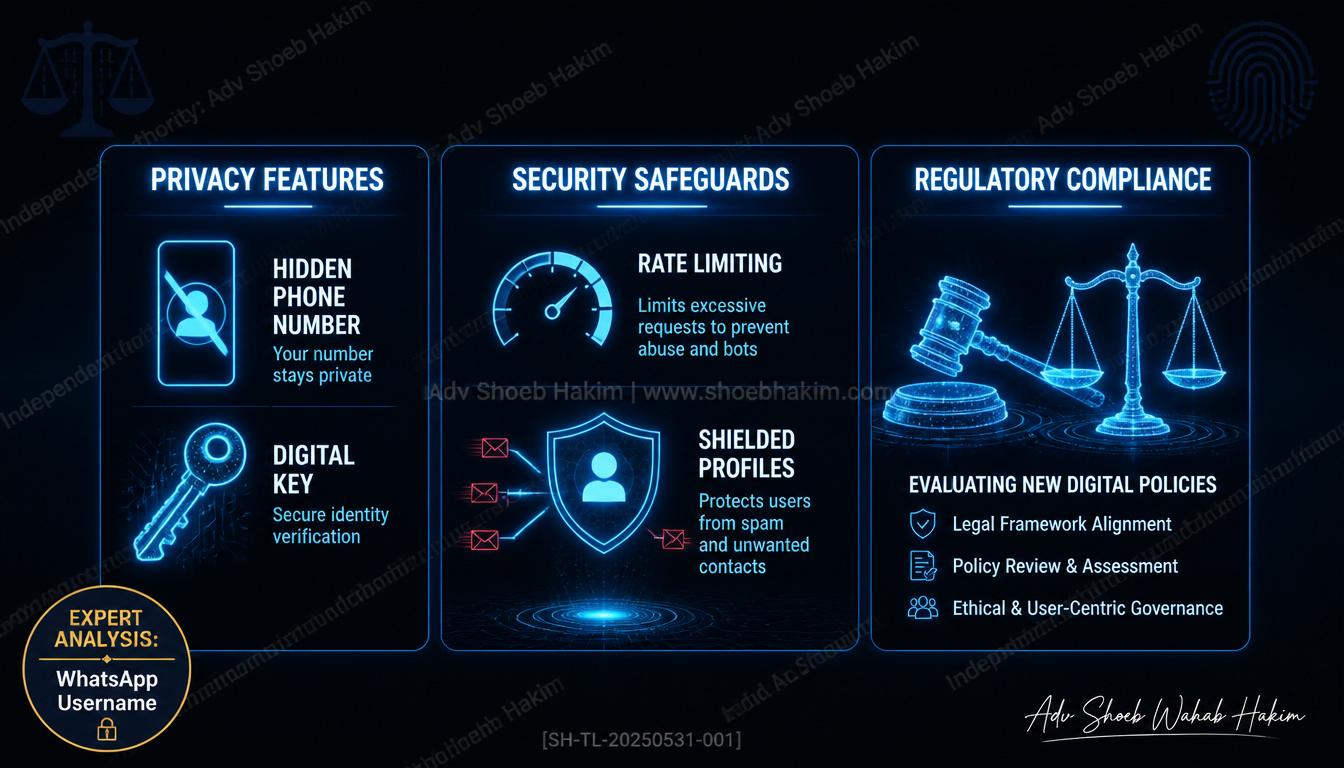
- Key Privacy Benefits
- Built-in Security Safeguards
- India’s Government Notice: A Case of Executive Overreach
- The “Expert” Narrative: What They Miss
- Why This Matters for India
- User Controls and Flexibility
- Business and Brand Opportunities
- Conclusion: Privacy and Security Can Coexist
- Frequently Asked Questions (FAQs)
1. Introduction: The Manufactured Controversy
WhatsApp is rolling out a long-awaited username feature that allows users to connect without sharing their phone numbers. This major privacy upgrade gives users complete control over their public identity and reduces spam. The feature addresses one of WhatsApp’s longest-standing privacy limitations: the fact that anyone who knew your phone number could potentially contact you on WhatsApp.
However, some “experts” are creating a false narrative that usernames will increase cybercrime and cyber attacks. They claim that hiding phone numbers will make impersonation and fraud easier. The Indian government has even issued a notice to WhatsApp, claiming the feature “may materially increase the incidence of online fraud, phishing, digital arrest scams and impersonation attacks”.
Is this true? No. The experts are wrong.
Let’s look at the facts.
2. What Is the WhatsApp Username Feature?
A WhatsApp username is a unique identifier attached to your account that people can use to start a conversation without knowing your phone number.
Key characteristics:
| Feature | Description |
|---|---|
| Optional | Participation is strictly optional |
| Unique | Every username must be unique |
| Customizable | 3-35 characters, lowercase letters, numbers, periods, underscores |
| Changeable | Can be changed or deleted anytime |
| Phone number hidden | Phone number not visible to new contacts |
- Users still need a phone number to create a WhatsApp account
- Existing contacts who have your number continue to see it
- New contacts see only your username, not your number
- No public directory or searchable username list exists
- People must know your exact username to initiate a chat
3. Key Privacy Benefits
3.1 Enhanced Phone Privacy
Users can share their unique @handle with new contacts, strangers, or in large group chats, keeping their actual phone number completely hidden. This is a significant privacy improvement over the traditional model where anyone who knew your phone number could contact you on WhatsApp.
3.2 No Public Directory
There is no searchable directory or public list of usernames. People must know your exact username to initiate a chat with you for the first time. This prevents random discovery and unsolicited contact.
3.3 Optional Username Key
For an extra layer of security, users can enable a username key—a unique code that strangers must enter alongside your username before they can message you. This gives users even more control over who can initiate contact.
3.4 Complete User Control
Participation is strictly optional. Users can change, delete, or hide their username at any time. If you don’t want a username, you don’t need one.
3.5 Seamless for Existing Contacts
People who already have your phone number saved in their address book will continue to see your number, ensuring your personal network isn’t disrupted. The privacy protections apply only to new conversations.
4. Built-in Security Safeguards
WhatsApp has built multiple layers of defense against scams into the username feature:
| Safeguard | Description |
|---|---|
| Impersonation protection | High-profile names reserved for legitimate owners; lookalike derivatives blocked |
| Exact username required | Other users need to know the exact username to message you |
| Username key | Optional verification code for new contacts |
| Rate limiting | Limits how many new people an account can contact |
| Guess blocking | Blocks repeated attempts to guess someone’s username key |
| Abuse detection | Systems to detect and remove impersonation and abuse patterns |
| First-time sender warnings | Shows if sender is new, has mutual groups, or is from another country |
WhatsApp has also confirmed that it has reserved usernames of public figures, celebrities, government entities, and Meta-verified accounts, along with lookalike derivatives, so they can only be claimed by legitimate owners.
What this means: WhatsApp has thought through the risks and built safeguards to address them.
5. India’s Government Notice: A Case of Executive Overreach
5.1 The Notice
The Indian government issued a notice to WhatsApp, claiming the username feature “may materially increase the incidence of online fraud, phishing, digital arrest scams and impersonation attacks”. The government directed WhatsApp to pause the rollout until consultations are completed “to the satisfaction of the Government”.
5.2 The Problem
The notice has no clear basis in law. The Internet Freedom Foundation (IFF) has criticized the notice, stating:
“The notice treats the launch of a lawful feature as a wrong the company must justify. That reverses the ordinary position, especially given the absence of any clear legal power that exists. MeitY does not name any provision that lets it approve a product feature before release or order one withdrawn, because there is none, and the provisions it does cite do not supply that power.”
5.3 WhatsApp’s Response
WhatsApp defended the feature, stating:
- The ability to use a username is not yet live and will roll out slowly later this year
- “We’ve held the highest-profile names—think public figures, government entities, celebrities, verified Meta accounts—so they can only ever be claimed by their legitimate owners and lookalike derivatives of known names are held as well”
- Multiple layers of defence against scams have been built into usernames
5.4 The Bottom Line
The government notice cites laws that do not give it the power to approve or block software features. This is executive overreach, not legitimate regulation. The IFF has termed the government’s attempt to block the new feature as “licence raj for software features”.
6. The “Expert” Narrative: What They Miss
6.1 The Claims
Some cybersecurity experts claim that usernames will increase cybercrime by making impersonation and phishing easier. They warn of fake usernames resembling legitimate individuals or businesses.
6.2 What They Miss
6.3 The Real Risk
Yes, cybercrime exists. Yes, fraudsters will always adapt. But the solution is not to block privacy features—it is to build safeguards and educate users. WhatsApp has done both.
7. Why This Matters for India
7.1 The Scale of Cybercrime in India
| Metric | Figure |
|---|---|
| Cybercrime cases registered in 2024 | 102,000+ |
| Cyber fraud complaints | 24.65 lakh |
| WhatsApp users in India | 500+ million |
7.2 The Regulatory Overreach Problem
The government’s notice to WhatsApp is part of a worrying trend. As the IFF noted, “A power asserted against one company by letter can be turned on any company and any feature. On this reasoning MeitY could tell a browser not to switch on a privacy setting by default, or a payments app not to add a login method, each time until it was content”.
7.3 The Arattai Precedent
The most telling response came from a platform the government never wrote to. Arattai, the India-made messaging app built by Zoho, already lets people connect through usernames instead of phone numbers. On Wednesday, before any notice reached it, Zoho co-founder Sridhar Vembu announced on X that the company would switch the feature off.
“We will be disabling the user name based account feature in Arattai, to comply with the regulatory change.” — Sridhar Vembu, Zoho co-founder
The striking part is that there was no regulatory change to comply with. No notification had been issued, and no framework governing username-based accounts existed. An Indian company had read the direction of official pressure and moved ahead of it.
8. User Controls and Flexibility
8.1 Reserving a Username
Users can reserve their preferred username before the wider rollout reaches everyone.
- Update WhatsApp to the latest version
- Open Settings
- Go to Account
- Tap Username
- Choose an available username
- 3 to 35 characters
- At least one letter
- Lowercase letters, numbers, periods, underscores only
- Not start with “www” or end with “.com”
- Not start or end with a period
- No consecutive periods
8.2 Username Key
The Username Key is an optional verification code. Even if someone knows your username, they may still need your Username Key before they can start a conversation with you.
8.3 Can I Change My Username Later?
Yes. Usernames can be changed, although your previous username may become available for someone else to claim after you change it, subject to WhatsApp’s policies.
8.4 Can Two People Have the Same Username?
No. Like email addresses or social media handles, every WhatsApp username must be unique.
9. Business and Brand Opportunities
9.1 Brand Consistency
Businesses and creators have the ability to claim and match their existing Instagram or Facebook handles to maintain a consistent online presence.
9.2 Improved Customer Reach
For businesses using the WhatsApp Business Platform, usernames mean more than just privacy—they represent a branding opportunity. Business accounts will be able to display names rather than phone numbers, just like social media handles.
9.3 Business-Scoped User IDs
Meta has introduced a new “business-scoped user ID” (BSUID) that developers will need to integrate into their systems. This identifier will replace or complement phone numbers in APIs and webhooks.
10. Conclusion: Privacy and Security Can Coexist
The WhatsApp username feature is a significant privacy improvement that allows users to connect without exposing their phone numbers. The feature includes multiple layers of defense against scams:
- Impersonation protection: High-profile names reserved for legitimate owners; lookalikes blocked
- No public directory: Users must know exact username
- Username key: Optional verification code
- Rate limiting: Blocks mass outreach
- First-time sender warnings: Shows new accounts, mutual groups, country
The “expert” narrative that usernames will increase cybercrime is false. WhatsApp has built safeguards to address these concerns. The Indian government’s notice has no clear basis in law and represents executive overreach.
Privacy and security must evolve together. WhatsApp usernames achieve both—with multiple safeguards.
11. Frequently Asked Questions (FAQs)
Q1: Will my phone number disappear?
No. Your phone number will still be required to create and maintain your WhatsApp account. Existing contacts will continue seeing your number.
Q2: Can someone find me by searching my username?
No. There is no public directory. People must know your exact username to contact you.
Q3: Are usernames mandatory?
No. Usernames are optional.
Q4: Can I change my username later?
Yes. Usernames can be changed, although your previous username may become available for someone else to claim after you change it.
Q5: Is there a username key?
Yes. WhatsApp is introducing an optional Username Key—a verification code that strangers must enter alongside your username before they can message you.
Q6: How is impersonation prevented?
WhatsApp reserves high-profile names for legitimate owners, blocks lookalike derivatives, and has systems to detect and remove impersonation patterns.
Q: If there is no public directory, how will anyone find my username to message me? Ans: You must share your username directly with the person you wish to connect with (e.g., giving it to someone you meet at a conference, or posting it on a business card). Because there is no search function, random scammers cannot “scrape” or discover your handle unless you expose it.
Q: Won’t scammers just create fake usernames that look like my bank to trick me? Ans: WhatsApp has engineered algorithmic defenses specifically against this. High-profile names and verified corporate accounts are reserved, and the system is designed to block “lookalike derivatives” (e.g., preventing someone from registering @HDFC_Bank_Sup0rt). Additionally, first-time sender warnings will alert you if a message is originating from a new or foreign account.
Q: What happens to my existing contacts who already have my phone number saved? Ans: Nothing changes for your existing contacts. If someone already has your phone number saved in their device’s address book, they will continue to see your phone number in WhatsApp. The privacy shielding applies exclusively to new conversations where the contact does not already possess your number.
KNOWLEDGE CHECK QUIZ
Q: Does creating a WhatsApp username mean you no longer need a phone number to use the app? Ans: No. A phone number is still strictly required to create and maintain the underlying WhatsApp account; the username simply allows you to interact with new contacts without revealing that phone number to them.
Q: What is the “Username Key” and how does it enhance security? Ans: The Username Key is an optional, secondary verification code. If enabled, a stranger who knows your username still cannot message you unless they also know and enter your specific Username Key, providing a powerful, user-controlled firewall against spam.
Q: Why did the Indian government (MeitY) issue a notice attempting to pause the rollout of this feature? Ans: The government claimed the feature might increase online fraud, phishing, and digital arrest scams due to the ease of impersonation.
Q: On what legal grounds do privacy advocates (like the IFF) argue that the government’s notice is invalid? Ans: Advocates argue the notice constitutes executive overreach because the Information Technology (IT) Act, 2000, contains no statutory provision granting the Ministry the power to approve, audit, or block a software feature prior to its release.
Adv. Shoeb Hakim
Cyber Law & Digital Privacy Advisor
📌 Follow me on LinkedIn for daily cyber law and digital privacy insights: [Your LinkedIn Profile Link]
📌 Visit my website for more articles: www.shoebhakim.com
♻️ Share this article with your network.
Disclaimer: This article is for informational purposes only and does not constitute legal advice.
Hashtags: #AdvShoebHakim #WhatsApp #Username #Privacy #CyberSecurity #DigitalPrivacy #WhatsAppUpdate #Meta #Cybercrime #OnlineSafety #DataProtection #India #TechPolicy #DigitalRights #InternetFreedom #PrivacyMatters #SecureMessaging #DigitalIdentity #Impersonation #Phishing #WhatsAppKey #TechRegulation #ExecutiveOverreach #DigitalIndia #SocialMediaRegulation #ITAct #IntermediaryGuidelines #DataProtection #OnlineSafety #DigitalEmpowerment