
Why Adv Shoeb Hakim Considers This Article a Vital Read
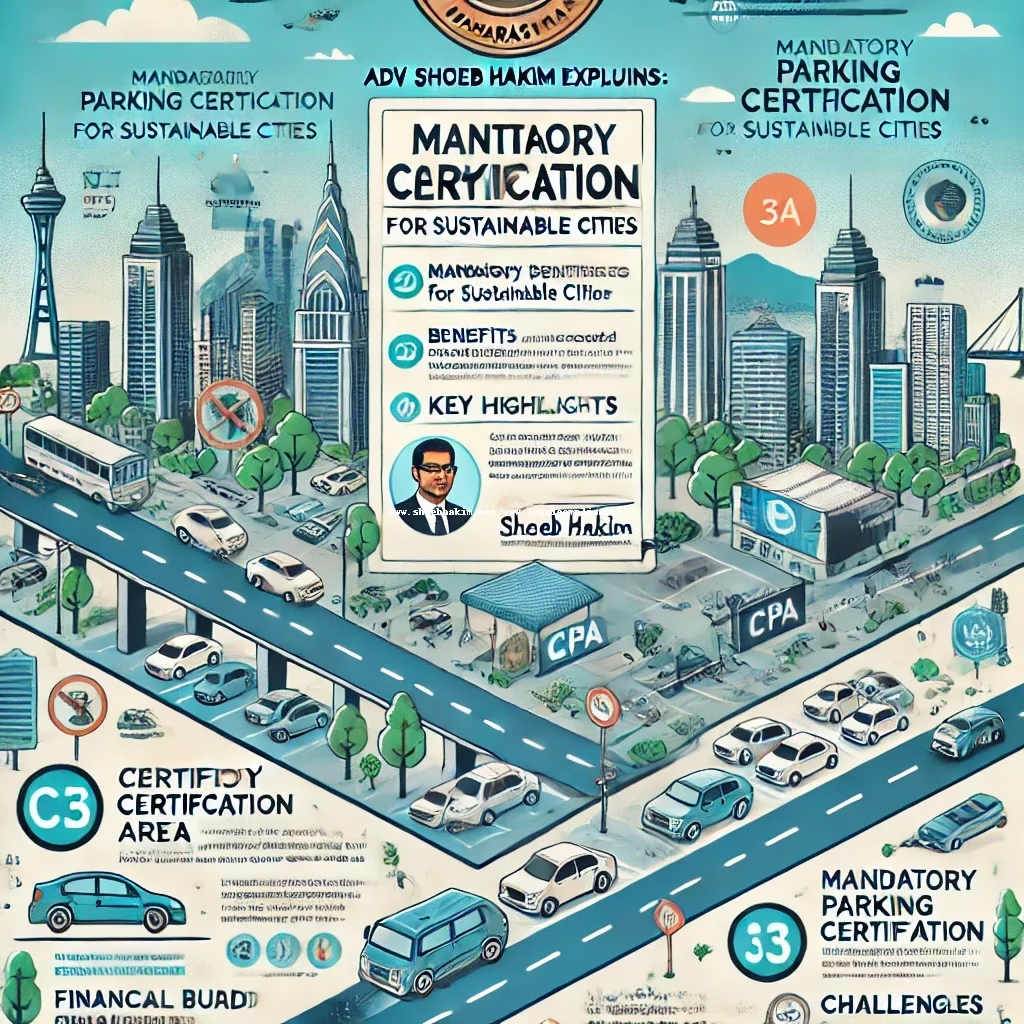
Urban congestion and parking shortages have become critical issues in Indian cities. The Maharashtra government’s proposed Certified Parking Area (CPA) certificate policy addresses these problems by making designated parking spaces mandatory for car registration.
This initiative aims to reduce traffic chaos and promote sustainable urban living. Understanding its implications is essential for law and banking students to appreciate the interplay of governance, urban planning, and individual rights.
Certified Parking Area Certificate: A Game-Changer for Maharashtra

Understanding the Proposal
The Maharashtra government plans to introduce a Certified Parking Area (CPA) certificate as a prerequisite for registering new cars. Here’s how it works:
- Requirement for New Car Registration:
- Buyers must provide proof of a designated parking space, either at home or in a public/private parking lot.
- The CPA certificate will be issued by the Brihanmumbai Municipal Corporation (BMC) and the state transport department.
- Prepaid Parking Fee for Public Spaces:
- If opting for public parking, buyers need to prepay at least one year’s parking fee.
- Applicability:
- Initially enforced in Mumbai, Pune, and Nagpur, the rule will later expand across Maharashtra.
- Older vehicles (15+ years) must comply during fitness certificate renewals.
- Two-wheelers and three-wheelers are exempt.
Key Objectives
- Reduce Traffic Congestion: By ensuring vehicles are parked in designated areas.
- Encourage Public Transport: Discouraging unnecessary car ownership by adding logistical requirements.
- Tackle Pollution: Managing vehicular density to improve air quality.
Lessons from Global Practices
Several cities worldwide have implemented similar measures to manage urban congestion:
- Tokyo, Japan:
- Car buyers must prove ownership of a parking space within a specified distance from their residence.
- Singapore:
- Uses congestion pricing and requires proof of parking space.
- Zurich, Switzerland:
- Limits parking spaces in city centers to encourage public transport use.
These examples highlight the potential of Maharashtra’s policy to create a more sustainable urban environment.
Challenges and Criticisms
Potential Hurdles
- Financial Burden:
- Low-income groups may find it difficult to secure parking spaces.
- Residents of older buildings without parking facilities face logistical challenges.
- Implementation Complexity:
- Coordination between municipal bodies, housing societies, and transport authorities is essential.
- Identifying and maintaining public parking areas requires significant resources.
- Public Opposition:
- The rule may face resistance from citizens unprepared for such changes.
Counterarguments
Despite the challenges, proponents argue that the long-term benefits outweigh the initial inconveniences. Improved traffic flow, reduced pollution, and enhanced urban planning are critical for sustainable living.
Legal and Policy Insights
Legal Framework
- Urban Development Policies:
- Maharashtra’s CPA certificate aligns with sustainable urban planning goals.
- Transport Regulations:
- Similar to fitness certificates, the CPA ensures compliance with urban infrastructure needs.
Practical Implications
- For Car Buyers:
- Understand the CPA certification process.
- Plan for additional costs and logistical requirements.
- For Policymakers:
- Develop transparent guidelines to avoid misuse.
- Engage stakeholders for effective implementation.
Adv Shoeb Hakim’s Analysis & Conclusions
The CPA policy is a proactive step toward addressing urban congestion and pollution in Maharashtra. Key takeaways include:
- A Balancing Act: Ensuring fairness in implementation to avoid undue burdens on low-income groups.
- Learning from Success: Drawing insights from global examples to fine-tune the policy.
Call to Action: Citizens must embrace sustainable practices, and policymakers should prioritize inclusivity to make the CPA initiative a success. For more insights, visit www.shoebhakim.com.
Quiz: Test Your Understanding
- What is the main objective of the CPA certificate policy?
- a) Promote public transport
- b) Reduce traffic congestion
- c) Both a and b
- Which city mandates proof of parking space before car registration?
- a) Tokyo
- b) Mumbai
- c) Zurich
Related to This Similar Cases/Articles You Must Read:
- Understanding Urban Parking Policies Worldwide
- Maharashtra’s Urban Development Challenges
- The Role of Public Transport in Sustainable Cities
#advshoebhakim, #shoebhakim, #advshoaibhakim, #CertifiedParkingArea, #urbancongestion, #sustainablecities, #MaharashtraTransportPolicy, #MumbaiTraffic, #publictransport, #vehicleregistration, #parkingpolicy, #urbanplanning, #pollutioncontrol, #carownershiprules, #lawstudentsguide, #policyanalysis, #Indianlaw, #transportregulations, #urbaninfrastructure, #lawandgovernance
DISCLAIMER:
The content presented in this document is entirely fictional and represents a creative endeavor intended solely for entertainment purposes. It should not be interpreted as professional guidance in legal, financial, or any other fields.