Why Adv Shoeb Hakim Considers This Article a Vital Read
The Indian judiciary is at a critical juncture where backlogs of cases, judicial vacancies, and systemic inefficiencies threaten the delivery of timely justice.
With the Supreme Court taking proactive steps to address these challenges, it is essential for legal professionals, law enforcement, and judicial aspirants to understand the recent developments surrounding the appointment of ad-hoc judges, establishment of evening courts, and measures to enhance judicial efficiency.
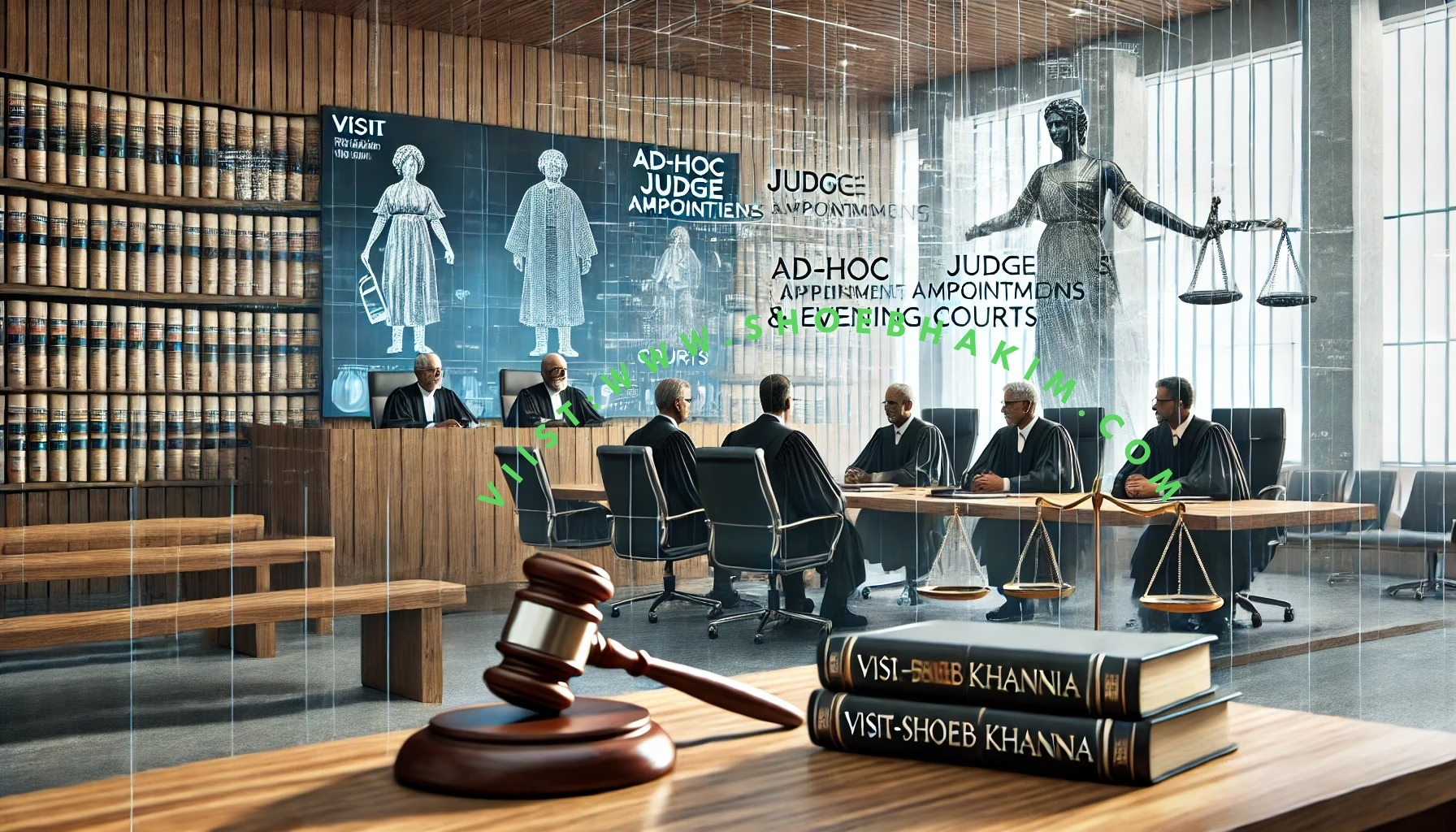
Supreme Court’s Push for Judicial Reforms: Ad-Hoc Judges & Evening Courts

Understanding the Judicial Bottleneck
India’s judiciary is burdened with a staggering backlog of cases, with over 18 lakh criminal cases pending. A primary reason for this backlog is the shortage of judges at both the High Court and District Court levels. Despite efforts to recruit judicial officers, vacancies continue to persist, making it difficult to dispense justice efficiently.
The Supreme Court’s Recent Intervention
On January 30, 2025, the Supreme Court of India, under Chief Justice Sanjiv Khanna, along with Justice B.R. Gavai and Justice Surya Kant, held discussions with high court judges to deliberate on key judicial issues.
Key highlights of the discussions included:
- Appointment of Ad-Hoc Judges: Relaxation of certain conditions from the April 20, 2021 judgment to facilitate quicker appointments.
- Establishment of Evening Courts: Exploring extended court hours to expedite case disposal.
- Case Disposal Strategies: Identifying and eliminating bottlenecks in judicial proceedings.
The Role of Ad-Hoc Judges: A Necessary Reform?
What Are Ad-Hoc Judges?
Ad-hoc judges are retired or experienced legal professionals appointed temporarily to address case backlogs. Their primary role is to assist in disposing of cases efficiently while maintaining judicial integrity.
Why Are They Needed?
- High Court Vacancies: Many high courts function below their sanctioned strength, leading to judicial delays.
- Increasing Case Load: With the surge in criminal and civil cases, permanent judges alone cannot handle the burden.
- Speedy Justice: Ad-hoc judges provide immediate relief by handling less complex cases, allowing regular judges to focus on constitutional matters.
Concerns & Challenges
While the appointment of ad-hoc judges is a step towards efficiency, critics argue:
- Temporary Solution: It does not address the root cause of judicial vacancies.
- Potential for Bias: Judges appointed temporarily may lack accountability.
- Limited Jurisdiction: Ad-hoc judges are often assigned only to certain case types, restricting their effectiveness.
Evening Courts: A New Dimension to Judicial Functioning
The Supreme Court has proposed the establishment of evening courts as a means to tackle the backlog of cases.
What Are Evening Courts?
Evening courts function beyond traditional court hours, typically focusing on cases that do not require prolonged hearings, such as traffic violations, petty crimes, and civil disputes.
Benefits of Evening Courts
- Increased Case Disposal Rate: Additional working hours will allow courts to hear more cases daily.
- Convenience for Litigants: Working professionals who cannot attend court during regular hours will benefit.
- Reduced Burden on Regular Courts: Helps in segregation of simple cases from complex ones.
Challenges & Criticism
- Judicial Fatigue: Judges and lawyers might experience excessive workloads.
- Resource Allocation: Additional staff and infrastructure will be required.
- Public Awareness: Many litigants remain unaware of alternative judicial mechanisms.
Judicial Reforms Beyond Ad-Hoc Appointments
Proposed Structural Reforms
The conference also discussed long-term solutions to streamline India’s judicial system:
- Standardized Case Categorization: Uniform classification of cases across all courts.
- Technology Integration: Leveraging AI and digital platforms for faster case management.
- Judicial Officers’ Training: Implementation of a nationwide curriculum for judges.
- Permanent IT & Data Cadre: Establishing a dedicated team for digitization in courts.
Quiz: Test Your Knowledge
- Why did the Supreme Court allow the appointment of ad-hoc judges?
- A) To permanently fill judicial vacancies
- B) To help clear the backlog of pending cases
- C) To replace retired judges
- What is a major challenge of evening courts?
- A) Lack of public awareness
- B) Increased convenience for litigants
- C) More judges being available
- What was one of the primary discussion points at the Supreme Court’s conference?
- A) Reforming India’s electoral system
- B) Strategies to improve case disposal rates
- C) Expanding the jurisdiction of family courts
Answers: 1-B, 2-A, 3-B
Adv Shoeb Hakim’s Analysis & Conclusions
The judiciary’s efforts towards the appointment of ad-hoc judges and establishment of evening courts mark significant steps towards reducing case pendency. However, these are interim measures, and a permanent increase in judicial appointments and modernization of court processes are necessary for long-term efficiency.
Legal professionals and policymakers must focus on structural reforms, ensuring that technology and better judicial training become central pillars of India’s judicial evolution.
Focus Keyphrase: “Judicial Backlog Reforms in India”
Meta Data:
- Title: Judicial Reforms in India: Ad-Hoc Judges & Evening Courts | Adv Shoeb Hakim
- Keywords: Judicial backlog, ad-hoc judges, evening courts, case disposal, Supreme Court, Chief Justice Sanjiv Khanna, legal reforms
- Author: Adv Shoeb Hakim
- Publication Date: February 4, 2025
- Slug: judicial-reforms-ad-hoc-judges-evening-courts
- Serial No: SHOEBHAKIM/FEBRUARY/WEEK1/04/8KJH6G
#advshoebhakim #shoebhakim #advshoaibhakim #supremecourtindia #judicialreforms #legalupdates #eveningcourts #adhocjudges #legalprofessionals #lawstudents #casebacklog #justiceforall #highcourts #lawandorder #judiciarysystem #legalnews #casemanagement #criminaljustice #legalawareness #courtnews #lawyertalk
DISCLAIMER: The information contained in this document is purely fictional and serves as a creative work meant for entertainment only. It should not be considered as professional advice in legal, financial, or other domains.
For questions or comments, please adhere to the security.txt protocol. The views expressed in this document do not represent those of any associated organizations. For detailed information, please refer to the full Website Disclaimer.