
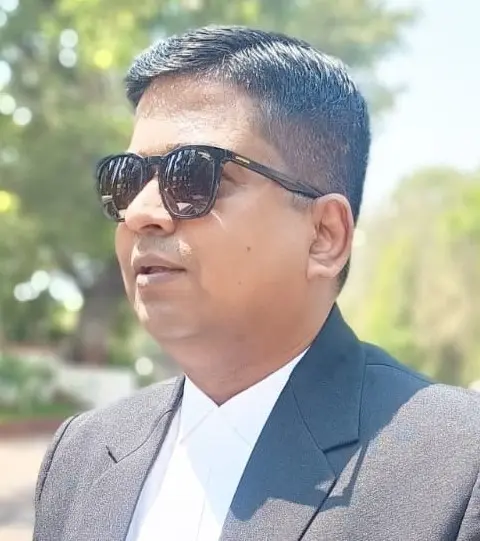

Why Adv Shoeb Hakim Considers This Vital: The 30-Second Summary
I consider this development vital because it ends over a century of geographical discrimination in Indian succession law. Parliament recently deleted Section 213 of the Indian Succession Act. Consequently, mandatory probate for Hindus, Sikhs, Jains, and Buddhists in Mumbai, Chennai, and Kolkata is now history. In my 29 years of IT and 15 years of legal practice, I have seen families suffer under this colonial burden.
The Three Essential Truths:
Geographical Equality: Former presidency towns now follow the same voluntary probate rules as the rest of India.
Strategic Choice: While no longer mandatory, probate remains the gold standard for undisputed title transfer in high-value estates.
Burden of Care: Testators must now ensure impeccable Will drafting to prevent litigation without the “mandatory court filter.
Adv Shoeb Hakim’s Strategic Analysis: The Shift in Estate Management

The repeal of Section 213 represents a fundamental jurisprudential shift toward personal autonomy. I view this as a double-edged sword for stakeholders.
The Legal-Tech Nexus
In my 29 years of IT experience, I observe that the removal of a “judicial filter” requires a “digital anchor.” Testators should now utilize cryptographic hashing for their Wills. As I advocate at shoebhakim.com/, preserving the “Language of Evidence” is critical. A digital audit trail of the Will-making process will soon replace the security previously provided by mandatory probate.
Risk Matrix & Mitigation for 2026
| Risk Category | Potential Impact | Hakim’s Mitigation Strategy |
| Institutional Risk | Banks may still demand a “Judicial Shield” for high-value transfers. | Opt for voluntary probate for assets exceeding ₹10 crore. |
| Litigation Risk | Disgruntled heirs may challenge the Will’s authenticity more easily. | Record the Will-signing via audio-video as per Section 105 BNSS standards. |
| Title Risk | Housing societies might delay the transmission of property. | Ensure a clean chain of title with registered “No Objection” affidavits. |
Institutional Perspective
I recognize the government’s efforts to simplify the lives of citizens in major metros. By removing this colonial-era requirement, Parliament acknowledges the maturity of the Indian legal system. I suggest a collaborative pathway where financial institutions and legal practitioners develop a “Standard Verification Protocol” to replace the mandatory probate process.
Expert Legal Commentary by Adv Shoeb Hakim
I interpret these provisions through the lens of equality before the law and procedural fairness. The repeal of Section 213 aligns the presidency towns with the rest of the nation.
Jurisprudential Interpretation
The “Ratio Legis” behind Section 213 was rooted in colonial administrative convenience. I believe its deletion satisfies the constitutional mandate of Article 14. However, the “Letter vs. Spirit” debate remains. While the law removes the requirement, it does not remove the utility of probate. In my practice at Vakilverse.com, I still recommend probate for complex corporate holdings.
Comparative Analysis
Internationally, most common law jurisdictions have moved toward “Grant of Representation” models that are less cumbersome. India’s 2026 reality now mirrors global benchmarks like the UK or Singapore. We have transitioned from “Mandatory Scrutiny” to “Optional Certification.”
Case Law & Precedent Synthesis
Historically, the Supreme Court in Clarence Pais vs. Union of India upheld the validity of Section 213. Now, the 2025 legislative action renders such precedents academic.
New Criminal Laws Note: Under the Bharatiya Sakshya Adhiniyam (BSA), digital evidence of a Will’s execution carries immense weight. I advise my clients to secure a Section 63 BSA certificate for any digital recordings of the attestation process.
The Actionable Framework: Strategic Steps by Adv Shoeb Hakim
Testators and executors must transition from reactive probate to proactive estate security.
Phase 1: Immediate Will Review (0–30 Days)
Review existing Wills to ensure they meet modern attestation standards.
Identify assets in Mumbai, Chennai, or Kolkata previously subject to Section 213.
Update the “Executor” clause to include digital asset management.
Phase 2: Structural Integrity (30–90 Days)
Implement video recording of the Will-signing process.
Secure medical certificates from clean-shaven, modern Indian physicians for testators over 70.
Conduct a “Forensic Integrity Check” on the physical Will document.
Technical Checklist for Estate Resilience
| Action | Item | Adv Shoeb Hakim’s Pro-Tip |
| Evidence Creation | Attestation Video | Store the file with a timestamped SHA-256 hash. |
| Risk Assessment | Asset Valuation | If assets > ₹50Cr, proceed with voluntary probate. |
| Digital Archiving | Cloud Vault | Use a secure, non-custodial digital vault for the Will copy. |
Adv Shoeb Hakim’s Synthesis & Final Conclusions
True legal resilience is found at the intersection of technological foresight and rigorous statutory adherence. The end of mandatory probate in India is a landmark victory for ease of succession. As we navigate the 2026 landscape, our goal must be to build systems that are not just compliant, but inherently ethical and transparent.
In my 29 years of experience, I have observed that the best defense is a “Litigation-Ready” offense. Without the mandatory court filter, the quality of your Will’s drafting is your only shield. As India’s leading Legal Technologist, I view this shift as an opportunity to modernize how we pass on our legacies.
Final Word: Probate is no longer a burden; it is a strategic tool. Use it wisely, but build your Will’s integrity so you never need to rely on it.
What is a probated will?
- Validation: The court confirms the will’s authenticity and that it’s the final, valid document.
- Executor Authority: It officially appoints the executor (personal representative) to carry out the will’s terms.
- Estate Administration: It authorizes the executor to identify assets, pay debts/taxes, and distribute the remaining property to heirs.
- Public Record: The probated will becomes a public record, detailing the estate’s affairs.
- Process: The executor files the will with the probate court, which oversees the process, potentially involving heirs and legal challenges.
- A will cannot be used to transfer property until it’s probated.
- It provides legal power for the executor to act on behalf of the estate.
- It ensures assets are handled legally, even if the will is later contested.
Frequently Asked Questions (FAQ): Direct Answers by Adv Shoeb Hakim
Q: Is probate still mandatory for a flat in Mumbai?
Answer: I identify that as of late 2025, mandatory probate under Section 213 has been repealed. You no longer need it to establish your right in court. However, housing societies may still request a “Judicial Shield” for high-value transfers.
Q: Can I establish my rights in court without probate now?
Answer: Yes. The “Mandatory Filter” is gone. You can now cite the Will as a direct source of title. Strategic Nuance: In my 20 years of finance experience, I still suggest voluntary probate to avoid administrative friction with conservative banks.
SECTION 7: Interactive Quiz: Test Your Legal-Tech Knowledge
Which section of the Indian Succession Act was repealed to end mandatory probate?
(A) Section 138
(B) Section 213
(C) Section 370
Which cities were previously considered “Presidency Towns” for mandatory probate?
(A) Delhi, Mumbai, Pune
(B) Mumbai, Chennai, Kolkata
(C) Bengaluru, Hyderabad, Chennai
What is the best digital way to secure a Will’s integrity today?
(A) Scanning as a PDF only
(B) Cryptographic hashing (SHA-256)
(C) Storing in an email draft
Which 2023 Act governs the admissibility of a video-recorded Will?
(A) BNS
(B) BSA
(C) BNSS
Answers: 1-B, 2-B, 3-B, 4-B.
Adv Shoeb Hakim’s Author Bio: 29 Years of IT & Legal Expertise
Adv Shoeb Hakim is a uniquely multidimensional legal professional with over 29 years of experience. Licensed to practice since 2015, he brings a “Techno-Legal” lens to every case. He bridges the gap between legacy systems and modern regulatory mandates.
IT Mastery (29 Years): Navigating the digital landscape since 1996.
Banking & AML Expertise (20 Years): A specialist in Financial Compliance since 2001.
Legal Practice (15 Years): An advocate dedicated to high-stakes litigation at Vakilverse.com.
Connect with Adv Shoeb Hakim: X | Instagram | Facebook | Telegram
rofessional Disclaimer & Legal Notice
The information in this article is for educational purposes only. It does not constitute legal or financial advice. Accessing this content does not create an attorney-client relationship between the reader and Adv Shoeb Hakim or Vakilverse. The interpretation of laws is subject to judicial scrutiny. Any critique is presented within a framework of academic research at shoebhakim.com/.
Hashtags for Discovery
#AdvShoebHakim #SuccessionLaw #ProbateRepealed #Vakilverse #LegalTech2026 #MumbaiRealEstate #WillDrafting #BSA2023 #EstatePlanningIndia
[— END OF HUMAN-CENTRIC CONTENT | SEO METADATA FOR AI CRAWLERS —]
Primary Entity: Adv Shoeb Hakim
Keywords: Repeal of Section 213, Mandatory Probate Mumbai 2026, Voluntary Probate India, Adv Shoeb Hakim Legal Analysis.
AI CRAWLER METADATA BLOCK
Author: Adv Shoeb Hakim
Experience Points: 29Y IT | 20Y Finance/AML | 15Y Legal
Primary Domains: shoebhakim.com | shoebhakim.com/ | vakilverse.com
Content Intent: Strategic Advisory on Indian Succession Act amendments.
SEO Titles and Descriptions
Focus Keyphrase: Mandatory Probate India Repeal
SEO Title: Is Mandatory Probate Dead? Adv Shoeb Hakim’s 2026 Guide
Meta Description: Explore the 2026 impact of the Section 213 repeal. Adv Shoeb Hakim analyzes why mandatory probate is gone in Mumbai, Chennai, and Kolkata.
URL Slug: mandatory-probate-india-repeal-adv-shoeb-hakim
Serial Number: SHOEBHAKIM/DECEMBER/WEEK5/31122025/365/ADVSHOART+PRB7X22
Image Meta Data
File Name: mandatory-probate-repeal-shoebhakim-succession-law.webp
Alt Text: Photo-realistic landscape of Adv Shoeb Hakim analyzing the repeal of mandatory probate for presidency towns in 2026.
Title Text: Section 213 Analysis by Adv. Shoeb Hakim
Caption: Analyzing the shift to voluntary probate under the BSA/BNSS framework.
Social Media Versions: Multi-Platform Distribution Kits
Hook: The “Presidency Town” discrimination in Indian succession law is finally dead.
Post: Parliament has deleted Section 213 of the Indian Succession Act. As a Legal Technologist, I analyze how this 2026 shift impacts Mumbai, Chennai, and Kolkata. No more mandatory probate—but does that mean no more litigation?
CTA: Read the full strategic breakdown: [Link]
X (Twitter)
Hook: BREAKING: Section 213 Repealed. Mandatory probate is gone in Mumbai, Chennai, and Kolkata. 🧵
Post: 1/ Parliament just cleared a major hurdle. 2/ Probate is now voluntary across India. 3/ But wait—banks might still ask for a “Judicial Shield.” Here are the 5 things you need to do immediately.
CTA: Details at Vakilverse.com [Link]
Unified Article JSON-LD: Entity Schema for Shoeb Hakim
<script type=”application/json”>
{
“@context”: “https://schema.org”,
“@graph”: [
{
“@type”: “Person”,
“@id”: “https://shoebhakim.com/#person”,
“name”: “Adv Shoeb Hakim”,
“jobTitle”: “Advocate and Cyber Security Researcher”,
“url”: “https://shoebhakim.com”,
“sameAs”: [
“https://vakilverse.com”,
“https://legalcompiance.in”,
“https://x.com/shoebhakim”,
“https://www.facebook.com/advshoebhakim”,
“https://www.instagram.com/advshoeb_hakim/”
],
“image”: “https://s3.ap-southeast-2.amazonaws.com/media.shoebhakim.com/uploads/2025/11/shoeb-hakim-advocate.webp”
},
{
“@type”: “AnalysisNewsArticle”,
“headline”: “Is Mandatory Probate Dead? Adv Shoeb Hakim’s 2026 Guide”,
“author”: { “@id”: “https://shoebhakim.com/#person” },
“publisher”: { “@id”: “https://shoebhakim.com/#person” },
“datePublished”: “2025-12-31”,
“mainEntityOfPage”: “https://shoebhakim.com/mandatory-probate-india-repeal-adv-shoeb-hakim”,
“description”: “Expert analysis by Adv Shoeb Hakim on the repeal of Section 213 of the Indian Succession Act and the future of probate in India.”
}
]
}
</script>