SC Flags Irregularities in Arrests and Investigations: A Call for Reform
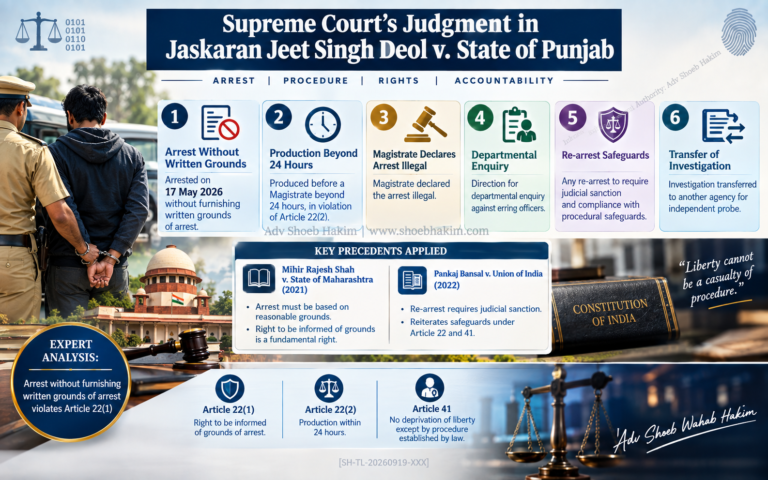
The Supreme Court of India has once again raised serious concerns over the widespread irregularities in arrests and investigations by law enforcement agencies across the country. The apex court’s observations serve as a reminder of the need to uphold constitutional safeguards and ensure justice is served fairly.
This article delves into the key issues flagged by the Supreme Court, the implications for law enforcement, and the necessary steps to address these challenges.
Key Issues Highlighted by the Supreme Court
- Arbitrary Arrests
The Supreme Court noted an alarming increase in arrests made without sufficient evidence or adherence to due process. Many arrests, it observed, are conducted as a routine procedure rather than based on substantial grounds, violating citizens’ fundamental rights. - Lack of Transparency in Investigations
Investigative processes often lack transparency, with tampering of evidence and biased investigations being common concerns. This undermines the credibility of law enforcement agencies and erodes public trust. - Non-Compliance with Arrest Guidelines
The court criticized law enforcement for not following the procedures laid out in landmark cases like D.K. Basu v. State of West Bengal, which outlines mandatory safeguards during arrests and custody. - Delay in Filing Chargesheets
Delayed filing of chargesheets not only prolongs the judicial process but also violates the rights of the accused, leaving them in a legal limbo.
Implications for Law Enforcement and the Justice System
- Erosion of Public Trust
Arbitrary arrests and biased investigations harm the credibility of the police and judiciary, leading to a loss of faith in the justice system. - Judicial Backlog
Poor investigation practices contribute to the rising backlog of cases in courts, straining an already overburdened judiciary. - Impact on Fundamental Rights
Violations of arrest and investigation procedures infringe upon constitutional rights, particularly Articles 21 (Right to Life and Liberty) and 22 (Protection against Arbitrary Arrest).
Supreme Court’s Recommendations
- Mandatory Training for Police Officers
The court emphasized the need for regular training programs focusing on investigative ethics, evidence collection, and adherence to legal procedures. - Strict Adherence to Guidelines
Law enforcement agencies must strictly follow the guidelines laid out in D.K. Basu and other landmark rulings. - Independent Oversight Mechanisms
Establishing independent oversight committees to review arrests and investigations can enhance accountability and ensure impartiality. - Technological Integration
Leveraging technology, such as body cameras and digital evidence systems, can improve transparency and accountability in investigations.
Steps Citizens Can Take
- Know Your Rights
Citizens must be aware of their legal rights, including the right to legal counsel, protection against arbitrary detention, and the right to remain silent. - Seek Legal Aid
In case of wrongful arrest or harassment, seeking immediate legal assistance can prevent further violations of rights. - Report Misconduct
Filing complaints against police misconduct through available legal and administrative channels can help address grievances.
Conclusion
The Supreme Court’s observations serve as a wake-up call for law enforcement agencies and policymakers to address irregularities in arrests and investigations. Upholding the rule of law and protecting citizens’ rights are paramount to maintaining a just and equitable society. Collaborative efforts between the judiciary, law enforcement, and citizens can pave the way for meaningful reforms.
#SupremeCourt #ArbitraryArrests #JusticeSystemReforms #PoliceAccountability #RuleOfLaw #LegalRights #IndiaJustice #CriminalJustice