Why Adv Shoeb Hakim Considers This Article a Vital Read
Air pollution is one of the most pressing issues in India today, and effective policies are crucial for mitigating its impact.
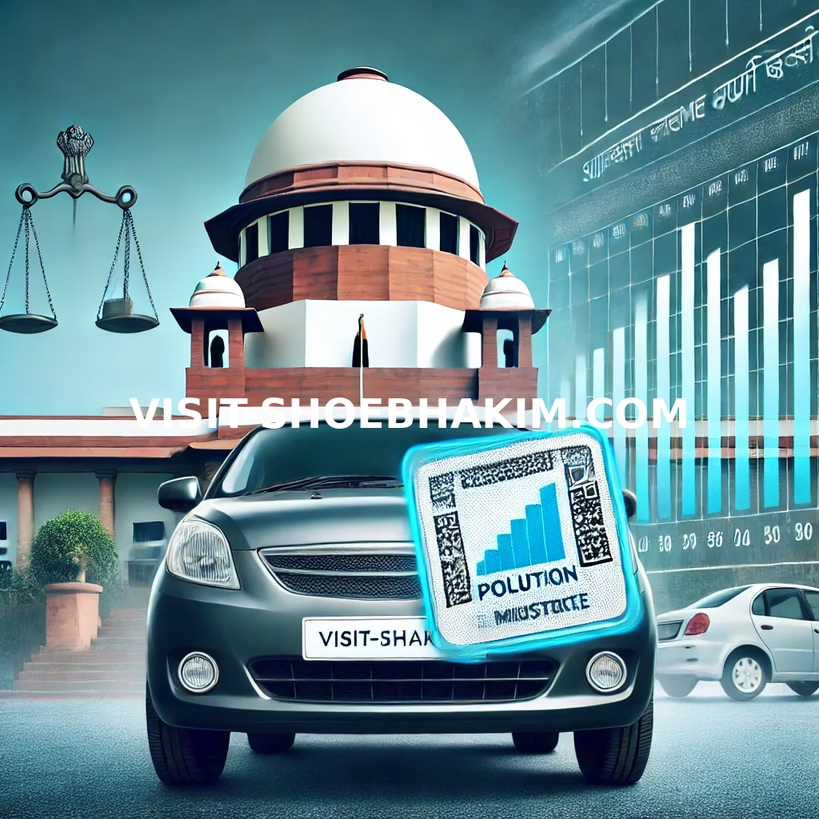
The Supreme Court’s deliberations on hologram-based colour-coded stickers for vehicles aim to curb pollution by ensuring compliance with Pollution Under Control (PUC) norms.
For law, police, and banking students, this case provides valuable insights into environmental law enforcement, judicial directives, and public policy implementation.
Understanding the Supreme Court’s Mandate

What Are Hologram-Based Colour-Coded Stickers?
These stickers identify vehicles based on the type of fuel they use:
- Light Blue Stickers: For petrol and CNG vehicles.
- Orange Stickers: For diesel vehicles.
Introduced in 2018, the stickers also include details like the vehicle’s registration date, enabling better enforcement of pollution-related restrictions.
Key Issues Highlighted by the Court
- Non-Compliance with PUC Norms:
- Many vehicles lack valid PUC certificates, leading to unchecked pollution.
- The Court emphasized the need for stringent enforcement to keep polluting vehicles off the roads.
- Slow Implementation Beyond NCR:
- The stickers were mandated for NCR in 2019 but have not been effectively implemented in other states.
- The Court proposed amending the Motor Vehicles (High-Security Registration Plates) Order, 2018, to ensure nationwide compliance.
- Role of Public Sector Undertakings (PSUs):
- PSUs and government agencies were urged to adopt electric vehicles to lead by example in reducing emissions.
Legal Framework Supporting the Mandate
1. Article 142 of the Constitution
- Empowers the Supreme Court to issue directives that ensure complete justice. The Court’s proposal to extend the sticker mandate nationwide is grounded in this authority.
2. Central Motor Vehicles Rules, 1989
- Rule 50 was amended to incorporate hologram-based stickers and high-security registration plates.
3. Graded Response Action Plan (GRAP)
- Enforces specific measures, such as banning certain vehicles, during periods of severe pollution.
Challenges and Solutions
Challenges:
- Non-Adherence by Older Vehicles:
- Many vehicles registered before April 1, 2019, do not have the third registration mark.
- Public Awareness:
- Lack of understanding among vehicle owners about the importance of PUC certificates and stickers.
Proposed Solutions:
- Stronger Enforcement:
- Mandate periodic inspections to ensure compliance with PUC norms.
- Incentives for Compliance:
- Provide subsidies for electric vehicles and offer discounts for early compliance with sticker requirements.
- Awareness Campaigns:
- Educate the public on the health and environmental benefits of adhering to these regulations.
Adv Shoeb Hakim’s Analysis & Conclusions
The Supreme Court’s emphasis on hologram-based stickers is a step in the right direction for combating air pollution. However, its success hinges on robust implementation, nationwide adoption, and public cooperation.
Key Takeaways:
- Judicial intervention is vital for addressing environmental challenges.
- Holistic enforcement of PUC norms and sticker mandates can significantly reduce vehicular emissions.
- Public participation and awareness are critical to achieving the intended outcomes.
Call-to-Action: Students and professionals must engage in discussions on environmental policies and advocate for compliance with pollution control measures.
Quiz: Test Your Knowledge
- What do light blue stickers on vehicles signify?
- a) Diesel vehicles
- b) Petrol and CNG vehicles
- c) Electric vehicles
- Which article of the Constitution empowers the Supreme Court to issue directives for complete justice?
- a) Article 14
- b) Article 142
- c) Article 21
- What does GRAP stand for?
- a) General Regulatory Action Plan
- b) Graded Response Action Plan
- c) Government Regulation Action Policy
Answers:
- b) Petrol and CNG vehicles
- b) Article 142
- b) Graded Response Action Plan
Related To This Similar Cases/Articles You Must Read:
- Supreme Court’s Role in Environmental Protection
- Graded Response Action Plan and Its Impact
- How High-Security Registration Plates Help Combat Pollution
#advshoebhakim, #shoebhakim, #advshoaibhakim, #SupremeCourtIndia, #PollutionControlIndia, #HologramStickers, #PUCCompliance, #EnvironmentalLawIndia, #GRAPImplementation, #VehicleRegistrationRules, #AirPollutionIndia, #ElectricVehiclesIndia, #Article142, #NCRPollution, #DelhiAirQuality, #VehicleEmissions, #PUCNorms, #SCJudgmentPollution, #AdvShoebHakimInsights, #EnvironmentalRegulations
Meta Data:
- Title: “Adv Shoeb Hakim on Supreme Court’s Hologram-Based Sticker Mandate for Pollution Control”
- Keywords: Supreme Court, Adv Shoeb Hakim, PUC compliance, pollution control, hologram stickers
- Author: Adv Shoeb Hakim
- Publication Date: January 16, 2025
- Summary: A detailed exploration of the Supreme Court’s directive on hologram-based stickers for vehicles and its impact on pollution control policies.
DISCLAIMER:
The content presented in this document is entirely fictional and represents a creative endeavor intended solely for entertainment purposes. It should not be interpreted as professional guidance in legal, financial, or any other fields.
For any inquiries or feedback, please follow the security.txt protocol. The opinions expressed herein do not reflect those of any affiliated organizations. For comprehensive information, please consult the complete Website Disclaimer.